
If you’ve ever navigated the dating world, you’ve likely crossed paths with someone who seemed to exhibit narcissistic behavior.
However, experts emphasize that these narcissistic tendencies are not confined to romantic relationships. They can be even more challenging to identify in family dynamics, friendships, and professional environments.
Prominent psychologists have outlined five distinct types of narcissists, providing insights on how to identify and handle them effectively.
These personalities often inhabit some of our most intimate relationships, from family members like parents and siblings to friends and supervisors at work.
Narcissistic Personality Disorder (NPD) is officially recognized in the DSM-5-TR, the authoritative manual used by mental health professionals for diagnosis.
While a clinical diagnosis is typically reserved for more severe instances, specialists note that narcissism operates on a spectrum. Individuals on the lower end have a greater potential for self-awareness and personal growth.
It is characterised by a pattern of grandiosity, a persistent need for admiration and a lack of empathy.
According to psychotherapist Kathleen Saxton, more than one in ten people worldwide may display narcissistic traits.

Narcissistic lovers may gaslight, lie, blame, exploit and control their partner, often making false promises in order to maintain power in the relationship. Pictured, Marlon Brando and Vivien Leigh in A Streetcar Named Desire (1951)
The dominating partner
In a recent article for the Telegraph, experts outlined one of the most damaging types of narcissist: the dominating romantic partner.
These individuals may gaslight, lie, blame, exploit and control their partner, often making false promises in order to maintain power in the relationship.
Sumeet Grover, a psychotherapist registered with the British Association for Counselling and Psychotherapy, says the severity of the traits matters.
‘Those lower on the spectrum may be able to observe their partner’s emotions and feel some guilt,’ he said. ‘They may be open to listening to your perspective and considering how to act differently.’
However, he warned that people with more severe narcissistic traits lack empathy and believe there is nothing wrong with their behaviour. ‘They won’t be open to seeking help or believing someone else understands them better than they do,’ he added.
Mr Grover advises sharpening awareness of narcissistic behaviours so people can make informed decisions about their own safety.
‘It’s easy to be blinkered by love, but a realistic view is empowering,’ he said. ‘Then you can decide what you’re willing to put up with – or whether staying means making huge compromises.’

Narcissistic friends target less confident people who may be easier to manipulate. Pictured, a scene from Mean Girls (2004)
The not-so-close friend
Another common type is the friend who leaves you feeling worse after every interaction.
These individuals often dominate conversations, undermine others and make it difficult for friends to express their own views.
Dee Johnson, a BACP-accredited counsellor, says such behaviour is often calculated rather than careless.
‘They target vulnerable, less confident people who are grateful for the friendship and easier to manipulate,’ she said.
‘They use charm and flattery to hook someone in, but demand constant validation in return. If you challenge them, you suffer their wrath.’
Experts also warn of so-called ‘covert narcissists’, who may appear socially anxious or introverted and are more commonly female.
While they can seem fragile, Ms Johnson says they still crave recognition and may react with anger if their needs are not met. ‘A useful tactic is to acknowledge what they say – ‘yes, I hear you’ – without agreeing or acting on it,’ she said. ‘It removes their sense of control.’

Parents are expected to offer unconditional love, but narcissistic parents are ‘me first’, leaving children feeling unsafe and ignored. Pictured, a scene from Mommie Dearest (1981)
The selfish parent
A narcissistic parent is often one of the most painful relationships to confront, experts say.
Parents are expected to offer unconditional love, but narcissistic parents may make affection conditional and transactional.
Ms Johnson said this can be deeply damaging. ‘When you realise your parent’s motivation is “me first”, you feel unsafe and ignored,’ she said.
Children of narcissistic parents may develop low self-esteem, anxiety and people-pleasing tendencies, constantly seeking approval.
While cutting contact can be difficult, experts say it may be necessary if the relationship becomes abusive.
If maintaining contact, boundaries are crucial. ‘Limit the time you spend with them and avoid engaging in their narrative,’ Ms Johnson said.
‘Narcissists want information because it gives them control – so share less, and remember you are entitled to privacy.’
The sibling who blames you for everything
Siblings argue, but a sibling who relentlessly blames you for problems may be displaying narcissistic traits.
Ms Johnson says the most difficult aspect is often grieving the relationship you wish you had.
‘People look at other families and realise they may never have that closeness,’ she said. ‘That loss needs to be acknowledged.’
She added that feelings of anger, loneliness and confusion are normal, and support from a therapist or trusted person can be vital.
‘If you can live alongside a narcissistic sibling while protecting your wellbeing, you are more likely to form healthy relationships elsewhere,’ she said.
Change is only possible, she added, if the sibling takes responsibility for their behaviour.

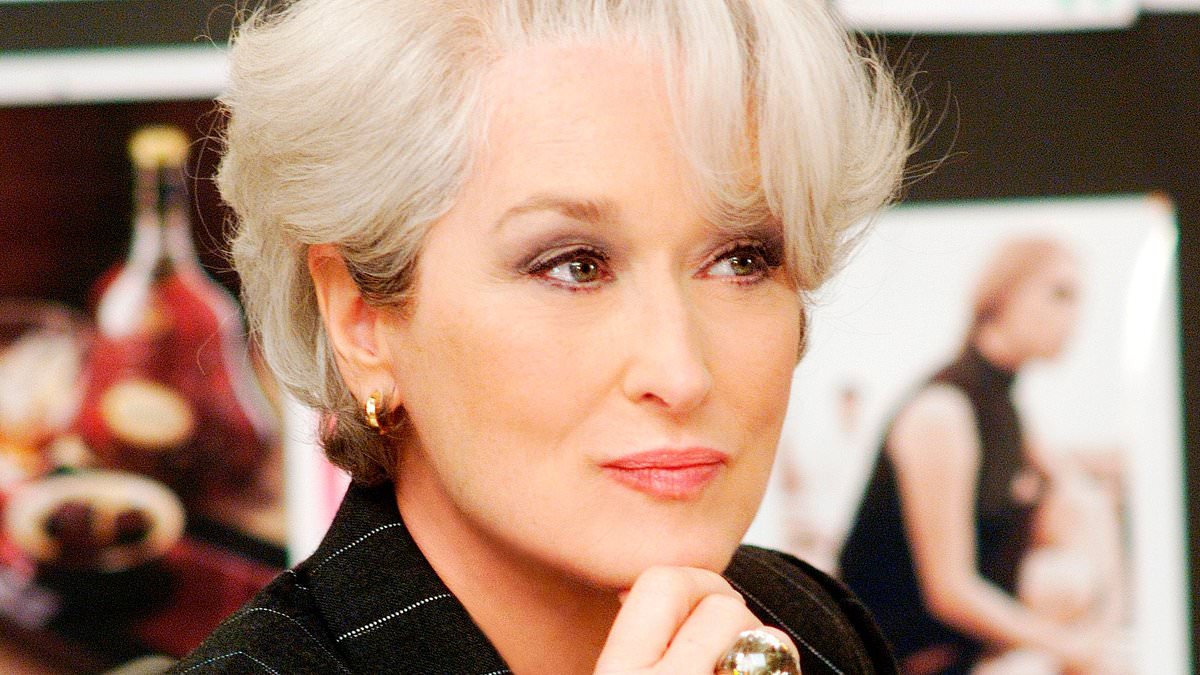
When faced with a narcissistic boss, Ms Johnson added that in some cases the healthiest option is to walk away. Pictured, Meryl Streep as fashion magazine editor Miranda Priestly in The Devil Wears Prada (2006)
The scary boss
The final type is the narcissistic boss – often charming at first, but entitled, arrogant and emotionally volatile.
Mr Grover said the power imbalance makes this particularly damaging.
‘They may be encouraging one moment and furious the next,’ he said. ‘It can be confusing and deeply demoralising.’
He advises sticking to facts when dealing with unfair criticism and calmly repeating them if necessary. ‘When praise is withheld, it often reflects envy rather than your performance,’ he said.
Ms Johnson added that in some cases the healthiest option is to walk away. ‘Sometimes you have to say enough is enough and look for another job,’ she said.