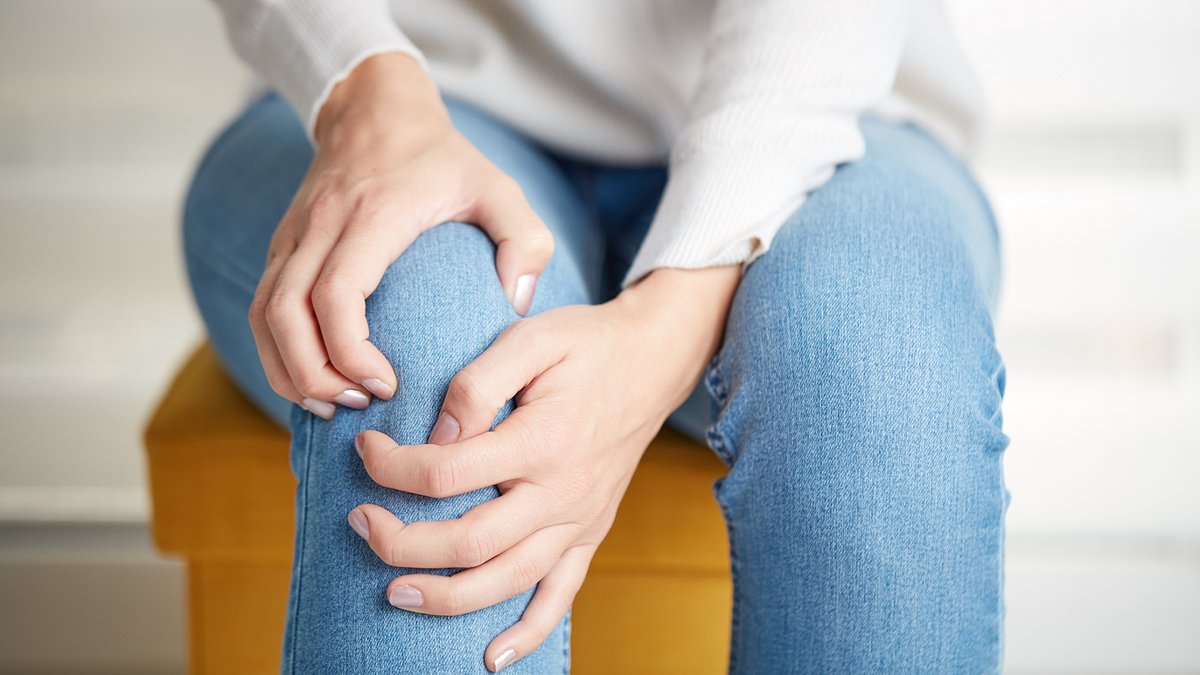

In a twist on conventional medical advice, incorporating a few minutes of walking backwards into your daily routine could potentially alleviate knee arthritis pain. This unconventional exercise may just be the simple remedy many are seeking.
Recent research highlights that when walking backwards is paired with exercises like rising from a seated position without hand support or balancing on one leg, the benefits are amplified. Participants who engaged in these activities reported significant pain relief and enhanced knee joint flexibility. These findings were published in the journal Physiotherapy Theory and Practice.
Walking backwards is believed to enhance the strength of the quadriceps, the muscles located at the front of the thigh. These muscles play a crucial role in various movements, including walking, running, jumping, and kicking. While typical forward walking does engage the quadriceps, walking backwards provides a more intense workout for these muscles.
Researchers from Chang Gung University in Taiwan suggest that stronger quadriceps help reduce the load on the knee joint during any movement, whether forward or backward, thereby diminishing pain.
Additionally, this reverse motion shifts more of the impact to the ankle joint, which in turn bears more of the workload than the knee, potentially offering further relief to those suffering from knee arthritis.
In the UK alone, osteoarthritis affects nine million individuals, characterized by the deterioration of protective cartilage within joints, leading to pain and mobility issues.
It often develops from wear and tear, although other risk factors include being overweight. While anti-inflammatory painkillers and steroid injections can help, many will need a knee replacement – around 100,000 such operations a year are performed on the NHS.
Keeping physically active can postpone the need for a surgery, in some cases by several years.

The stronger the quadricep muscles, the smaller the load on the knee joint during forward or backward movement
Small studies have previously hinted at the potential benefits of walking backwards for those with knee pain.
Tim Allardyce, a physiotherapist at Surrey Physio, explains: ‘When we walk forwards, our feet tend to land on the heel first and then the toe. But walking backwards is the exact opposite and this reduces the load that goes through the knee.’
He adds: ‘Research suggests that backwards walking does lead to a moderate improvement in knee pain when compared with physiotherapy alone.’
Other studies have shown it can help alleviate lower back pain, too – again by boosting leg muscle strength so that there’s less pressure on back muscles.
Moving in reverse on a treadmill can also help stroke patients walk faster and have better balance, studies show – again, by strengthening vital leg muscles.
Regularly walking backwards may even ward off cognitive decline, by firing up the prefrontal cortex – the area that deals with problem-solving, logic and decision-making – reported the journal Behavioural Brain Research in 2020.
For the latest study, researchers pooled data from 13 clinical trials – involving more than 480 people aged 40 to 68 – which compared walking backwards with conventional physiotherapy. In the studies, volunteers were asked to walk backwards on a treadmill three to four times a week, usually for 15 minutes at a time.
The researchers concluded that overall pain intensity ‘was significantly reduced’ among the backwards-walking volunteers compared with those who stuck to conventional routines.

Tim Allardyce, a physiotherapist at Surrey Physio, says: ‘When we walk forwards, our feet tend to land on the heel first and then the toe. But walking backwards is the exact opposite and this reduces the load that goes through the knee.’
The practice of walking backwards for health purposes is thought to have originated in China but, in recent years, has gained attention as a way of improving performance and reducing injury among professional sportspeople.
In back pain, for example, regular backwards walking is thought to help stretch the hamstrings – muscles at the back of the thigh that control how knees bend and straighten. This, in turn, reduces the load on the lower back.
Tim Allardyce, who runs every day, now does 50m of running backwards and sideways at least twice a week to ‘work different muscles and activate my hamstrings more effectively’.
Lucy MacDonald, a physiotherapist with Restart Physio in Surrey, suggests first trying it on a treadmill by ‘walking forwards for ten minutes and then backwards for five minutes’.
But Tim Allardyce warns people should be cautious of trying it without a treadmill, especially as those with knee osteoarthritis ‘may not be the most stable’.
Philip Conaghan, a professor of musculoskeletal medicine at the University of Leeds, notes that it’s unclear from the latest research whether backwards walking is really any better than other forms of exercise designed to build thigh muscle strength.
‘It’s interesting, but patients in this study were five to ten years younger than most osteoarthritis patients and with less joint damage. It’s unclear if their age influenced their ability to exercise.’


