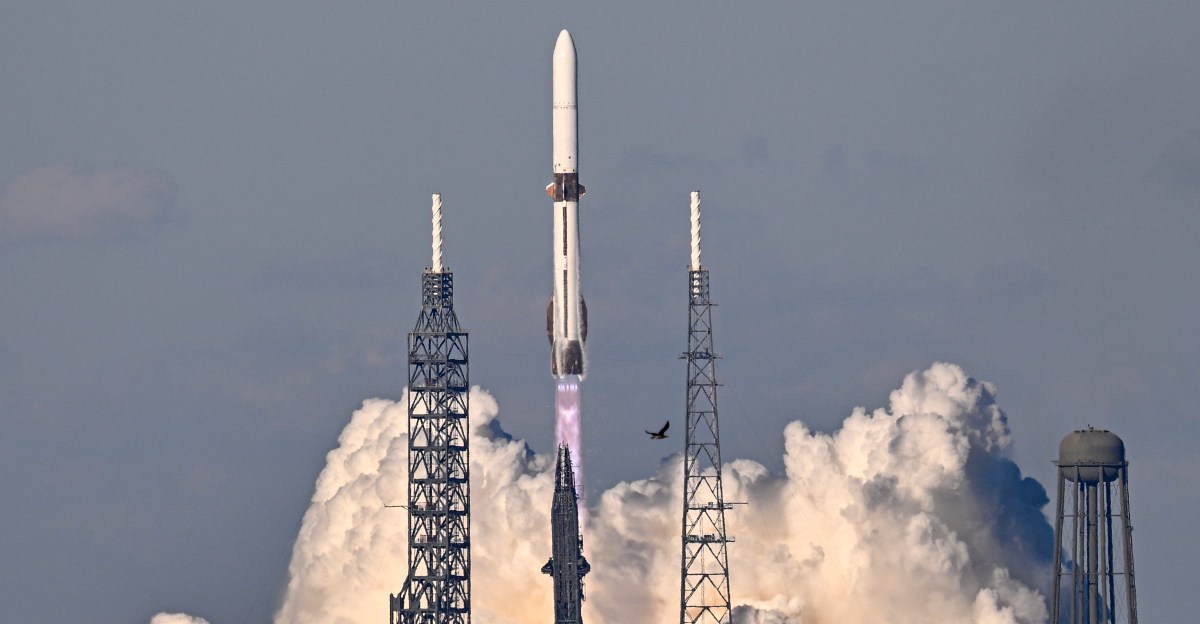

In the ongoing race for space-based internet dominance, SpaceX’s Starlink currently leads with the most satellite presence. However, a new contender is on the horizon. Blue Origin, the space venture helmed by Jeff Bezos, has unveiled its ambitious TeraWave network. This project promises to deliver impressive bandwidth capabilities of up to 6 terabits per second anywhere on the globe, catering primarily to the needs of enterprise-level clients.
The catch, though, is that direct access might not be forthcoming for everyday users. The service, slated to begin satellite deployments by the close of 2027, is tailored for business clients. Blue Origin’s CEO, Dave Limp, formerly with Amazon Alexa, emphasizes that TeraWave is “purpose-built for enterprise customers,” underlining its specialized focus.
The TeraWave network will feature an intricate “multi-orbit” framework, comprising 5,408 satellites interconnected optically. The majority will orbit at low-Earth altitudes, ensuring ground connectivity through conventional wireless methods at speeds reaching up to 144 gigabits per second. A select group of 128 satellites will orbit in medium-Earth space, providing the potential for formidable 6 terabit bidirectional links.
Distinguishing itself from competitors like Starlink and Amazon’s nascent Leo satellite network, Blue Origin’s strategy is to accommodate only about 100,000 clients. This targeted approach zeroes in on “tens of thousands of enterprise, data center, and government users” who demand robust connectivity for essential operations. Meanwhile, Amazon is also eyeing enterprise opportunities with its Leo Ultra antennas, which offer speeds of 1 gigabit per second for downloads and 400 megabits per second for uploads. Starlink, not to be outdone, aims to introduce gigabit speeds to its users within the year.