
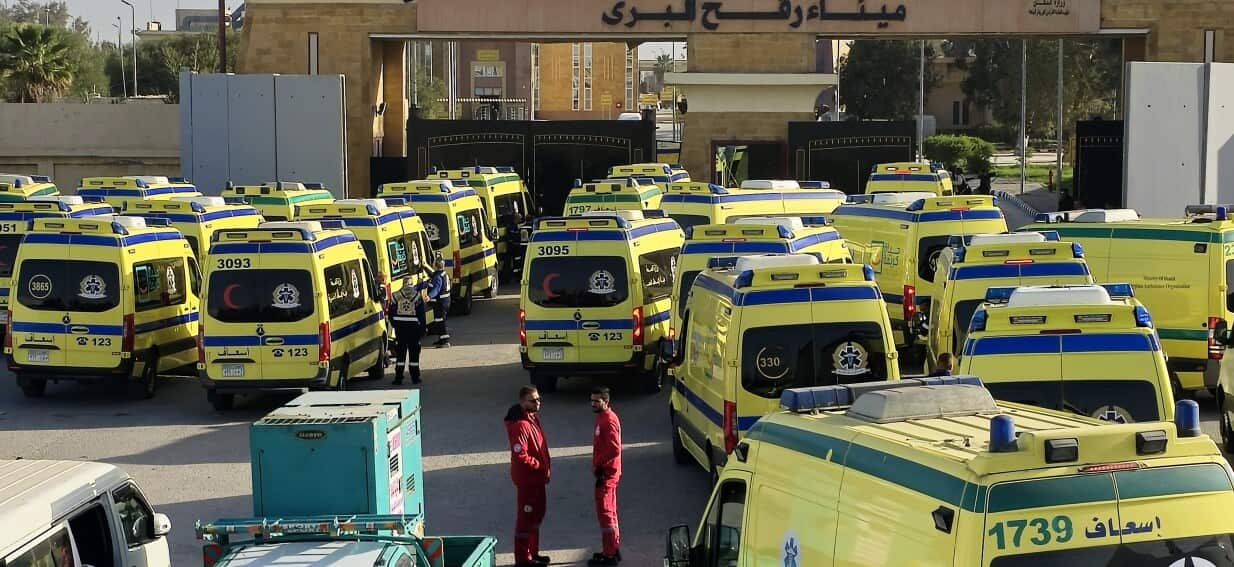
Gaza’s primary border crossing at Rafah is set to reopen for Palestinians later this Monday, according to a statement from Israel. This development comes as preparations are being made at the enclave’s main gateway, which has largely remained closed for nearly two years due to ongoing conflict.
Prior to the onset of hostilities, the Rafah crossing with Egypt served as the sole direct passage for most Gazans seeking to access the outside world. It was also a crucial channel for humanitarian aid into the territory. Since May 2024, it has been predominantly shut, with Israeli forces maintaining control over the Gazan side.
The Israeli military unit responsible for humanitarian oversight, known as COGAT, announced that the crossing would permit movement in both directions, although strictly for Gaza residents traveling by foot. The operation will be conducted in coordination with Egypt and the European Union.
However, COGAT’s announcement made no reference to the anticipated influx of humanitarian aid, which many have been hoping for.
The humanitarian situation in Gaza remains dire, exacerbated by two years of war, despite a ceasefire that has been in effect since October 10.
Since Israeli forces took control of the crossing in 2024 during the conflict with Hamas, it has remained closed, aside from a brief, limited reopening in early 2025.
Israel has said the crossing would open under stringent security checks only for Palestinians who wish to leave the war-ravaged enclave and for those who fled the fighting in the first months of the war to return.
Many of those expected to leave are sick and wounded Gazans in need of medical care abroad. The Palestinian health ministry has said that there are 20,000 patients waiting to leave Gaza.
Footage showed a queue of ambulances at the crossing on the Egyptian side, though sources told the Agence France-Presse news agency none had been allowed into Gaza yet.
“The opening of Rafah opens a small door of hope for patients, students and people in Gaza,” Amin Al-Hilu, 53, who lives in a tent in the territory’s Al-Shati camp, told the agency.
“We need the crossing to fully open for travel and bringing in goods without Israeli restrictions, and this I think will require major pressure on Israel.”
Israel had previously said it would not reopen the crossing until the body of Ran Gvili — the last Israeli hostage held in Gaza — was returned.
His remains were recovered days ago, and he was laid to rest in Israel on Wednesday, with COGAT announcing the reopening two days later.
COGAT described Sunday’s reopening as “an initial pilot phase” coordinated with the European Union, adding that the parties were carrying out “preliminary preparations aimed at increasing readiness for full operation of the crossing”.
For the latest from SBS News, download our app and subscribe to our newsletter.


