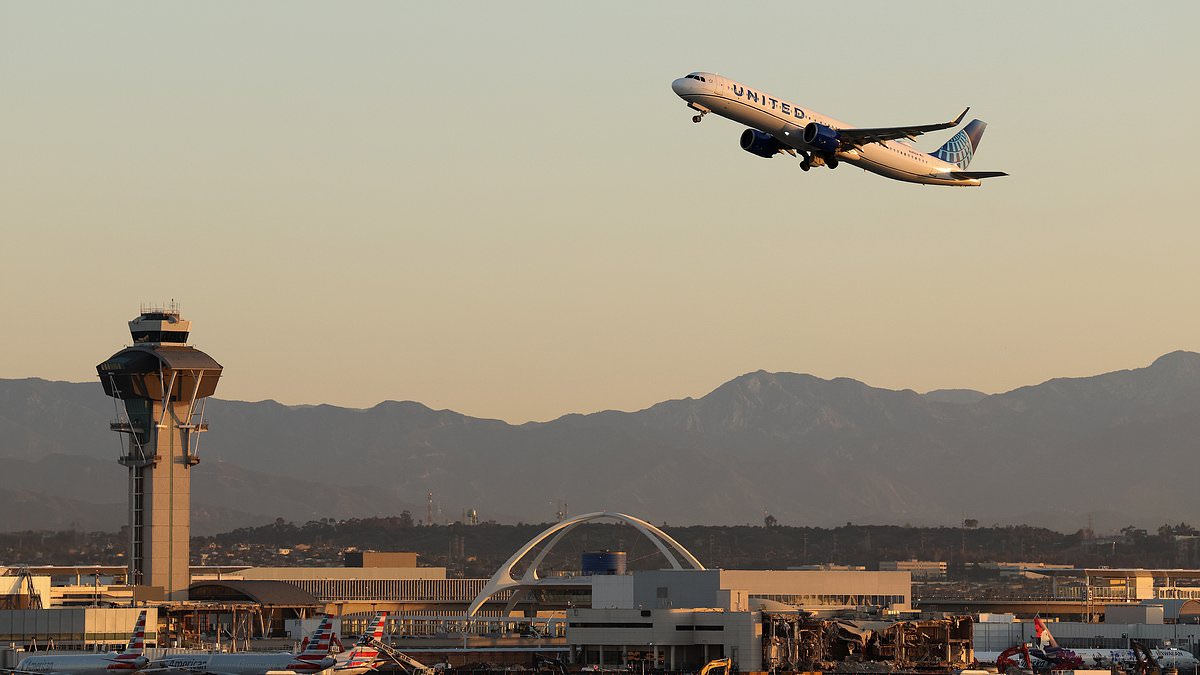

In a recent warning that has drawn attention from travelers and theme park enthusiasts alike, health officials have announced potential measles exposure at a major theme park and a bustling airport. These warnings come after an individual infected with the virus visited Disneyland in Anaheim, California, and passed through Los Angeles International Airport (LAX).
According to a statement from the Orange County Health Care Agency, an international traveler, confirmed to have measles, was present at Disneyland and LAX. During the contagious phase, the individual visited Goofy’s Kitchen at Disneyland Hotel between 10:30 a.m. and 1:30 p.m. on Wednesday, January 28. The same day, they spent time at Disneyland Park and Disney California Adventure Park from 12:30 p.m. until the parks closed at 9 p.m.
The traveler, arriving on Viva Aerobus flight No 518 at LAX’s Tom Bradley International Terminal B, reached the airport on Monday, January 26. They were at gate 201A, potentially exposing people in the terminal between 10:45 p.m. and 1 a.m. on Tuesday, as reported by the Los Angeles County Department of Public Health.
Disneyland Park typically sees around 47,500 guests daily, with its maximum capacity stretching to 85,000. Meanwhile, Disney California Adventure Park welcomes approximately 27,500 visitors each day, with a maximum capacity of 51,000. Given these figures, the potential exposure is significant.
Health authorities are advising anyone who was present at these locations during the specified times to verify their immunity status. This can be done by confirming previous vaccination or infection, and individuals are urged to remain vigilant for any symptoms of measles.
Officials are urging people who were in these locations during this time check their immunity status, either through prior infection or vaccination, and monitor for symptoms.
The statement said: ‘People who were at these locations during the date and time listed above may be at risk of developing measles from 7 to 21 days after being exposed.’
California has recorded three confirmed measles cases this year, but the recent news comes as the US battles one of the worst resurgences of measles since it was declared eliminated in the early 2000s.

Disneyland Park (pictured above) has an average of 47,500 guests per day with a maximum capacity of 85,000

While infectious, the person visited Disneyland Park and Disney California Adventure Park from 12:30 pm to closing at 9 pm on January 28 (file photo)
As of January 30, 2026, the South Carolina Department of Public Health (DPH) has recorded 847 measles cases since October 2025, surpassing a massive outbreak in Texas last year that has infected over 800.
Of these, 558 cases have been reported in 2026 alone, according to DPH.
There are currently 443 people in quarantine and 20 in isolation and about a dozen schools have students under quarantine measures.
Additionally, 19 people have been hospitalized with the measles and complications from the virus since the outbreak began in October.
No deaths have been reported in the state or nationwide so far in 2026. There were three deaths in 2025.
As of January 29, the CDC has reported only 588 cases of measles nationwide. However, those figures are not as recently updated as the ones for South Carolina, so state data is more accurate.
A separate database maintained by Johns Hopkins Center for Outbreak Response Innovation (CORI) reports 658 cases nationwide in 2026, with 524 in South Carolina.
So far in 2026, measles cases have also been reported in Washington state, Oregon, Idaho, Utah, California, Arizona, Minnesota, Ohio, Kentucky, Virginia, North Carolina, Georgia and Florida.

South Carolina’s outbreak of measles, which causes the distinctive rash pictured above, has surpassed a massive surge seen in Texas last year (stock image)
Cases in North Carolina, Washington and California have been linked to the South Carolina outbreak.
Measles is an infectious, but preventable, disease caused by a virus that leads to flu-like symptoms, a rash that starts on the face and spreads down the body, and, in severe cases, pneumonia, seizures, brain inflammation, permanent brain damage, and death.
The virus is spread through direct contact with infectious droplets or through the air. Patients with a measles infection are contagious from four days before the rash through four days after the rash appears.
The US formally eliminated measles in 2000, meaning there had been no community spread in 12 months, due to widespread MMR vaccine uptake.
Enclosed areas like airports and planes are extremely risky locations for disease transmission, as the measles virus spreads via airborne droplets when an infected person coughs or sneezes.


