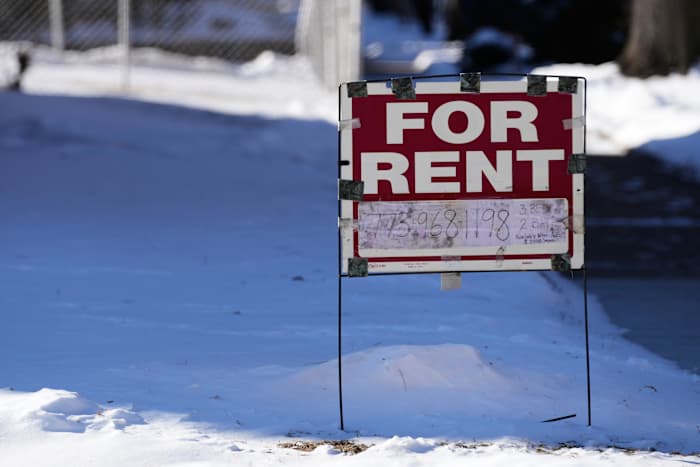

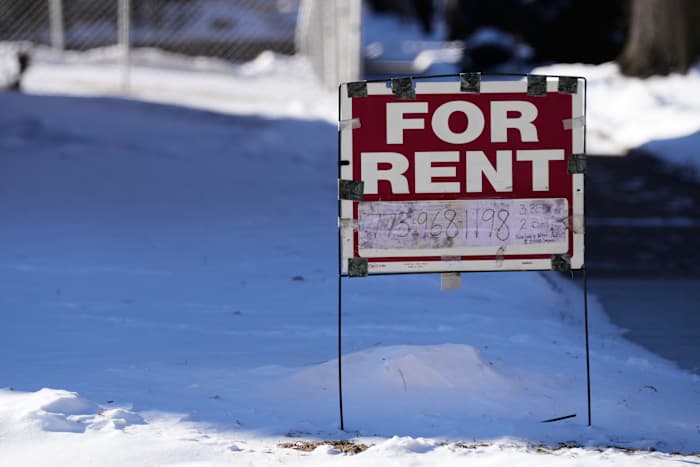
NEW YORK – As the first of the month approaches, many renters find themselves facing a daunting financial hurdle: the rent bill that can swallow an entire paycheck. In response, an increasing number of tenants are turning to a unique financial service that allows them to divide their rent payments, albeit at a cost.
The rise of “rent now, pay later” services has been notable over the past few years, especially as housing costs soar and incomes become more unpredictable, particularly for those in lower-income brackets and gig-economy roles. Data from the Bureau of Labor Statistics reveals that rent prices have surged nearly 28% over the last five years.
Companies like Flex, Livble, and the newer entrant Affirm offer solutions by allowing renters to break their rent into smaller, more manageable payments. While this can provide temporary relief, consumer advocates caution that these services often resemble short-term loans, adding fees to already tight budgets. In some scenarios, they can lead to triple-digit effective interest rates, sparking debate over whether they truly alleviate financial stress or exacerbate it.
Kellen Johnson, a 44-year-old renter, began using Flex about two years ago to divide his monthly rent payments. Instead of paying his full rent of $1,850 at once, he managed his cash flow by paying $1,350 on the first of the month and the remaining $500 mid-month. Flex charged him a $14.99 monthly subscription fee, plus 1% of his rent, totaling $18.50, resulting in monthly app expenses exceeding $33.
Johnson found the additional costs justifiable because, at the time, he worked as an independent delivery contractor for Amazon, a job with fluctuating paychecks.
“It was an extra cost, but it provided the convenience I needed,” said Johnson, who has since transitioned to driving seniors around Sacramento, California.
Roughly 109 million Americans, or about 42.5 million households, are renters in the United States. The Census Bureau estimated in 2024 that a large share of those households pay 30% or more of their monthly income on rent. The bureau considers such households to be “cost burdened,” meaning rent consumes so much of their income that they have less ability to plan for future expenses or build wealth.
Rent now, pay later services generally operate the same way: The company pays the landlord the full rent when due, and the renter repays the company in two or more installments over the course of the month. Because rent can be such a large expense, the companies argue that spreading payments out can give renters more cash on hand.
Many of these services come with fees. The fees can be structured differently but should be generally thought of as cost of credit, consumer advocates warn. In Johnson’s case, he was paying $33.49 for a two-week loan of $500, for an effective annual percentage rate of 172%, when expressed using standard consumer-lending calculations.
“Renters should be skeptical of any financing providers that have partnered with a landlord and be skeptical of anything that sells itself as no fees or no interest,” said Mike Pierce, executive director of Protect Borrowers. Pierce previously worked at the Consumer Financial Protection Bureau.
Launched in 2019, Flex is one of the largest companies focused on splitting rent payments. The company says its 1.5 million customers now send about $2 billion a month in rent through its system, and several of the country’s largest landlords accept Flex as a payment option.
Flex says most of its customers are lower-income renters with weaker credit profiles. The company reports a median credit score of 604 among its users and says about one in three customers works more than one job to make ends meet. A Flex spokesman says the average customer uses the service three to four times a year. Johnson used it every month.
Livble does not charge a subscription, but charges renters a fee ranging from $30 to $40, according to the company’s help page. Depending on how long the renter defers part of the payment, Livble’s fees can translate into effective annual percentage rates of roughly 104% to 139%.
The buy now, pay later company Affirm said this month that it is piloting a program allowing some customers to split rent into two payments. The program is being tested in partnership with Esusu, a company that reports rent payments to credit bureaus to help consumers build credit. An Affirm spokesman said the company is not charging renters interest or fees to use the product, but may charge landlords fees.
As another financing option, landlords are increasingly accepting credit cards for rent payments. Bilt, a credit card startup, built its brand around targeting renters when it launched, and some tenants also use credit cards to accumulate rewards or points.
But paying rent by credit card can also be costly. Landlords typically pass the processing fees on to tenants. Depending on the card issuer and payment network, these fees can range from about 2.5% to 3.5% of the rent. For a renter paying $1,500 a month, that translates to roughly $37.50 to $52.50 in fees — a monthly cost comparable to what services like Livble and Flex charge.
Economists and renters’ advocates argue that none of these financing options address the fundamental issue of affordability in the rental market. If credit cards, or flexible rent payment options become more widely used, they worry rents could rise further as landlords start factoring in a potential renters’ weekly cash flow as opposed to the rental market in the area the building is located in.
Merchants already pass along credit card processing costs to customers in the form of higher prices, and advocates worry that the rental market could adopt similar patterns. For example, Livble is owned by RealPage, which last year settled allegations that its algorithm allowed landlords to collude and push rents higher.
___
Economics Writer Christopher Rugaber contributed from Washington.
Copyright 2026 The Associated Press. All rights reserved. This material may not be published, broadcast, rewritten or redistributed without permission.