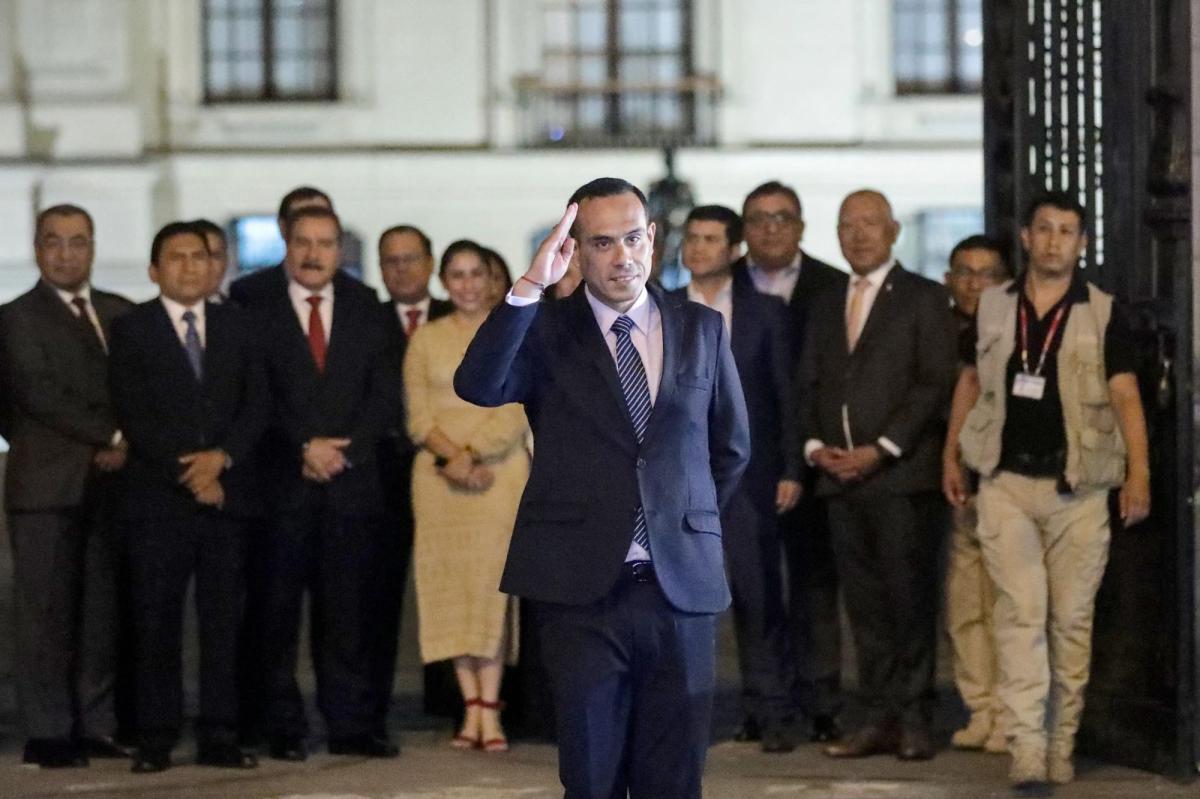


On Tuesday, Peru’s Congress removed President Jose Jeri from office just four months into his tenure due to a scandal involving undisclosed meetings with a Chinese businessman. This decision continues a pattern of political instability that has plagued the Andean nation for nearly a decade.
In the vote, 75 legislators supported Jeri’s removal, while 24 opposed it, and three chose to abstain.
Following this decision, Congress will select a new leader who will also assume the presidency, marking Peru’s eighth president in as many years. Jeri is now the third consecutive president to be ousted from office in Peru.
The frequent removal of presidents highlights the failure of Peru’s political leaders to address key voter concerns, such as crime and corruption. This has resulted in a cycle of short-lived administrations that struggle to address critical issues, alongside a Congress that seeks to boost its popularity by removing presidents who have lost public favor.
Lawmaker Ruth Luque, a supporter of Jeri’s censure, expressed the need for a leader who prioritizes public welfare and security, emphasizing the importance of a fresh start with a new president.
“We urge an end to this turmoil so we can genuinely initiate the transition that citizens are longing for,” she stated. “We need a transition free from hidden agendas, influence-peddling, secret meetings, and shadowy dealings. That is not the transition we desire.”
With yet another interim leader set to take over ahead of scheduled elections on April 12, the volatility risks deepening public distrust as legislators and politicians seek to posture themselves as presidential contenders.
“It strikes me that there is no trace of high mindedness here, only electoral calculations,” said Michael Shifter, former president of the Inter-American Dialogue think tank in Washington. “Enough lawmakers concluded their support for Jeri would hurt them in elections, so they had to act.”
The scandal that was dubbed “Chifagate” – after a local name for Chinese restaurants – began last month when Jeri was filmed arriving at a restaurant late at night wearing a hood to meet with Chinese businessman Zhihua Yang, who owns stores and a concession for an energy project. The meeting was not publicly disclosed.
Jeri became president in October after Peru’s unpopular Congress voted unanimously to remove his predecessor Dina Boluarte, as the right-wing parties that had backed her dropped their support amid corruption scandals and growing anger over rising crime.
Boluarte had no vice president and Jeri, who was the head of Congress at the time, was next in the line of succession.
This interim status was used to remove him from the presidency on Tuesday.
Unlike impeachment, which requires a supermajority of 87 in the 130-member legislature, Congress voted to censure Jeri, which strips him of his title as head of Congress with a simple majority.
Jeri has said he would respect the outcome of the vote.
VOTING ON NEW PRESIDENT ON WEDNESDAY
While the current head of Congress, Fernando Rospigliosi, would be constitutionally next in the line of succession, he has declined to assume the presidency. As such, legislators will have to elect a new head of Congress who will then automatically assume the presidency.
Rospigliosi said parties have until 6 p.m. local time to present their candidates and the legislature would vote on a new president on Wednesday.
This would be similar to Francisco Sagasti’s ascent to the presidency in 2020 after he was chosen by Congress amid a sharp political crisis and protests following former President Manuel Merino’s five-day presidency.
The field for the April election is crowded, with dozens of candidates expected to participate. According to a recent Ipsos poll, large portions of the electorate are undecided about who to vote for.
Despite the political turmoil, Peru’s mining-heavy economy has remained resilient with 3.4% growth in 2025 and relatively low inflation of 1.7%, underscoring how the economy has remained insulated from political shocks.