
Thousands of men battling prostate cancer find themselves denied a potentially life-altering treatment by the NHS, a situation that underscores significant gaps in healthcare accessibility.
Introduced to the UK in 2006, focal therapy offers a non-invasive approach that specifically targets cancerous cells while sparing the surrounding healthy tissue. This precision minimizes the risk of side effects such as incontinence and erectile dysfunction, which can affect up to 20% of men undergoing conventional treatments like radiotherapy.
Beyond its clinical benefits, focal therapy is also a cost-effective solution. Patients typically experience a swift recovery, often returning home the same day, and generally require less follow-up care compared to traditional methods.
Despite its advantages and the potential to improve the quality of life for approximately 15,000 men, focal therapy remains largely unavailable through the NHS. This is particularly concerning as only a handful of specialized centers, predominantly located in London, offer this treatment.
Medical professionals have raised concerns about the lack of information provided to patients regarding focal therapy, leaving many to endure life-altering side effects without being aware of all their options.
Only a few specialist centres, mostly in London, carry out the focal therapy, as doctors warn that most patients are not told about the treatment and face life-changing side effects.
Around 60,000 men are diagnosed with prostate cancer each year but a mere 600 to 700 are thought to be offered it, although it is widely available privately for an average £16,000.
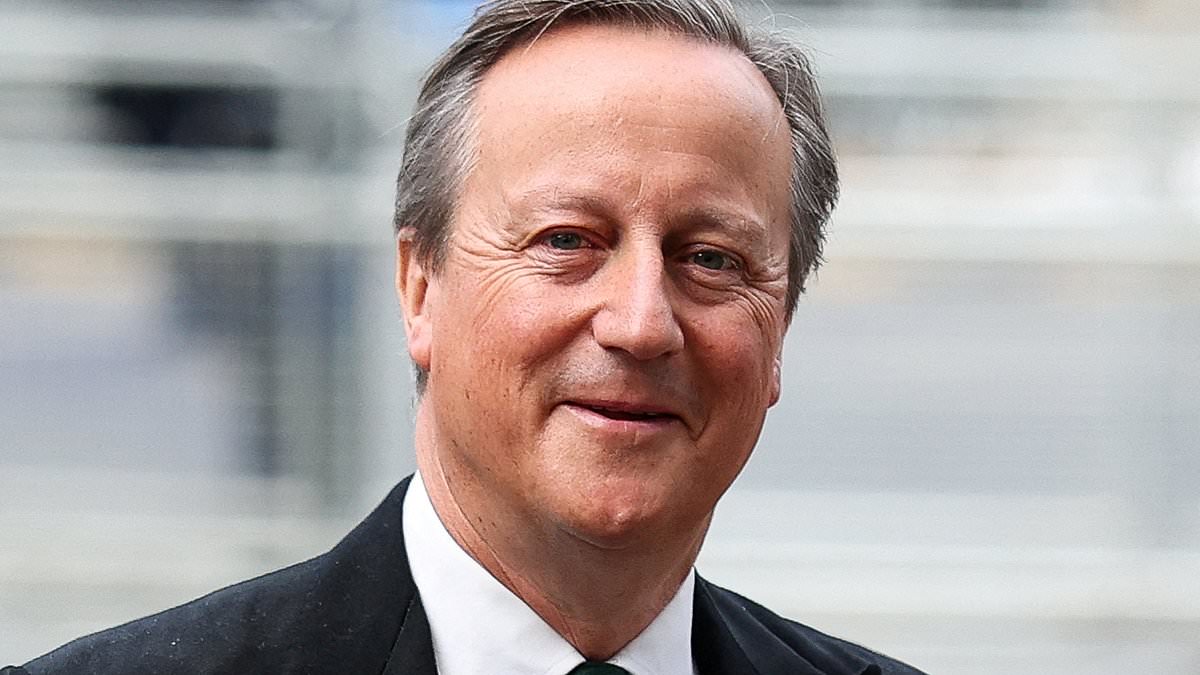
David Cameron paid to be privately treated with focal therapy after he was diagnosed with prostate cancer.

David Cameron paid to be privately treated with focal therapy after he was diagnosed with prostate cancer (pictured in May last year)
The former Prime Minister was diagnosed after his wife Samantha urged him to get a prostate-specific antigen (PSA) having listened to a radio interview on symptoms.
Focal therapy is just as effective as surgery, according to a study published by Imperial College London.
It showed that only one in 20 people had side effects including incontinence, compared with six in ten who had traditional surgeries.
Professor Hashim Ahmed, chair of urology at Imperial College London, said: ‘Men with prostate cancer have a right to know that focal therapy is open to them as an alternative option to surgery, radiotherapy and active surveillance, but that is not the case.’
The professor, who helped introduce the treatment to the UK, told The Times: ‘It’s been 20 years since I worked with Professor [Mark] Emberton on introducing focal therapy in the UK and, in many ways, we’re no further along, even though the technology has moved on considerably.
He added: ‘We have seen cases where patients attend an NHS cancer centre, are told of their diagnosis and are offered surgery or radiotherapy as the main options, with focal therapy not mentioned at all.
‘Those patients then go away, research it themselves, come back and ask, ‘What about focal therapy?’ and are told, ‘No, it’s not proven, we don’t recommend it.’ Some patients end up absolutely fighting for it, insisting they want focal therapy, and only then are they finally referred.’
He has urged the NHS to introduce the treatment at more hospitals
There are three principal forms of focal therapy. High-intensity focused ultrasound (HIFU), which uses ultrasound waves to generate heat and destroy cancer cells, irreversible electroporation, which targets tumours with electrical pulses that kill cells and cryotherapy, which uses extreme cold to freeze and kill cancer cells utilizing a technology called NanoKnife.
Professor Ahmed branded the introduction of NanoKnife as ‘genuinely game-changing’.
But Lord Cameron was one of just 175 patients to have used NanoKnife treatment across the country last year.
The NHS has claimed that ‘current guidance notes limited evidence on the effectiveness of cryotherapy and high-intensity focused ultrasound’.