
Do you experience a tight chest or shoulders, persistent tiredness, bloating or palpitations? Do you often feel unable to take a full, deep breath?
If several of these symptoms sound familiar, you may have dysfunctional breathing.
The NHS estimates that around one in ten adults in the UK experience this condition, also known as breathing pattern disorder. It has been linked to a wide range of health problems.
Instead of breathing in a calm, comfortable and effortless rhythm, people with dysfunctional breathing may breathe too quickly, forcefully or mainly from the upper chest. The term can also describe breathing through the mouth rather than the nose.
Because the pattern usually develops gradually over months or years, many people do not realise they are doing it, experts say.
‘Dysfunctional breathing is an interesting and common phenomenon,’ says Richard Russell, professor of respiratory medicine at King’s College London and consultant respiratory physician at Hampshire and Isle of Wight Healthcare NHS Foundation Trust.
‘Normal breathing is relaxed, automatic, subconscious and easy. It involves the diaphragm, which helps draw more air – and therefore oxygen – into the deepest parts of the lungs.’
By contrast, Professor Russell says, dysfunctional breathing involves ‘shallower breaths taken higher in the chest. The rhythm is less steady and more muscles are recruited, including those in the shoulders and upper chest.’

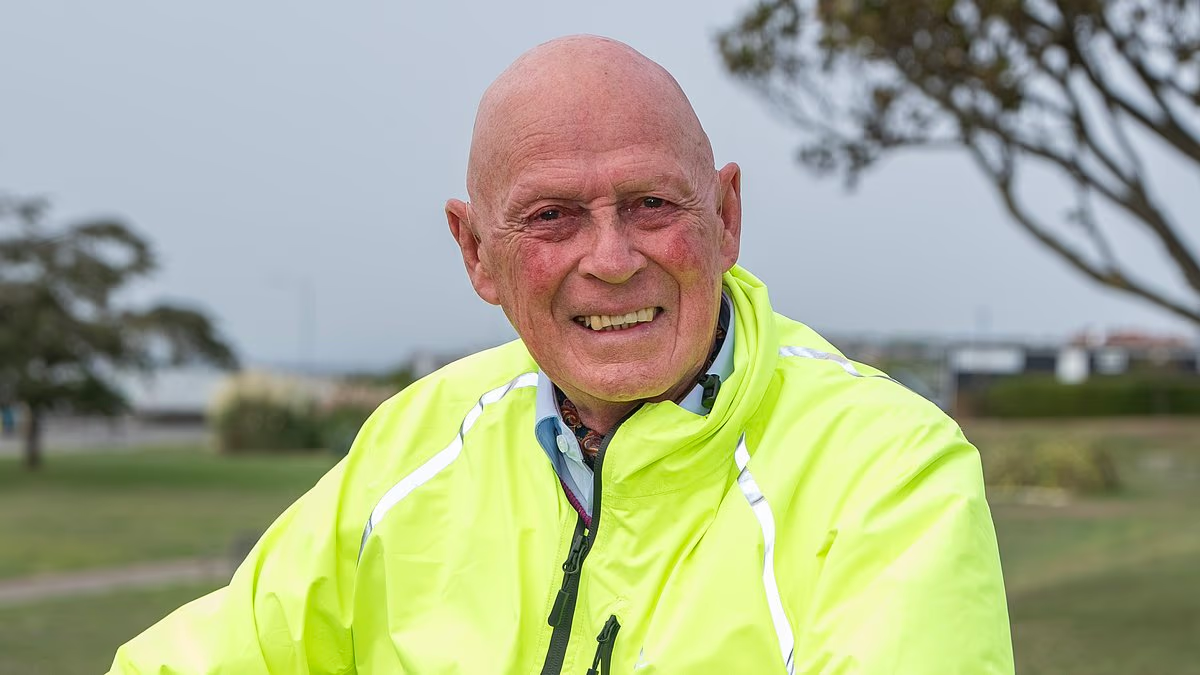
Former police detective inspector Bob Craven was diagnosed with asthma in his 50s. For years he could not walk across a room without triggering coughing and breathlessness
Since this is an inefficient way of drawing air into the body, symptoms may include frequent sighing or yawning in response to an uncomfortable feeling of breathlessness known as air hunger.
Dysfunctional breathing can develop alongside a number of illnesses.
‘It can follow an acute illness – Covid is one example – and may occur alongside established lung conditions such as asthma or COPD [chronic obstructive pulmonary disease, an umbrella term covering conditions including chronic bronchitis and emphysema],’ says Professor Russell.
It may also begin after trauma, whether physical or emotional, or as a result of pain.
‘If you have back pain, for instance, you may breathe more shallowly to avoid making the pain worse,’ says Professor Russell. ‘That response can then become a learned behaviour.’
Spending long periods looking at screens may be another trigger. Research published in 2008 by a former Microsoft executive found that around 80 per cent of office workers hold their breath while viewing a screen. The behaviour, described as ‘screen apnoea’, can contribute to dysfunctional breathing and has since been associated with higher blood pressure.
There is no straightforward test for dysfunctional breathing, so the condition is frequently overlooked.
Recognising it is important, however, because it can affect several aspects of health, from blood pressure to the digestive system, says Professor Russell.
‘Breathing can worsen gastrointestinal problems such as heartburn, acid reflux, burping and hiatus hernia, as well as allergic rhinitis,’ he says. ‘It is also linked to hypertension [high blood pressure].’
Dysfunctional breathing can influence mood and emotions, too. It ‘places greater strain on the body as a whole, leading to subconscious anxiety and stress’, he adds.
A 2023 study of 300 people, published in European Psychiatry, found that 60 per cent of those with anxiety also had dysfunctional breathing.
The condition is also strongly associated with asthma. According to a 2016 paper in the journal European Respiratory Review, almost one-third of people with asthma have dysfunctional breathing. Narrowed airways and learned breathing habits, doctors say, can make symptoms worse.
That was the experience of Bob Craven, 79, a former police detective inspector from Southend-on-Sea, Essex.
He was diagnosed with asthma in his 50s, several years after leaving the police force because of stress. For years, even walking across a room could bring on coughing and severe breathlessness.

Around one in ten adults in the UK experience dysfunctional breathing, in which breathing may become too fast or forceful rather than calm and comfortable
Bob needed his reliever inhaler up to eight times a day to control almost constant chest tightness, coughing, wheezing and shortness of breath. He used steroids during flare-ups and required antibiotics for chest infections every four to six weeks.
A little over ten years ago, Dr Duncan Powrie, a respiratory consultant at Southend Hospital, diagnosed him with dysfunctional breathing and referred him for pulmonary rehabilitation.
Bob says breathing exercises proved a turning point. ‘The breathing coaching has changed me as much as the medication. It has been tremendous.’
He now practises the exercises every day.
‘It has been amazing,’ Bob says.
‘I count to eight as I breathe in, then breathe out for as long as I can without forcing it or becoming giddy. It does not stop my asthma, but it helps me stay in control, recognise the warning signs and manage the problems.’
‘Breathing exercises can be absolutely transformative,’ says Professor Russell.
‘It is surprising that dysfunctional breathing is not corrected more widely, particularly when it co-exists with conditions such as anxiety or asthma, given the extent to which it can affect health.’
He adds: ‘One difficulty is that dysfunctional breathing sits between respiratory medicine and mental health.
‘Doctors may investigate the heart or lungs, while anxiety and stress are often treated as psychological problems. The breathing pattern itself can be overlooked.’
In 2018, award-winning science journalist James Nestor, author of Breath: The New Science Of A Lost Art, worked with scientists at Stanford University in the US to examine how quickly the body responded to dysfunctional breathing.
To force himself to breathe through his mouth, he blocked his nose with silicone for ten days while sleeping, eating and exercising.
He rapidly developed obstructive sleep apnoea, in which breathing stops during sleep as the throat muscles relax excessively. His blood pressure rose sharply, while his heart rate variability – the change in timing between heartbeats and a measure of nervous system balance – fell, suggesting that his body was in a state of shock.
Encouragingly, the changes returned to normal after ten days of breathing through his nose.
For people who believe they may have dysfunctional breathing, Professor Russell recommends concentrating on slow, steady nasal breathing once or twice a day for ten minutes.
However, he stresses that this will not stop an asthma attack triggered by an infection or allergen such as pollen.
‘Controlled breathing will not resolve that problem,’ he says. ‘It is essential to follow the treatment and management plan provided by your GP or specialist.’

With regular breathing exercises, Bob now cycles frequently and in 2023 completed a charity walk up and down Southend Pier 15 times
Anyone who suspects dysfunctional breathing is affecting their wellbeing or health can ask their GP about a referral for respiratory physiotherapy.
Respiratory physiotherapy – physical therapy for people with lung or breathing problems – ‘can help establish whether you have a breathing pattern disorder and whether another condition, such as an anxiety disorder, also needs treatment’, says Professor Russell.
There are also exercises that can be practised at home to improve dysfunctional breathing, he adds.
‘These may include nasal breathing or box breathing, sometimes called window breathing. This involves inhaling and exhaling for roughly four seconds, with a breath-hold of a similar length between them, to help reset breathing patterns.’
‘The key is to commit to it and keep practising,’ says Professor Russell. ‘You may notice improvements quickly, but resetting unconscious breathing patterns can take months.’
Patrick McKeown, a breath-training coach and author of The Breathing Cure, says: ‘Dysfunctional breathing is not new. What is changing is our understanding of how closely breathing is connected to physical health, mental health and the way we live.’
Bob would agree.
After once being barely able to cross a room without becoming breathless, he now cycles regularly. In 2023, he completed a 40-mile charity walk up and down Southend Pier 15 times to raise money for Asthma & Lung UK.
This year, he has needed his reliever inhaler only twice.
In 2024, Bob was prescribed the injection benralizumab every two months to treat his asthma, which has also helped. However, he credits much of his improvement to regular, slow and deep breathing.
‘Without it, to be quite honest, I would most likely be in a wheelchair or even dead,’ he says.


