
John Davidson, a figure who has often found himself at the heart of controversy, is once again under scrutiny following an incident at the BBC Baftas. Davidson, who lives with Tourette’s syndrome, has had a history of public outbursts, including an infamous moment where he shouted “f*** the Queen” at the late Queen Elizabeth II. His notoriety first took root with the 1989 documentary, “John’s Not Mad,” which brought his condition into the public eye.
Recently, Davidson has been thrust back into the spotlight due to a contentious scene at an awards ceremony. During the event, he shouted racial slurs, which has reignited debates about his presence at such high-profile gatherings. This incident follows his previous brush with the law, which involved a bomb scare at Buckingham Palace, further cementing his controversial public persona.
Last year, Davidson’s life was revisited in the film “I Swear,” where actor Robert Aramayo portrayed him. Aramayo’s performance was met with acclaim, earning him the Bafta for Best Actor. This win was unexpected, especially given the competition from Hollywood heavyweights like Timothée Chalamet and Leonardo DiCaprio.
Diagnosed with Tourette’s syndrome in childhood, when awareness and understanding of the condition were minimal, Davidson has devoted much of his life to educating others about it. Despite his advocacy, his recent behavior at the Baftas has drawn sharp criticism, both directed at him and the BBC for their handling of the situation.
The latest incident unfolded at London’s Royal Festival Hall, where Davidson was reportedly heard shouting the N-word during the presentation of the first award by Michael B. Jordan and Delroy Lindo. This has sparked a wave of backlash, questioning his involvement in such public events.
He was heard to yell the N-word while Michael B Jordan and Delroy Lindo were on stage to present the first award at London’s Royal Festival Hall.
The outburst was audible on BBC1’s initial broadcast of the show, before later being removed – and there have been apologies, including from Baftas host Alan Cumming.
Jordan and Lindo, stars of the movie Sinners, did not react on stage – But Cumming later said, ‘We apologise if it has caused offence’, and Davidson made the decision to leave the ceremony halfway through after a series of outbursts.

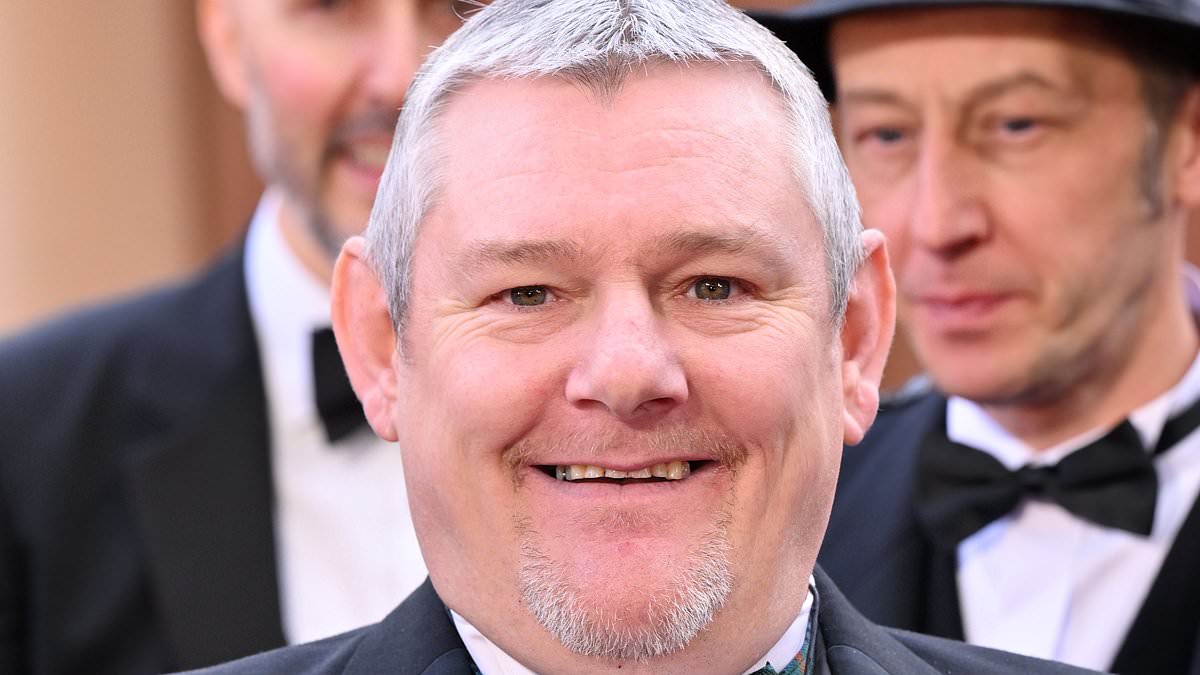
John Davidson is pictured here arriving at the BAFTA British Academy Film Awards at London’s Royal Festival Hall on the evening of Sunday 22 February 2026

The campaigner became known after featuring in an edition of the BBC documentary series QED called John’s Not Mad in 1989

He went on to become a leading advocate for the condition, which affects one in 100 children

I Swear stars Robert Aramayo (pictured in the film) as campaigner John Davidson and depicts his younger years living in Glasgow, when he was first diagnosed with Tourette’s
Davidson has suffered from a severe form of Tourette’s since the age of 12, with the condition characterised by involuntary movements or sounds known as tics.
In the 1989 documentary John’s Not Mad, cameras followed his troubled walks his Scottish Borders home town of Galashiels – including struggling to visit a library and being exiled from class due to his behaviour.
His mother is also seen calling police to complain about an officer swearing at Davidson in response to his foul language which almost had the boy arrested.
Davidson later recalled: ‘It was like every time I walked into the classroom the teacher would say, “Right John, go and pick the desk right at the back of the room facing the wall, or go and sit outside in the corridor at a desk”, or there was a cupboard in one of the classrooms and the teacher used to make me sit in there with the door shut.
‘So that I wasn’t distracting the rest of the class – and those were really hard times because I really, really felt excluded and I felt so, so alone.’
He was also shown in the programme spitting fish and chips at his mother at home, while his father was seen finding it difficult to stay at the dinner table alongside him.
Davidson has said: ‘Tourette’s is such an awful condition that most of the time I don’t want to be the centre of attention. I want to be able to walk down the street and not be noticed because I’m shouting or swearing.’
Looking back on the programme broadcast 37 years ago in the BBC’s QED series, Davidson said: ‘Back then, we knew that Tourette’s existed but it was a rare condition. There’s nothing rare about it now. Millions of people live with it.

In the 1989 documentary John’s Not Mad, John Davidson cut a sad and lonely figure as the cameras followed him around his home town of Galashiels in the Scottish Borders.
‘This film raises awareness but it also gives people the grit and determination to keep going, fight on for their kids, go to schools, go to your local MPs. We need people to stand up and listen.’
He added: ‘Not long after that first documentary was out, I realised I finally had a platform to try and change the way people with Tourette’s were viewed.
‘I knew there had to be other people out there with the condition, although we were told it was very rare. And from then I just was determined to try and make life as bearable as possible.’
The documentary was narrated by the actress Eleanor Bron, whose films include Bedazzled, Help! and Women In Love, and featured contributions from the late neurologist and writer Oliver Sachs.
Discussing the words he uses, teenage Davidson tells an interviewer in the documentary: ‘I think that I say them because I know they’re disgusting and know that’s somebody’s going to be angry about it. And when I think of that, it just makes me worse. That’s what my mum thinks as well.
‘The noises, as well – I know it’s going to be annoying somebody. So I just can’t stop myself from doing it.’
Davidson then featured in a follow-up broadcast by the BBC in 2002, called The Boy Can’t Help It, catching up with him at the age of 30.
Davidson has likened Tourette’s to ‘someone else controlling my mind’ and revealing it previously left him suicidal,
He has told of symptoms being heightened during moments of stress, noting: ‘The more you worry, the more likely it is that you should be worried.
‘It’s never a case of, “Will I embarrass myself?” – it’s a case of when, and how badly.’
One such example of being in a high stress environment occurred when he received his MBE from the late Queen in recognition of ‘his efforts to increase understanding of [Tourette’s] and helping families deal with it across the country.’
When his car was being searched by police on entry to the Palace of Holyroodhouse in Edinburgh in 2019, Davidson involuntarily yelled: ‘A bomb! I’ve got a f***ing bomb!’ – and then when meeting Elizabeth II herself, he shouted: ‘F*** the Queen!’
He later recalled to the Daily Mail: ‘It was absolutely awful. There was a military band playing and I thought some of the guys were going to choke on their instruments, they were trying so hard not to laugh.
‘But the Queen never batted an eyelid. She was just so cool and calm. She was very lovely and asked about the documentaries and congratulated me on doing so well.
‘She’s probably had that slur thrown at her before, although maybe not in her own palace.’
Having returned to his seat, he then responded to another honours recipient being announced ‘for services to water-skiing’, that he exclaimed: ‘F***ing water-skiing!’ – before excusing himself and moving away from the ceremony to decompress.

John Davidson, pictured in 2007, likens his condition to someone else controlling his mind
Davidson has struggled with his tics since childhood, developing them suddenly at the age of 10.
Tourette’s rarely appears alone, and the majority of people also have conditions like ADHD, OCD, anxiety or autism.
Despite there being a two-hour time delay on the BBC’s coverage of Sunday night’s Baftas, Davidson’s N-word slur was aired to millions tuning in on BBC1 and could still be heard on iPlayer on Monday morning.
A BBC spokesperson later said: ‘Some viewers may have heard strong and offensive language during the BAFTA Film Awards. This arose from involuntary verbal tics associated with Tourette syndrome, and as explained during the ceremony it was not intentional.
‘We apologise that this was not edited out prior to broadcast and it will now be removed from the version on BBC iPlayer.’
Davidson’s actions has divided opinion, with Django Unchained star Jamie Foxx now fuming on social media: ‘Out of all the words you could’ve said Tourette’s makes you say that. Nah he meant that s***. Unacceptable.’
Charity Tourette’s Action said it ‘deeply understands that these words can cause hurt’ but insisted they were ‘not a reflection of a person’s beliefs, intentions or character’.
The organisation said it was ‘incredibly proud’ of Mr Davidson and those involved in the film I Swear, with a spokesperson adding: ‘We also want to address the negative comments that have surfaced following John’s involuntary vocal tics during the ceremony.

John Davidson was heard yelling the N-word during a presentation by black actors Michael B. Jordan (left) and Delroy Lindo (right)
‘We deeply understand that these words can cause hurt but at the same time it is vital that the public understands a fundamental truth about Tourette syndrome, tics are involuntary. They are not a reflection of a person’s beliefs, intentions or character.’
Kirk Jones, writer and director of the film I Swear, has welcomed what he highlights as better understanding of the condition.
Jones has said: ‘In 2025 there are so many more things that you can say which are explosive in a sentence,.
‘You can walk down the street and just shout a couple of words and it could get you punched, it could get you arrested, it could get you beaten up.
‘I really hope that this film can make people think twice about giving people space, giving them time, having patience with people who aren’t exactly like you are.’