Share this @internewscast.com
IN brief
- Iran and the United States have ended talks in Geneva without a deal but with “significant progress”, according to mediators.
- More discussions are scheduled for next week in Austria.
The United States and Iran have reportedly made headway in discussions concerning Iran’s nuclear program, according to mediator Oman. However, despite several hours of dialogue on Thursday, a decisive breakthrough that might deter potential US military actions in the Middle East remains elusive.
Following the talks in Switzerland, Omani Foreign Minister Sayyid Badr Albusaidi announced that the two countries intend to continue negotiations after internal consultations. Technical-level discussions are slated to occur next week in Vienna, he shared via a post on X.
A tangible agreement between these long-standing adversaries might lower the likelihood of US President Donald Trump executing a threatened strike on Iran—a move many worry could spiral into a broader conflict. Nevertheless, no agreement was reached this week, keeping regional tensions high.
Badr Albusaidi’s optimistic remarks came after indirect conversations in Geneva between Iranian Foreign Minister Abbas Araghchi and US representatives Steve Witkoff and Jared Kushner, spanning two sessions, one in the morning and another in the afternoon.
“We have concluded the day with significant progress in the negotiations between the United States and Iran,” Albusaidi stated.
Despite this progress, many experts view these discussions as potentially the final opportunity to avoid military confrontation. However, Albusaidi refrained from offering details and did not confirm whether the parties had managed to resolve their most critical disagreements.
Describing the talks as some of the most serious that Iran has had with the US, Araghchi told Iranian state television: “We reached agreement on some issues, and there are differences regarding some other issues.”
“It was decided that the next round of negotiations will take place soon, in less than a week.”
The Iranians, he added, had clearly expressed their demand for lifting of US sanctions, which the US has long insisted will only come after deep concessions from Iran.
There was no immediate comment from the US negotiating team on the outcome of the talks. But US-based news outlet Axios quoted a senior US official as saying the Geneva negotiations were “positive”.
The discussions about the decades-long dispute over Iran’s nuclear work come as fears grow of a Middle East conflagration. Trump has repeatedly threatened action if there is no deal, and the US military has amassed its forces in waters near the Islamic Republic.
A senior Iranian official told the Reuters news agency earlier on Thursday that the US and Iran could reach a framework for a deal if the US separated “nuclear and non-nuclear issues”.
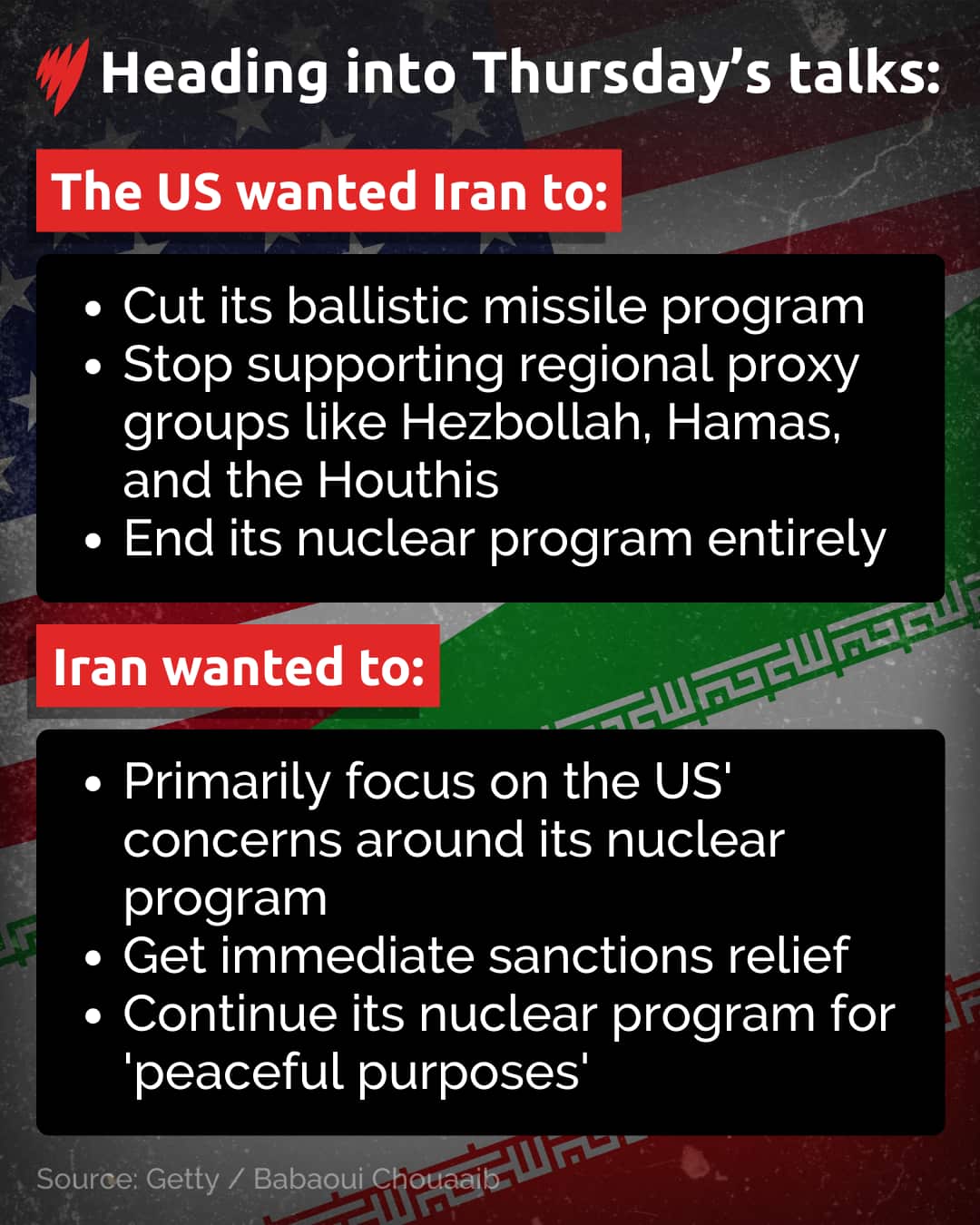
The Trump administration has insisted that Iran’s ballistic missile program and its support for armed groups in the region must be part of the negotiations.
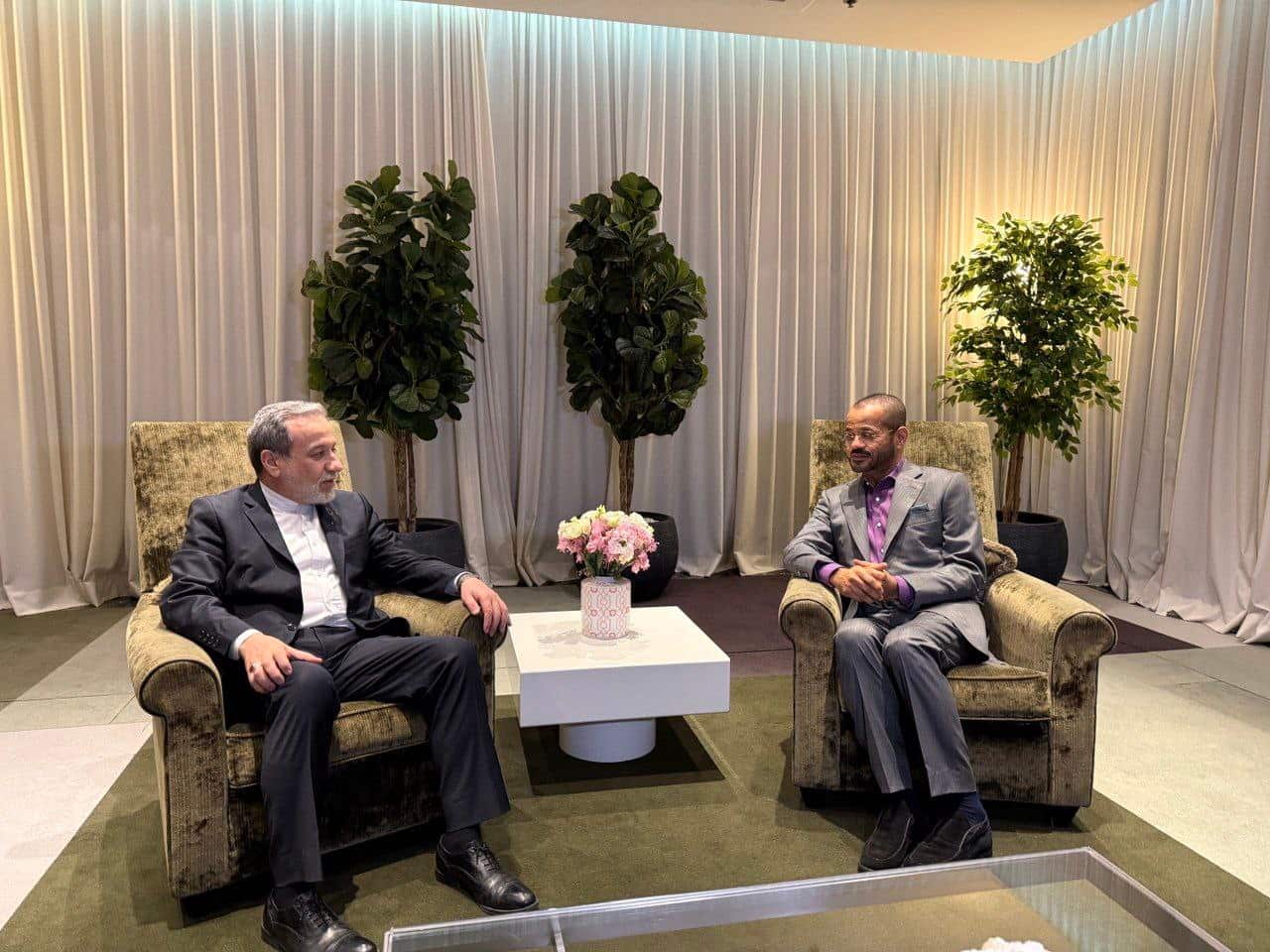
After the morning session, Badr Albusaidi said the two sides had exchanged “creative and positive ideas”.
But a senior Iranian official said at the time that some gaps still had to be narrowed.
The US, which believes Iran seeks the ability to build a nuclear bomb, wants Iran to give up all uranium enrichment, a process that makes fuel for atomic power plants but that can also yield material for a warhead.
Iran has long denied wanting a bomb and said earlier on Thursday it would show flexibility at the talks. Reuters reported on Sunday that Iran was offering undefined new concessions in return for removal of sanctions against it and recognition of its right to enrich uranium.
US secretary of state Marco Rubio said on Wednesday that Iran’s refusal to discuss its ballistic missile program was a “big problem” that would have to be addressed eventually.
The missiles were “designed solely to strike America” and pose a threat to regional stability, he said, but offered no proof to back the claim that US territory could be targeted.
On 19 February, Trump said Iran must make a deal in 10 to 15 days, warning that “really bad things” would otherwise happen.
He briefly laid out his case for a possible attack on Iran in his State of the Union speech this week, underlining that while he preferred a diplomatic solution, he wouldn’t allow Iran to obtain a nuclear weapon.
In June 2025, the US joined Israel in hitting Iranian nuclear sites and has been ramping up the pressure on Iran again since January this year, when Trump threatened to intervene over its crushing of nationwide protests in which thousands of people were killed.
Since then, Trump has deployed fighter jets and aircraft carrier strike groups in the region.
Iran responded to last summer’s strikes by firing fusillades of missiles at Israel and has threatened to retaliate fiercely if attacked again, raising fears of a wider regional conflict that has alarmed Gulf oil producers.
Within Iran, Supreme Leader Ayatollah Ali Khamenei faces the gravest crisis of his 36-year tenure, with an economy buckling under tightened sanctions and renewed protests following the major unrest and crackdown in January.
Iran’s President Masoud Pezeshkian said on Thursday that Khamenei has banned weapons of mass destruction, which “clearly means Tehran won’t develop nuclear weapons”, reiterating a religious decree issued in the early 2000s.
For the latest from SBS News, download our app and subscribe to our newsletter.