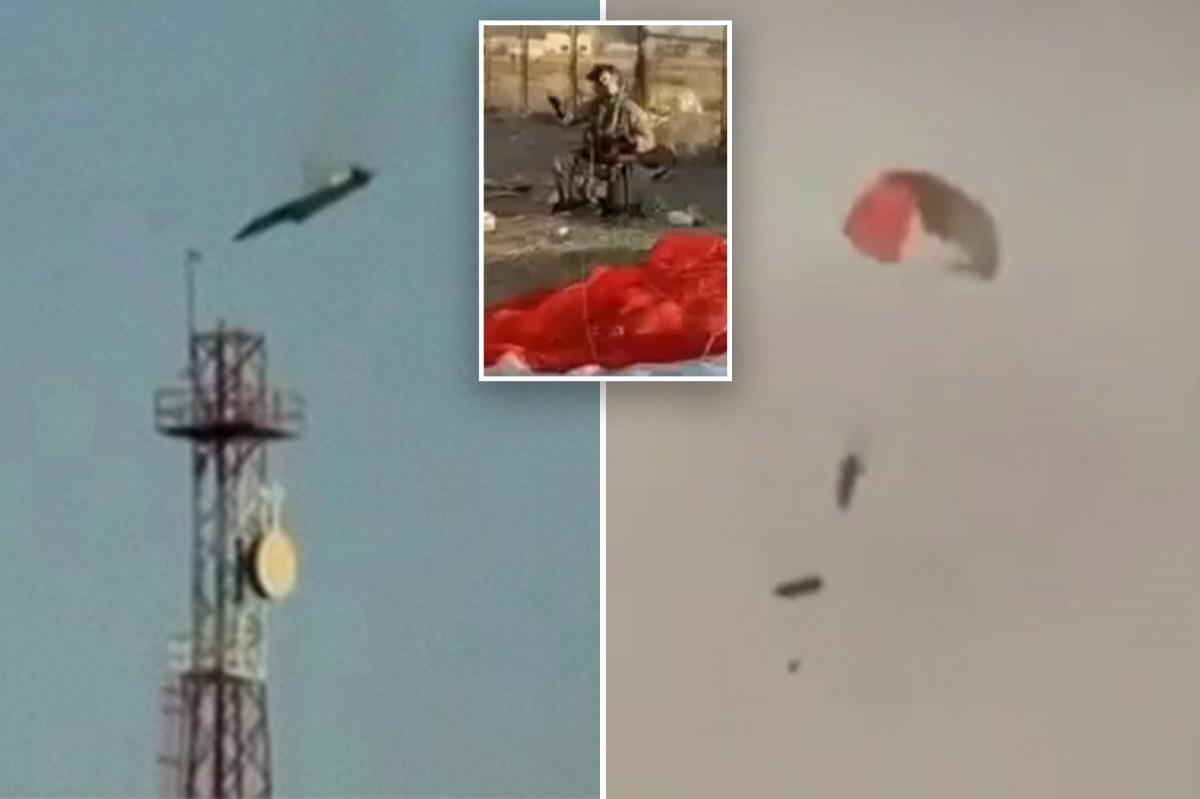


When American pilots were accidentally shot down in Kuwait, they encountered locals who eagerly offered help, but only after confirming the aviators were from the United States and not from Iran.
Kuwait has been a steadfast ally of the United States for years, with Iraq’s 1990 invasion of the country igniting the Gulf War.
To aid in situations like these, US pilots often carry “blood chits,” documents they’ve had for decades, promising a reward from the US government to anyone who assists them.
After the $31 million F-15E Strike Eagle jets were downed on Monday, images and footage rapidly surfaced showing the pilots meeting Kuwaiti locals who, at first, feared they might be Iranian forces.
Despite the potential for communication issues, the language gap didn’t hinder the locals, who aided the pilots. For years, pilots have carried multilingual documents designed to assist them in finding safety, even in hostile territories.
The concept of blood chits dates back to 1842 when the British Army used them in Afghanistan, with the US adopting the practice in 1941 for operations in China.
The blood chits went into popular use during World War II, with the program making some 42 payments for soldiers rescued by civilians during the Korean War, the New York Times reported.
Blood chits were notably reinstated during Operation Desert Storm, where an international military coalition, led by the US, helped liberate Kuwait from Iraq.
It was not clear if the Americans who were shot down during Monday’s incident were carrying blood chits with them, as their usage has been classified.
All six crew members on board the F-15E Strike Eagle jets ejected to safety, with images of their encounter with confused Kuwaitis going viral.
Although some of the encounters were tense, the crew members were rescued by the residents and taken to medical facilities, where they were all listed in stable condition.
The chaos that unfolded in Kuwait began on Monday during an Iranian attack on the American ally, which hosts more than 13,000 military personnel at several air bases and military facilities in the country.
“During active combat — that included attacks from Iranian aircraft, ballistic missiles, and drones — the U.S. Air Force fighter jets were mistakenly shot down by Kuwaiti air defenses,” US Central Command said in a statement.
Harrowing images began appearing on social media of American jets spinning out of control in the air over Kuwait as the pilots ejected before their aircraft crashed.
Kuwaiti authorities said rescue teams were quickly deployed to help the downed Americans, some of whom came face-to-face with scared locals who feared that the pilots were the same Iranians trying to bomb them.
One viral video, verified by Storyful, shows one group of Kuwaitis yelling at an American soldier who just landed on the ground, with one of the men holding a pipe in hand as he yelled at him.
The group eventually realized that the soldier was an American, not an Iranian, with the pilot rescued.
Another viral video shows how a Kuwaiti man rushed to help a female pilot who landed in the middle of a barren field, with the man thanking the US soldier for their help in repelling the Iranian attack.
Other images show a dazed pilot who appeared to be struggling to stand as Kuwaiti security officials approached him and helped him stand straight, the US Sun reported.
Another image shows one of the pilots receiving help from a group of Kuwaitis who loaded the flyer into the back of their car before driving off to safety, according to Visegrad 24.
Following the incident, Kuwaiti authorities said they were working with the US to investigate why their air defense system targeted the American jets.
“Kuwait has acknowledged this incident, and we are grateful for the efforts of the Kuwaiti defense forces and their support in this ongoing operation,” CENTCOM said.
Kuwait is listed as one of America’s major non-NATO allies, with the country maintaining strong military ties with the US following Operation Desert Storm in 1991.
The Gulf War saw American-led troops swoop into Kuwait and help liberate the country after it was invaded and annexed by Iraq.
Given its close ties with the US, Kuwait has been among Tehran’s biggest retaliatory targets, with dozens of people injured since the war began over the weekend, according to local officials.
Six American servicemembers who were stationed in Kuwait were also killed after Iran bombed the bunker they were in.