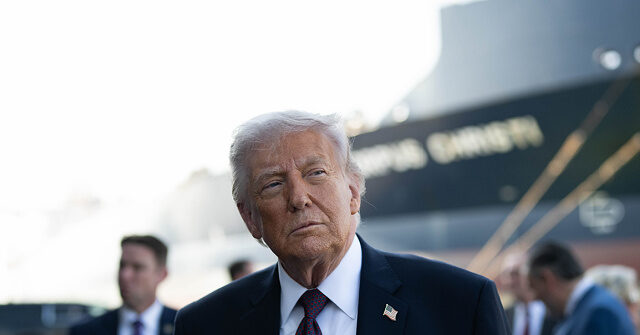

On Thursday, President Donald Trump announced an extension of the ceasefire between Israel and Lebanon for another three weeks. This development follows his direct engagement in significant peace negotiations at the White House. Trump expressed hope that these diplomatic efforts could pave the way for a lasting peace agreement, with plans to host leaders from both nations in Washington in the near future.
After meeting with senior representatives from Israel and Lebanon in the Oval Office, Trump confirmed the ceasefire extension. He stated that the United States would collaborate with Lebanon to bolster its defense against Hezbollah, a militant group backed by Iran that is central to the conflict. The ceasefire has been formally extended for an additional three weeks.
Trump described the discussions as “a great meeting” with top officials from both countries, suggesting that the extension could signify the start of significant developments. He hinted at the potential for broader regional progress through ongoing diplomatic efforts.
This meeting marked the second round of talks mediated by the U.S., following an initial session on April 14. That first meeting, the first direct engagement between the two sides in decades, resulted in a ten-day ceasefire two days later.
After the latest talks, Trump was joined in the Oval Office by senior U.S. officials and the participating envoys from Israel and Lebanon to discuss the next steps in the diplomatic process.
Secretary of State Marco Rubio credited Trump’s direct involvement with making the ceasefire extension possible. He described it as a crucial step in advancing negotiations towards a broader peace agreement. Rubio noted that the extension provides more time to work towards a permanent peace, expressing optimism that both sides will be “even closer” to achieving this goal in the coming weeks.
Secretary of State Marco Rubio said Trump’s direct involvement “made it possible” to extend the ceasefire, describing the move as creating space to advance negotiations toward a broader agreement. The extension, he said, “gives everybody time to continue to work on what’s going to be permanent peace between two countries that want to be in peace,” adding he expects the sides to be “even closer” to that goal in the coming weeks.
Vice President JD Vance called the development “a major, historic moment,” crediting Trump’s direct engagement with bringing the parties together for high-level talks at the White House.
Israeli Ambassador to the United States Yechiel Leiter struck a forward-looking tone, emphasizing that “Israel wants peace with Lebanon, and Israel wants security for its citizens,” while stressing that both sides share a common objective in confronting Hezbollah’s malign influence.
Leiter added that with Iran’s regional posture weakened, “the possibility of degrading Hezbollah … is real,” expressing hope the current diplomatic track could lead to a formal peace agreement “in the very near future.”
U.S. Ambassador to Israel Mike Huckabee framed the issue directly, stating, “The problem is not Lebanon; the problem is not Israel. The problem is Hezbollah.”
U.S. Ambassador to Lebanon Michel Issa underscored the broader significance of the moment, calling the talks “60, 70 years in the making” and describing the meeting as a potential turning point in efforts to shift the trajectory of the long-running conflict.
Lebanese Ambassador Nada Hamadeh Moawad thanked the United States for facilitating the talks, describing the meeting as a “historic moment” and expressing appreciation for Washington’s continued support.
Despite the diplomatic progress, tensions on the ground remained evident, with rockets launched from Lebanon toward northern Israel as the talks were underway, though they were intercepted without reported casualties.
Trump emphasized that Israel retains the right to defend itself, stating that any response would be carried out “carefully” and in a “surgical” manner.
He also made clear that broader regional stability would require Iran to end its support for Hezbollah, responding “that is a must” when asked whether Tehran must halt its financing of the group as part of any agreement.
Looking ahead, Trump said he expects Israeli Prime Minister Benjamin Netanyahu and Lebanese President Joseph Aoun to visit Washington “over the next couple of weeks,” potentially within the ceasefire window, as negotiations continue.
“I think there’s a very good chance of having peace,” Trump said, pointing to Hezbollah as the shared adversary driving a rare alignment between the two sides.