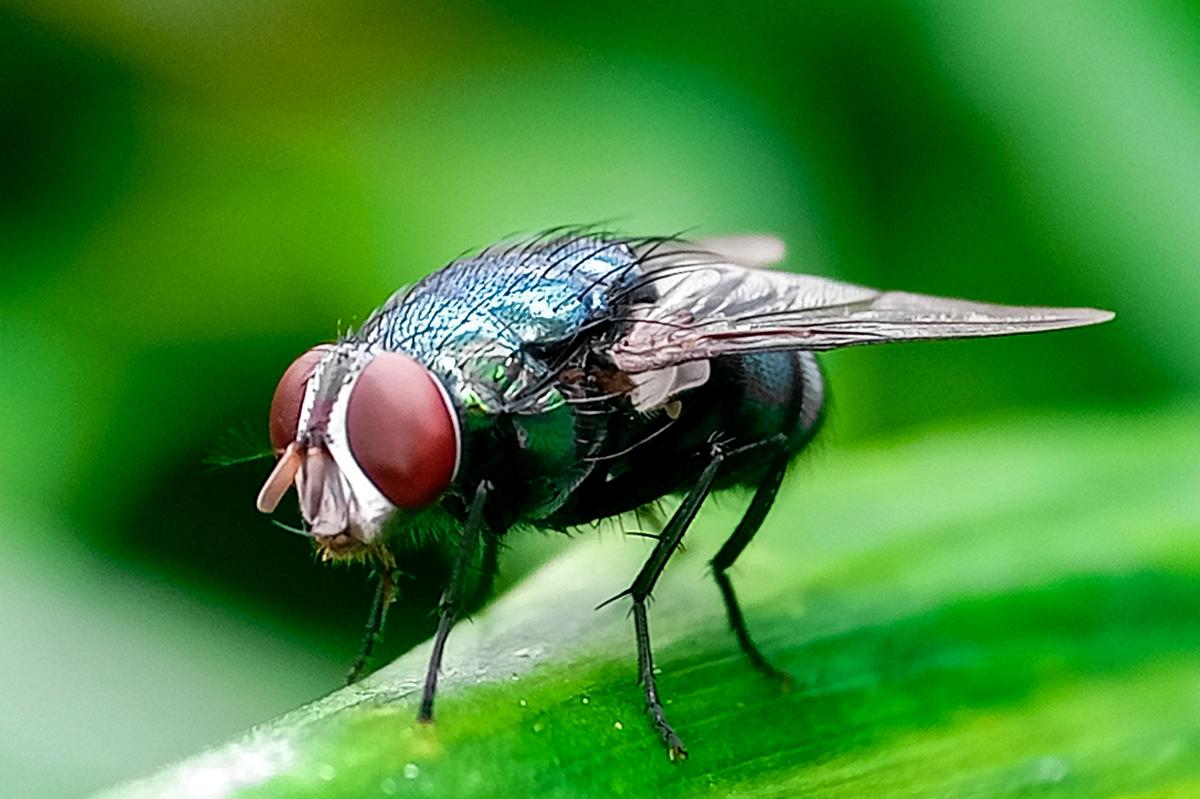


A chilling case involving a flesh-eating worm has emerged in Texas, following the recent sighting of the destructive parasitic fly near the US-Mexico border.
The United States Department of Agriculture has verified an instance of the New World screwworm in a three-week-old calf from Zala County, Texas. This confirmation came after larvae were discovered in the calf’s umbilical area, as detailed in an official statement from the agency.
A similar screwworm case was confirmed just 25 miles south of the Texas border in Coahuila State, Mexico, on Tuesday, according to a report by Reuters. In these cases, larvae invade the flesh of living animals, posing a significant threat to livestock.
In response, the USDA and Texas authorities are swiftly working to contain the spread of the parasitic fly. They have established a 20-kilometer infected zone around the affected area, where they will implement quarantines and surveillance protocols.
To further prevent the spread, officials plan to increase trapping efforts for New World screwworm flies along the border and conduct focused outreach within the local community, as stated by the USDA.
The maggots of the screwworm can infest not only livestock but also other warm-blooded animals, including pets, and in rare instances, humans. These pests typically enter through open wounds, feeding on living tissue, which can ultimately lead to death if not treated promptly.
The USDA announced on social media earlier on Wednesday that it was investigating the possible infestation in South Texas and has submitted a sample to the agency’s National Veterinary Services Laboratories in Iowa for confirmation.
“All jokes aside this is a serious matter and a time to unite and work together,” Texas Representative Don McLaughlin wrote on X before the confirmation of the case.
“If this case is confirmed I will stand lock step with every local, state and federal agency to work together and fight this horror.”
An outbreak of screwworm could cause a whopping $1.8 billion in damages to Texas’ economy alone and would likely inflate beef prices across the nation by shrinking the cattle supply, experts have said.
The US has closed its border with Mexico to cattle imports for more than a year to try to halt the parasite from reaching the states.
The screwworms do not infest meat, fruits, vegetables, or other food sources — only livestock.
Residents near the reported case should check their pets for signs of the New World screwworm. Though they rarely infest humans, people should seek immediate medical attention if they notice a suspicious lesion, officials urged.
“All models showed New World Screwworm entering the country in 2025; however, thanks to the hard work across the entire Trump administration and our industry, state, and local partners, we were able to buy time for this moment,” Dudley Hoskins, Under Secretary for Marketing and Regulatory Programs, said in a statement.
“Protecting our livestock industry is a national security issue of the utmost importance, and USDA is wasting no time in taking action,” Hoskins added.
“USDA invested heavily in the tools needed to eliminate NWS ever since cases started increasing in Central America and Mexico. The United States has defeated this pest before, and we will do it again.”
With Post Wires