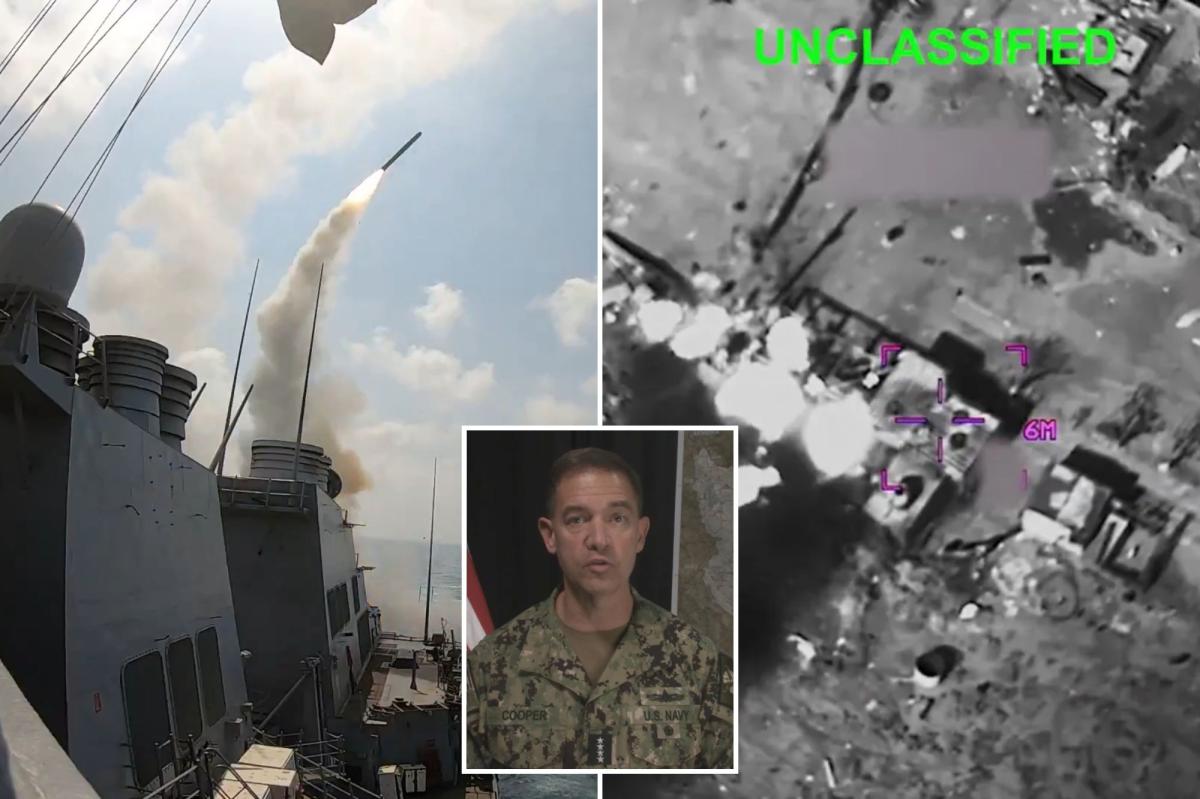


In a formidable show of military might, the United States has targeted close to 2,000 Iranian sites within the initial 100 hours of what has been dubbed Operation Epic Fury. Military leaders have pledged to persist with their comprehensive offensive, extending their reach from the depths of the ocean to the heights of space, and even into the digital realm.
Admiral Brad Cooper of the US Navy characterized this campaign as the “largest military buildup” in the Middle East in decades, involving the deployment of over 50,000 American troops. This significant mobilization underscores the gravity and scale of the operation.
In a video statement released on the platform X, Adm. Cooper explained, “Under the directives from the President of the United States and the Secretary of War, our forces in the Middle East are executing an unprecedented mission to dismantle Iran’s capacity to threaten American lives, a menace that has persisted for nearly fifty years.”
Since the commencement of Operation Epic Fury on Saturday, the US has not only dispatched a formidable ground force but also deployed 200 fighter jets, two aircraft carriers, and an unspecified number of bombers. This extensive arsenal aims to ensure a swift and decisive impact.
Adm. Cooper likened the intensity of this operation to the notorious “shock and awe” campaign of 2003. He noted that the strikes within the first 24 hours of this current operation were executed at twice the scale of previous endeavors, and the relentless 24/7 offensive continues to penetrate Iran across various domains, including maritime, aerospace, and cyber environments.
“Many of you may remember the shock and awe of the strikes of 2003. The first 24 hours of this operation were literally doubled the scale, and we continue with 24/7 strikes into Iran from seabed to space and cyberspace,” he added.
Nearly 2,000 Iranian targets were struck in the first 100 hours of the joint operation with Israel, with the US firing over 2,000 munitions.
Cooper said the US has “severely diminished” Iranian air defenses and destroyed hundreds of ballistic missiles, launchers and drones.
“In simple terms, we’re shooting all the things that can shoot at us,” he said.
American forces have utilized their various bombers, including the B-2s, B-1s and B-52s, with operations “deep inside Iran.”
At least 17 Iranian ships and a submarine were struck by the US.
“We are also sinking the Iranian Navy, the entire navy, thus far” Cooper said.
No Iranian-flagged ships have been located in the waters of the Middle East after the operation was launched.
“We will not stop, we will continue to conduct dynamic targeting operations. We’re hunting Iran’s last remaining mobile ballistic missile launchers, to eliminate what, I would characterize, is their lingering launch capabilities,” Cooper said.
An Iranian retaliatory strike killed six US service members in a drone attack on Kuwait’s Port Shuaiba on Sunday.
Capt. Cody Khork, 35, of Florida.; Sgt. 1st Class Noah Tietjens, 42, of Nebraska.; Sgt. 1st Class Nicole Amor, 39, of Minnesota; and Sgt. Declan Coady, 20, Iowa, were identified as four of the six killed in the strike.
Other Iranian attacks have targeted US bases around the Middle East and on Tuesday, the US Consulate in Dubai was hit by an Iranian drone.
“To be clear, Iran is indiscriminately targeting civilians, as they launch these missiles and drones,” Cooper said. “You’ve seen it on TV, the evidence is crystal clear and overwhelming.”
The US Central Command leader said Iran’s ability to strike the US was diminishing because the continued attacks on its military infrastructure.
“My overall operational assessment is that we are ahead of our gameplan,” Cooper said.