

When President Trump gave the green light for U.S. military strikes on Iran in partnership with Israel, a wave of criticism surged from within the Democratic Party. Prominent figures such as former Vice President Kamala Harris and California Governor Gavin Newsom were quick to label the decision as both reckless and unconstitutional. Many Democrats viewed the strikes as yet another example of American foreign policy skewing towards Israel’s interests.
In the current landscape of Democratic politics, stances that seem to favor Israel are no longer seen as neutral. Instead, they have become indicators of ideological alignment and potential political liabilities.
Recent findings from Gallup highlight how dramatically perspectives have shifted. Sympathy towards Israelis among Democrats has plummeted to a mere 17%, marking an all-time low, while a notable 65% now express support for Palestinians. An internal Democratic analysis, reported by Axios, indicated that Harris lost significant backing in the 2024 elections, partly due to the Biden administration’s handling of the situation in Gaza.
In this evolving context, backing Israel, whether in regard to Gaza or conflicts involving Iran, is no longer a given for Democrats; it has become a strategic decision. This is particularly significant for Jewish politicians within the Democratic Party, who must weigh their positions carefully. The question looms: is there still a place for Zionists within the Democratic fold?
Traditionally, a Jewish Democrat’s support for Israel was politically unremarkable. It was a stance that required neither justification nor apology, regarded as both a moral obligation and a strategic alliance. Support for Israel was seamlessly integrated into the Democratic Party’s core values, alongside championing labor rights, protecting minorities, and committing to democratic allies post-World War II.
Throughout much of the 20th century, American Jews played an active role in Democratic politics. They ascended through the ranks of the labor movement, were instrumental in founding and leading unions, and helped shape the New Deal coalition.
But today, Jewish candidates and officeholders face a chilling new reality: Has unapologetic support for the Jewish state become disqualifying inside the Democratic Party?
What is being tested now is not loyalty to a particular Israeli government; it is whether support for Israel’s legitimacy, security, and continued role as a U.S. ally is itself becoming suspect inside Democratic politics.
For a majority of American Jews, however, the U.S.-Israel relationship is not merely a foreign-policy platform. It is history, peoplehood, and essential to Jewish survival.
As hostility toward Israel hardens on the progressive left, Jewish leaders are watching the terms of belonging inside their political home quietly change.
When Scott Wiener, a progressive Democratic San Francisco state senator running for Nancy Pelosi’s congressional seat, was first asked whether Israel’s actions in Gaza constituted genocide, Wiener declined to answer. Days later, after sustained backlash, Wiener reversed course, releasing a video calling Israel’s actions genocide.
Nothing changed in the 48 hours, but Weiner surrendered moral clarity in a political environment that increasingly punishes Jews who refuse to distance themselves from Israel.
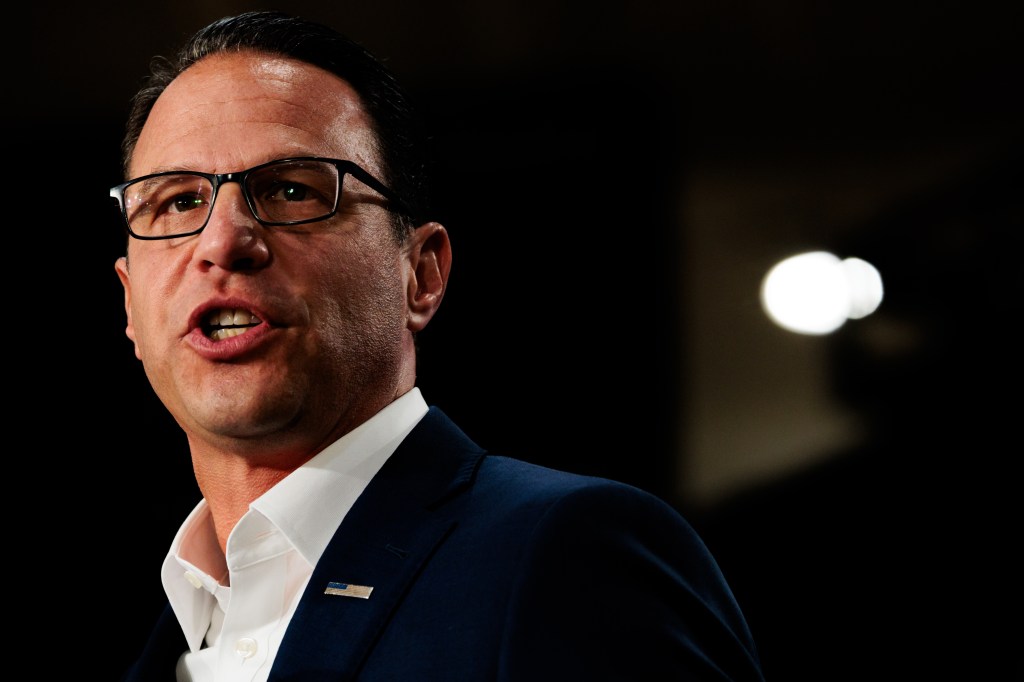
In April 2024, as encampments consumed campuses and Jewish students experienced intimidation, harassment, and physical attacks, Pennsylvania Gov. Josh Shapiro spoke plainly. Universities had failed to protect Jews, he said. That clarity followed him into the vice-presidential vetting process for Harris’ campaign. According to Shapiro’s own account, he was urged by Harris herself to soften his remarks. He refused.
He also revealed that he was asked whether he had ever served as an Israeli agent, reviving an old libel of Jewish dual loyalty. In his memoir, Shapiro wrote that he wondered whether these questions were posed only to him, the sole Jewish candidate, or to everyone.
The Democratic Party was built on the principle that no citizen should have to check their identity at the door. That principle must extend to Jewish and Zionist politicians as well.
Karsh is a six-time Emmy-nominated multimedia journalist and a board member of the Jewish Federation of Los Angeles.