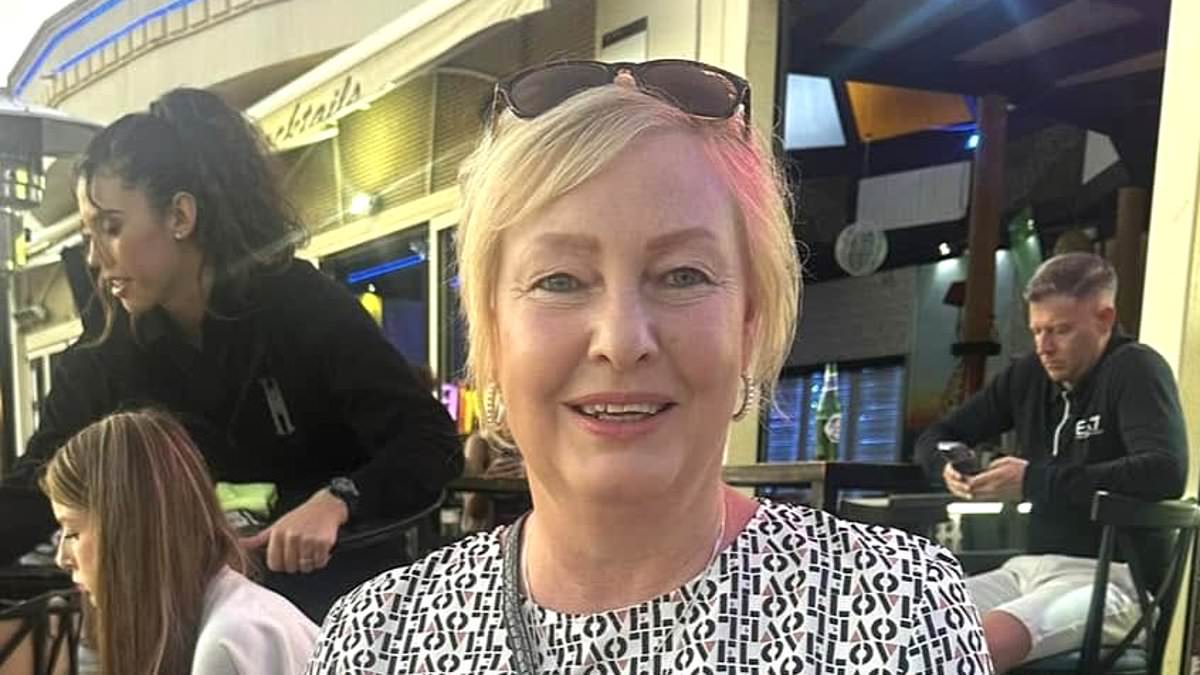

An inquest has revealed that even if medical professionals had diagnosed Yvonne Ford’s rabies infection earlier, they could not have saved her life. The 59-year-old grandmother from Barnsley contracted the disease after a stray dog scratched her in Morocco, but the late diagnosis proved futile.
Yvonne passed away four months following the incident on a Moroccan beach, where a minor scratch on her leg occurred as she accidentally startled the stray animal during a holiday with her husband, Ron, in February of the previous year.
The injury was so negligible that Yvonne simply cleaned it with a wet wipe, as detailed during the Sheffield inquest. However, by May, she began experiencing alarming symptoms, including headaches and anxiety, prompting her to seek medical attention at Barnsley Hospital by June 2.
Her condition rapidly worsened, manifesting as nausea, panic attacks, hallucinations, and hydrophobia—a classic rabies symptom that causes an irrational fear of water, leading sufferers to reject liquids.
Despite their efforts, medical staff struggled to determine the cause of her symptoms. On June 6, Yvonne was referred to a psychiatrist amid suspicions that her deteriorating health might be linked to a mental health issue.
Doctors struggled to work out what was wrong with her and on June 6 she was referred to a psychiatrist as there were concerns her conditions may be related to a mental health crisis.
Psychiatrist Dr Alexander Burns then asked about the family’s foreign travel history and was told about the dog scratch in Morocco.
He suspected she may have rabies and Mrs Ford was referred to a specialist infectious diseases team at Royal Hallamshire Hospital in Sheffield.
Sadly, her condition deteriorated further and she died on June 11.

Mrs Ford died four months after being scratched by a stray dog while on holiday with her husband in Morocco

Mrs Ford’s daughter, Robyn Thomson, and husband, Ron, attended each day of the three-day inquest to find out whether anything could have been done to prevent her death
After sitting through two days of evidence from doctors who treated Mrs Ford, an expert in infectious disease and her family, a jury concluded: ‘The rarity of the disease and unusual presentation led to a difficulty in reaching a diagnosis but this did not affect the outcome.’
Mrs Ford’s family had raised concerns that she was not ‘treated with the level of dignity and respect she deserved’ while an inpatient at Barnsley Hospital.
But infectious diseases expert Dr Katharine Cartwright, from Sheffield Teaching Hospitals, told the jury that rabies ‘has the highest mortality rate of any infection in the world’ and is 100% fatal once symptoms begin to show.
Contracting rabies can be prevented with vaccination, the inquest heard.
Mrs Ford had not received a rabies vaccine prior to travelling to Morocco.
Mrs Ford’s daughter, Robyn Thomson, told the inquest on Wednesday that it was vital the public are made aware that they must seek urgent medical advice if they are scratched or bitten by an animal abroad to prevent ‘another family from enduring this trauma, loss and devastation.’
In a statement, she added: ‘We are determined that Yvonne’s death will not be without meaning.’
Mrs Thomson said her mother was a ‘loving, active and devoted family woman’ who was a ‘fantastic wife… wonderful mother and exceptional grandmother’ to her four grandchildren.
She said that owing to her mother’s diagnosis, family and staff had to wear gloves, masks, visors and aprons when they were with visiting Mrs Ford at Sheffield Hallamshire Hospital.
Outside court following the jury’s conclusion, Mrs Ford’s son, Adam, said: ‘Despite being preventable, this deadly disease continues to claim thousands of lives.
‘As a family, we feel a deep responsibility to raise awareness about rabies in the hope that greater understanding can help prevent further tragedies.’
There have only been 26 reported cases of rabies in the UK since 1946. The last time a rabies case originated in Britain was recorded in 1922.
However, popular tourist destinations such as Egypt, Tunisia, Morocco and Turkey all continue to carry a high risk of dogs transmitting rabies to people.
A spokesman for Barnsley Hospital NHS Foundation Trust said: ‘Our thoughts are with Yvonne’s family following the sad loss of a loved family member in such unusual circumstances.
‘We welcome ongoing discussions with Yvonne’s family about all aspects of her care.’