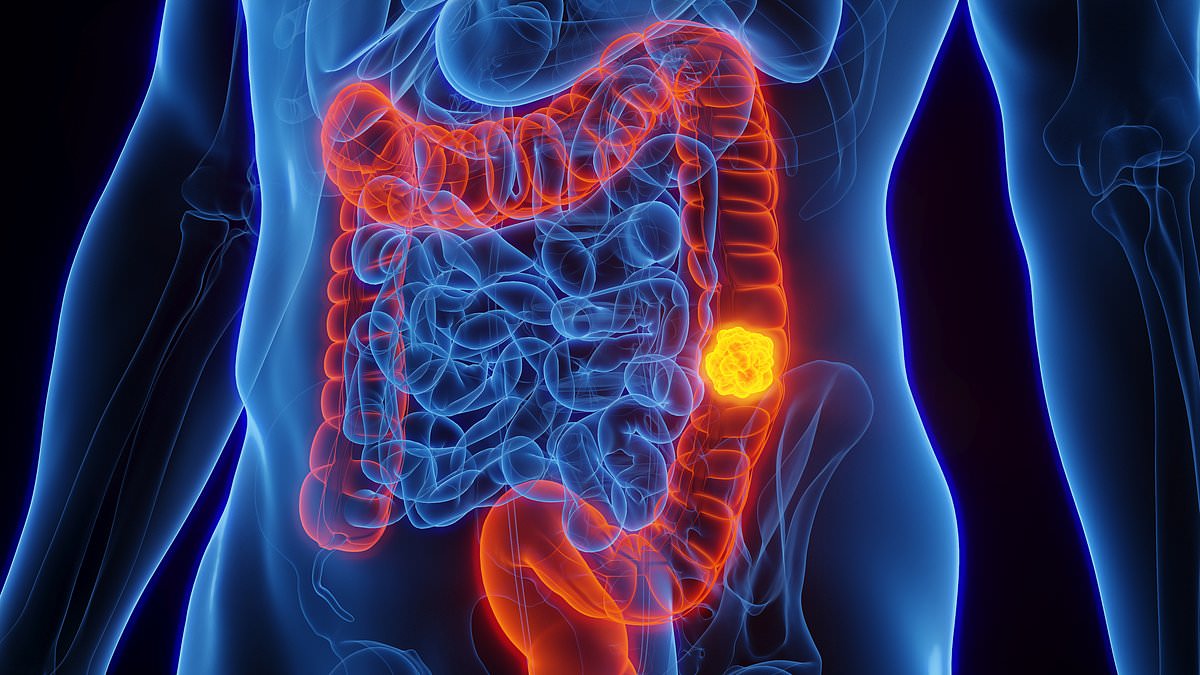

In the UK, young individuals have emerged as a particularly vulnerable demographic for bowel cancer, a condition that experts believe can be mitigated through mindful dietary choices, healthier lifestyles, and regular screenings.
Annually, approximately 44,000 individuals receive a bowel cancer diagnosis across the United Kingdom, with the disease, also referred to as colorectal cancer, claiming about 17,000 lives in that same period.
Factors such as obesity, a lack of physical activity, and excessive alcohol consumption have been well-established as increasing the likelihood of developing this type of cancer.
Traditionally, research has indicated that the probability of being diagnosed with bowel cancer escalates with advancing age.
However, recent studies reveal a troubling rise in cases among those under 50, with scientists pointing to possible culprits like ultra-processed foods, microplastics, and a puzzling surge in inflammatory bowel disease as contributing factors.
Early symptoms often include persistent changes in bowel movements, such as ongoing constipation or diarrhea, as well as signs like blood in the stool, abdominal discomfort, fatigue, and unexpected weight loss.
And with Cancer Research UK estimating that more than half of bowel cancer cases are preventable, we asked Dr Angad Dhillon, a consultant gastroenterologist, how to keep bowel cancer at bay…
He said: ‘There are many preventative measures people can take to reduce the risk.
‘Eating a diet rich in plants and fibre, maintaining a healthy weight, staying physically active, avoiding smoking, keeping alcohol within recommended limits and managing stress all play an important role in maintaining a healthy gut.’

Broadcaster, journalist and campaigner Dame Deborah James was diagnosed with bowel cancer when she was 35. She died in 2022, aged 40
Eat a balanced diet: limit your intake of red and processed meats and focus on fibre
Processed meat has come under particular scrutiny in recent years, after scientists called for a ban on supermarket bacon and ham after the chemicals used in their production were linked to more than 50,000 bowel cancer cases.
Experts suggest that eating just two rashers of bacon – or 50g a day – can increase bowel cancer risk by nearly 20 per cent.
And Dr Dhillon agrees: ‘The UK guidance of limiting red and processed meat to around 70g a day is a practical, evidence based way of reducing bowel cancer risk without asking people to avoid these foods completely.
‘But the risk increases with higher and more frequent intake, particularly of processed meat.’
Instead Dr Dhillon recommends focusing on fibre – the essential nutrient found in certain vegetables, nuts, pulses, legumes and wholegrains.
This is because fibre isn’t absorbed by the body. Instead, it keeps the gut healthy by maintaining regular bowel movements, reducing the time potential toxins spend in contact with the bowel wall.
When fibre is processed by bacteria in the gut, short-chain fatty acids are also produced which have anti-inflammatory properties that help prevent the cellular changes that can lead to cancer.
For this reason, Dr Dhillon says its best to focus on adding plenty of fibre-rich anti-inflammatory foods to your diet, which well help keep your diet balanced without turning food into something to fear.
Stay physically active and maintain a healthy weight
Sedentary lifestyles are one of the biggest drivers of disease, Dr Dhillon says.
Studies show that people who regularly spend long periods of time sitting down are more prone to developing cancer – with physical exercise helping to reduce inflammation and oxidative stress, a process in which harmful molecules damage cells.
In January, a team of researchers even found that a ten-minute workout could halt bowel cancer growth.
Scientists from Newcastle University say physical movement protect against bowel cancer progression, and that even a short burst of exercise could trigger a rapid molecular change in the blood.
And last year, experts found that exercise was ‘better than a drug’ for improving bowel cancer recovery.
But exercise is not only important for those with a bowel cancer diagnosis – it can act as a preventative measure, too. A 2023 study of 430,000 participants found that people who spend five hours or more a day watching TV are 30 per cent more likely to develop bowel cancer compared with those who limit their screen time to just an hour.

It is estiamted that 11 out of 100 bowel cancers in the UK are linked to being overweight
While experts still don’t know exactly what’s behind the current rise in bowel cancer cases, at least 11 per cent are thought to be caused by being overweight or obese.
In people with excess body fat, especially around the abdomen, the body’s tissue can become resistant to insulin, triggering the pancreas to make more, ultimately driving cancer development.
De-stress and prioritise sleep
Some studies have found that irregular sleeping patterns are linked to a greater risk of cancer over time – which experts say is likely related to immune-system health .
The body needs sleep to repair itself from the constant stress of everyday life. Not getting enough sleep is linked to higher cortisol levels, which suppresses the immune system, increasing vulnerability to things like cancer.
New research has also suggested that patents with cancer who meditate each morning and evening could reduce the chance of its spreading
Drink less and don’t smoke
In 2023, the World Health Organisation (WHO) declared that no amount of alcohol is ‘safe’ when it comes to cancer risk.
And Dr Dhillon agrees, saying that heavy alcohol consumption appears to contribute to colorectal cancer development.
When we consume alcohol, ethanol is broken down by the body into acetaldehyde – a toxic compound that has been linked to cell damage and carcinogenic mutations that can develop into cancer.
Men who drink two pints a day on average have been found to be at a nearly 40 per cent increased risk of developing colorectal cancer than men who don’t drink research has shown, underlining just how serious the risk is.
According to figures, there are more than 5,000 new cancer cases a year attributable to alcohol consumption in men, and half of those are cases of bowel cancer.
People who smoke are also more likely to develop polyps – non-cancerous growths – in the bowel, which could turn into cancer if they’re not treated.
Get tested
If you have any of the signs or symptoms of bowel cancer – including blood when you pass stool, weight loss or abdominal pains – it is always worth flagging these with your GP, Dr Dhillon says.
‘Early detection is important because it allows us to find and deal with problems before they cause harm.
‘In the bowel, many cancers do not start as cancer. They begin as polyps, which are common growths on the lining of the bowel and are often completely silent.’
He continued: ‘If these polyps are found early, they can usually be removed during a colonoscopy, the gold standard test for bowel cancer, and often at the same time they are diagnosed.’
Bowel cancer screening is now being rolled out to everyone over the age of 50 in the UK on the NHS. Everyone aged 50 to 52-years-old should received home FIT tests which are repeated every two years.
The stool sample is then sent to a lab where it is screened for small amounts of blood, which can be a sign of polyps or bowel cancer.
‘Even when cancer is present, detecting it at an early stage makes a huge difference,’ Dr Dhillon adds.
‘Early bowel cancer is far more likely to be curable, often with less extensive treatment and a much better long-term outcome.
‘By contrast, symptoms often only appear once disease is more advanced. Tests like FIT help us identify people who may need further investigation at a stage when they feel well, which is exactly when intervention is most effective.’