

Iran has reportedly begun deploying explosive-laden drone boats, cleverly disguised as wooden fishing vessels, in the strategically vital Strait of Hormuz. This development marks a significant shift towards hybrid maritime warfare in one of the globe’s most crucial shipping corridors, according to defense experts.
Cameron Chell, CEO of the drone technology firm Draganfly, offered insights into this evolving threat after the United Kingdom Maritime Trade Operations (UKMTO) confirmed an incident involving a Marshall Islands-flagged oil tanker. This vessel was targeted on March 1 by an Iranian unmanned surface vehicle north of Muscat, Oman.
The UKMTO released a threat assessment confirming the attack, stating, “UKMTO has received confirmation that the vessel was attacked by an uncrewed surface vehicle (USV), and that the crew has been evacuated to shore.”
Further reports revealed that on March 11, two additional oil tankers were similarly targeted by remote-controlled explosive boats in the Gulf. These incidents occurred amidst a backdrop of escalating tensions, as Iran increased its assaults on foreign vessels following the initiation of the U.S.’s Operation Epic Fury against the Iranian regime on February 28.
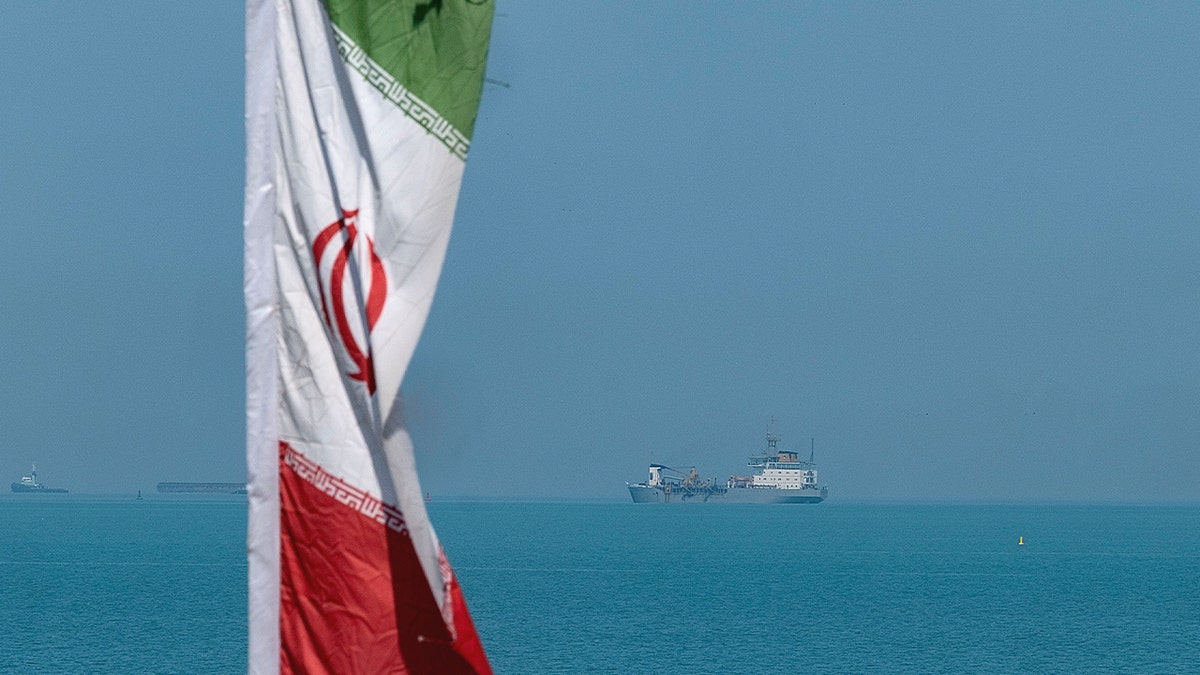
The emergence of these so-called “suicide skiffs” poses an increasing asymmetric threat within the narrow confines of the 21-mile-wide Strait of Hormuz. Chell emphasized the technological prowess underpinning these maritime attacks, underscoring the need for heightened vigilance in this vital waterway.
The use of so-called “suicide skiffs” represents a growing asymmetric threat in the narrow, 21-mile-wide Strait, Chell warned, while highlighting the technological capabilities behind these attacks.
“The Iranians probably have use of radio remote control, line of sight, frequency hopping, or encrypted radio communication between the skiffs and the Hormuz shoreline,” Chell told Fox News Digital.
“These can be jammed and tracked, but when there’s 50 of these boats, it’s hard to try to find them all along this shoreline or to find a 20-foot wooden fishing boat that is laden with explosives.
“They can have one person controlling a swarm of 10 boats,” he said before describing how there “could also be autonomous swarming where they might have 10 boats that can act with a large level of independence, because they’re pre-programmed.”
“The boats would be used to ram into targets and explode,” Chell clarified.
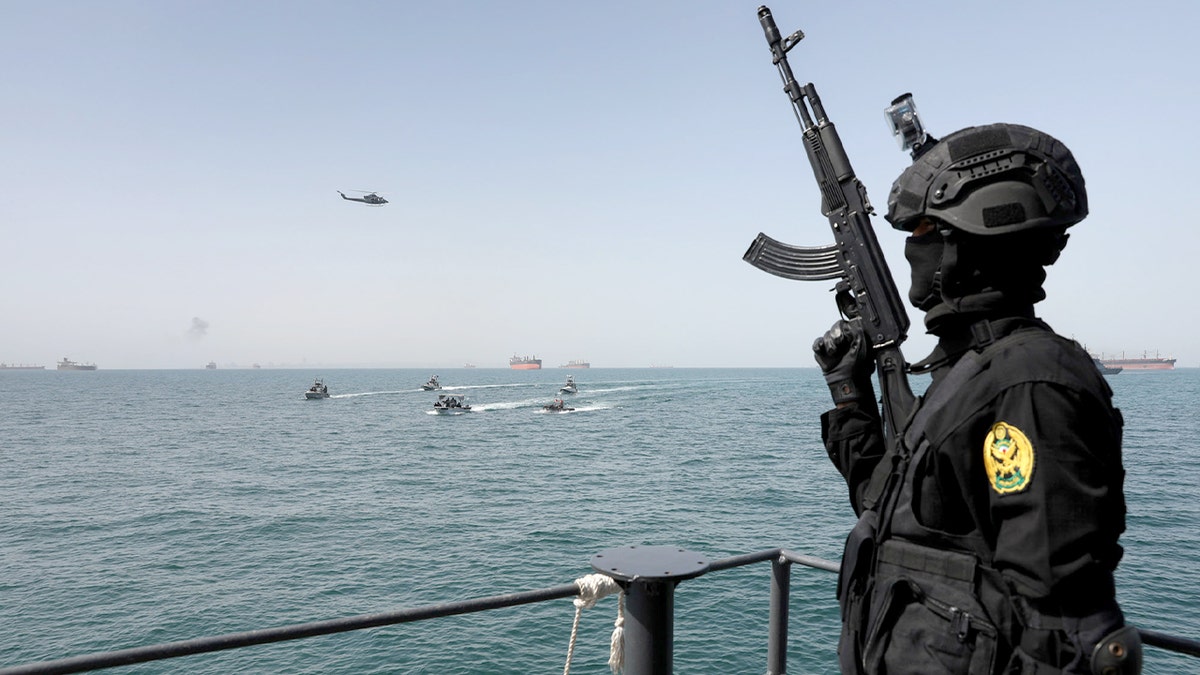
Naval units from Iran and Russia simulate the rescue of a hijacked vessel during joint drills at the Port of Bandar Abbas in Hormozgan, Iran, on Feb. 19, 2026. (Iranian Army/Handout/Anadolu via Getty Images)
Chell’s comments followed a March 12 Reuters report stating that six vessels had been attacked in the Gulf and Strait of Hormuz.
Sources said that Iran had also deployed about a dozen mines, complicating efforts to maintain any traffic through the critical waterway.
U.S. Treasury Secretary Scott Bessent told Sky News Thursday that the U.S. Navy, potentially alongside an international coalition, would escort ships when militarily feasible.
U.K. Defense Secretary John Healey also said discussions were underway with European counterparts stressing the global economic stakes tied to the strait. Chell, however, questioned current defensive readiness.
“The drone defense fleets that the U.S. Navy would not have been set up to take these suicide skiffs out,” Chell said.
“The U.S. would be using manned aircraft in order to take them out, which are fantastic at taking out a large target, but inefficient in taking out 50 boats at one time that are an average of 25 or 30 feet in size, laden with explosives.
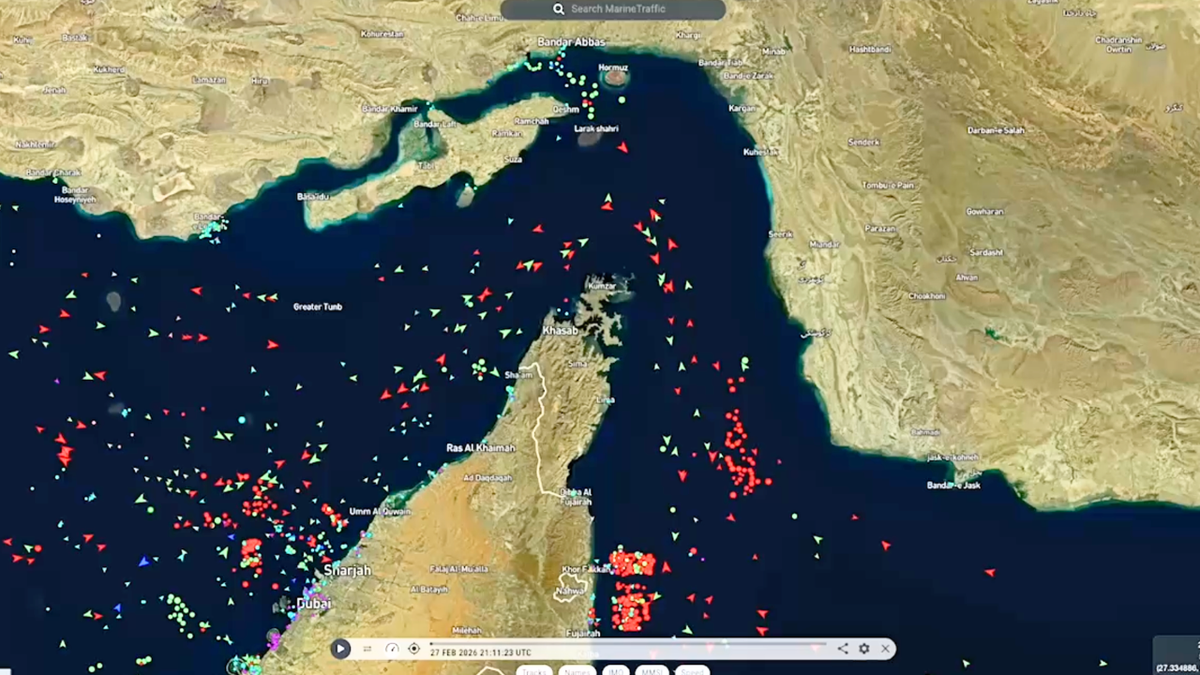
A screenshot of a marine traffic terminal showing vessels in the Strait of Hormuz on March 4, 2026. (Kpler/Marine Traffic)
“Given the Strait’s geography, it would require patrolling by many aircraft and would require pervasive surveillance over the area, a rapid response to any activity that’s happening,” he said.
As Supreme Leader Mojtaba Khamenei vowed to keep the Strait closed as leverage against the U.S. and Israel, oil prices continue to surge, with Chell also highlighting the geographic advantage Iran holds.
“The geographic layout of the Strait lends itself very well to relatively unsophisticated suicide skiffs, unmanned surface vehicles or USVs,” he warned before describing how the area “lends itself to this low-cost, automatic, asymmetric warfare.”
“The Iranians can disguise them as fishing boats and can be anywhere from 12 to 30 feet, and a boat could be of any description,” Chell said.
“These skiffs are equipped with basic remote control capabilities that may or may not be using GPS waypoints or manual remote control.”
“The skiffs are not autonomous, because the distance across the Strait is so short, and it’s very flat across this waterway, the communication signal could be carried for quite some time via a line of sight,” he added.
“They could literally have hundreds out there at a time, because they’re also so inexpensive to defend against,” Chell said.


