
In the realm of football, the journey to success is rarely straightforward, especially when fans take the reins as club owners. The last ten years have shown us that this path is fraught with challenges.
For instance, the Supporters Trust board at Wrexham faced intense scrutiny as their team’s performance lagged behind expectations. The situation changed dramatically when Hollywood stars Rob McElhenney and Ryan Reynolds stepped in. Similarly, clubs like Portsmouth and Brentford realized that maintaining competitiveness in the long run necessitated private investment, leading their trusts to sell to financially robust investors.
However, when a club has been mismanaged by owners more interested in stripping assets or feeding their egos, few custodians are better suited than the fans themselves. These devoted supporters, who truly grasp the club’s essence, are often the ones who can revive and stabilize it, as seen in the cases of Wrexham and Portsmouth.
Meanwhile, James Bord and his consortium attempted to take over a club by putting down a £4 million bid. Yet, their funding sources, linked to gambling and crypto-gambling, likely made passing the English Football League’s Owners’ and Directors’ Test (ODT) improbable, leading them to withdraw—possibly before being rejected.
Currently, American businessman David Storch has emerged as the new preferred bidder under the club’s administration. However, skepticism surrounds whether his company, AAR Corporation, can successfully navigate the ODT.

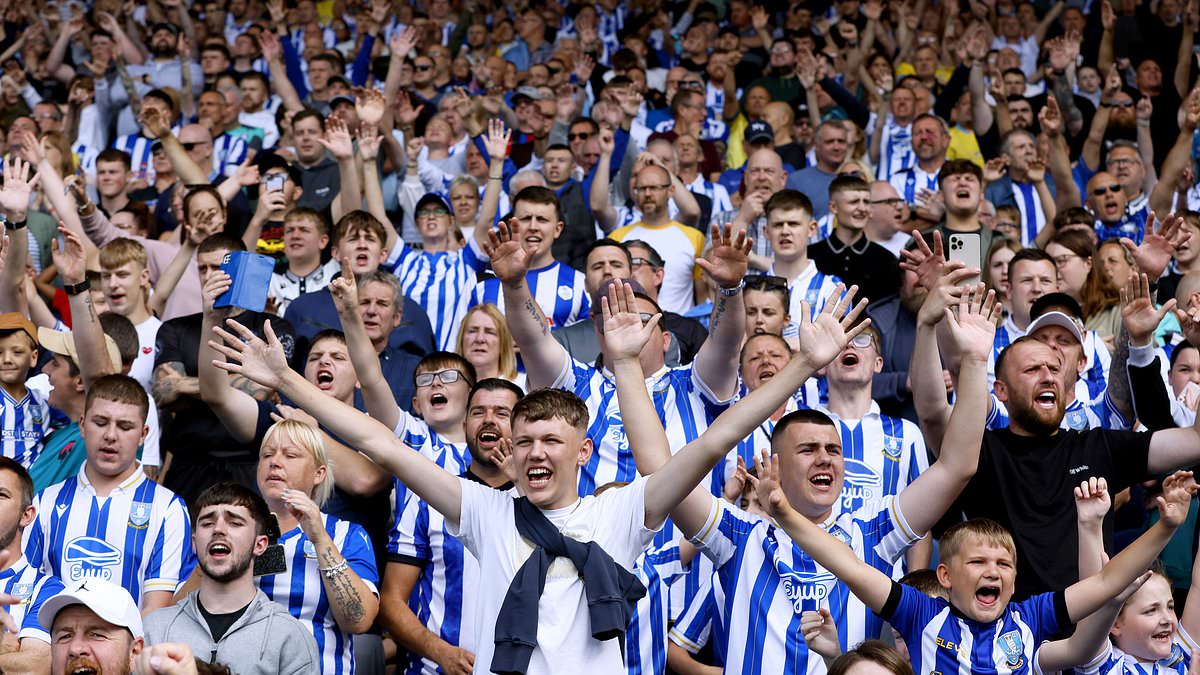
No club in Britain currently requires care quite so much as Sheffield Wednesday

Supporters who thought that the wretched tenure of Dejphon Chansiri might be the end of the nightmare were mistaken
Storch faces the challenge of elucidating to the EFL the origins of the $55 million (£41.5 million) AAR Corp paid in 2024 to resolve U.S. Department of Justice and Securities and Exchange Commission investigations. These inquiries stemmed from allegations that executives bribed government officials in Nepal and South Africa in connection with $24 million (£18.1 million) worth of aircraft and parts sales.
The EFL are going to be particularly risk-averse here, as they do not want to grant him an ownership which the new Independent Football Regulator (IFR) immediately overturns when it re-assesses the decision as part of its licensing system for all clubs. It would be no surprise whatsoever if the EFL reject Storch.
Of the known bidders for Wednesday, that would leave only Mike Ashley – waiting in the wings with a dirt-cheap bid which, just like Storch’s, would surely be too low to prevent the club beginning next season with a 15-point deduction.
With that controversialist, cut-price approach to football which made him a reviled figure for many at Newcastle United, Ashley is the last man you would want at the centre of a club in Wednesday’s predicament.
The future would look very different with Wednesday’s Supporters Trust – an organisation which has intelligently advocated for better management throughout the Chansiri debacle – at the helm.
The Trust have not indicated that they would be interested in buying the club themselves, should all other viable bids fail. When I asked them, last week, if they were considering such a move, they told me: ‘Our focus is firmly on the ongoing administration process and ensuring that the club secures a suitable new owner as quickly as possible. We expect the administrators to identify and move forward with a preferred bidder soon.’
But broadcaster and former Crystal Palace owner Simon Jordan, part of a consortium which pulled out of the running to buy Wednesday, said last week that he thinks the value of the club is less than £20m – a figure which, given the size of the fanbase, arguably the biggest outside the Premier League, would appear to be within the Supporters Trust’s reach.
With such an organisation at the reins – rather than a rapacious money-maker like Ashley – it seems possible that the EFL could use their discretion not to impose a looming 15-point penalty on Wednesday, for a failure to ensure the unsecured creditors from the Chansiri era are paid at least 25 per cent of what they are owed.

With that controversialist, cut-price approach to football which made him a reviled figure at Newcastle United, Mike Ashley is the last man you would want at Wednesday

Wednesday are one of the great British football clubs, with a tradition, a name and a fanbase which, though it seems hard to see it now, can take them back to the top
But even if Wednesday begin the next League One season with the points deduction, and find themselves relegated to League Two, it does not require much imagination to see that by starting again at the bottom, they could become a club reborn: resurgent and dominant in the fourth tier, with Hillsborough packed out again and the blue half of the Steel City getting behind its own people as they manage the rebuild.
In Jordan’s discussion of the club, he observed that it may take four or five years to recover Wednesday from the pit that Chansiri has left them in. But that within two years, he suggested, the club’s next owners could be in position to find new investment and spread the ownership base – in the same way that Wrexham’s owners have done, by selling part-shares to the New York-based Allyn family and private equity firm Apollo.
‘What you do is have it for a couple of years, do the hard yards and get it into good shape – and then you spread it out, like Wrexham have done,’ Jordan said. ‘Maybe that’s what you do with Sheffield Wednesday.’
Wednesday are one of the great British football clubs, with a tradition, a name and a fanbase which, though it seems hard to see it now, make them extremely capable of making their way back to the top.
The absence of credible takers creates an opening for those who are most innately attuned to what a journey from darkness to light really needs to look and feel like. Some journey and story it could be.


