
In brief
- The treasurer said two scenarios that have already been modelled could underestimate the cost.
- Prior to the strikes on Iran, oil had been trading at about US$71 a barrel.
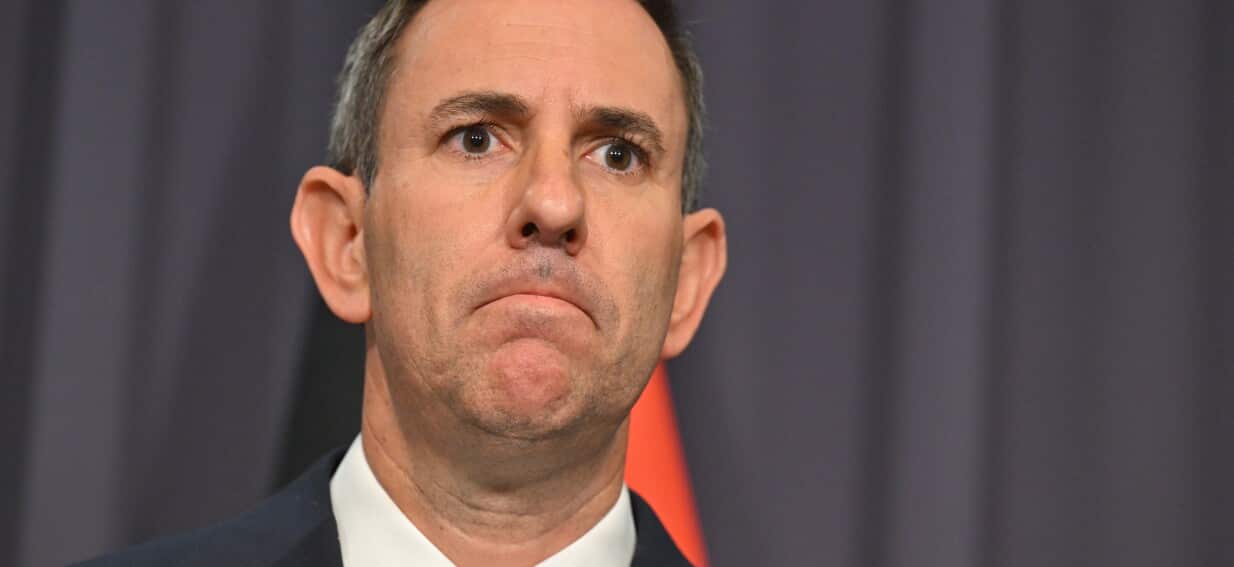
Amid escalating tensions in the Middle East, Treasurer Jim Chalmers has revealed that several potential scenarios, including a particularly severe one, are being evaluated in preparation for the upcoming May budget. He emphasized that the ongoing conflict will play a pivotal role in shaping the financial blueprint.
In a speech slated for Thursday, Chalmers will note, “We’ve already witnessed four major disruptions: the global financial crisis, a significant pandemic, a surge in global inflation, and intensifying trade tensions. This current oil shock could very well be the fifth.”
Recently, oil prices have skyrocketed following military actions by the United States and Israel against Iran, igniting a broader regional conflict. This turmoil has led to a significant increase in oil prices, exceeding $100 per barrel, sending ripples through regional markets.
Compounding the issue, the Strait of Hormuz, a critical maritime passage along Iran’s southern frontier through which approximately 20% of the world’s oil supply transits, has been effectively obstructed.
The resulting bottleneck has caused global oil prices to surge by 40 to 50 percent, consequently impacting the costs of various commodities, including fertilizer and plastics.
“This situation is exerting upward pressure on global inflation, interest rate projections, and bond yields, while international equity markets and overall sentiment have taken a hit,” Chalmers remarked, highlighting the broader economic implications.
On Tuesday, the Reserve Bank of Australia (RBA) hiked interest rates by 0.25 per cent for the second time in as many months, citing high inflation.
Chalmers, at the time, said Australia’s pre-existing inflation challenges had been exacerbated by the war.
Government modelling predicts the nation’s gross domestic product (GDP) could be 0.6 per cent lower by 2027 if the war isn’t resolved soon, Chalmers will reveal in his speech.
By 2029, in the worst-case scenario, the economy still will not have fully recovered from the aftershocks of the war, he will say.
“Around half of the impact to GDP is due to the impact of higher oil. The other half is due to broader consequences,” he will tell a gathering of business economists in Melbourne.
‘Drastic’ scenario under consideration
In his remarks previewing the budget, Chalmers said treasury had constantly been monitoring and modelling potential impacts of the war.
“We have been considering two scenarios, with a third more drastic one also under development,” he said.
In the shorter term scenario, the oil price remains at US$100 a barrel for the first half of the year and then gradually returns to pre-war prices by end of year.
Should a more prolonged scenario play out, the treasury has forecast the oil price reaching US$120 a barrel in the first half of the year, taking three years to return to its pre-war price.
Chalmers warned that both scenarios could underestimate the cost, “given where the oil price is and the uncertain duration of these events”.
Oil is currently trading at about US$100 a barrel and prior to the war, was trading at about US$71 a barrel.
A widely accepted rule of thumb is that every US$10 increase in the price of a barrel adds 10 cents to the fuel pump in Australia.
‘Very real’ prospect of higher inflation
Headline inflation is at 3.8 per cent, far higher than the RBA’s 2-3 per cent target range.
In announcing Tuesday’s rate hike, RBA governor Michele Bullock said the uncertainty brought on by the Middle East conflict was “just another reason to be a little cautious.
In treasury’s longer-term scenario, inflation would peak 1.25 per cent higher than previously expected — around 5 per cent — while in the shorter-term one it would be at least 0.75 per cent higher, putting it in the high fours in 2026.
“It means the prospect of inflation peaking in the high fours or even higher this year is very real,” he said.
The government’s immediate priority is Australia’s fuel security, Chalmers said.
“That’s why we are making more supply available for industry and households, managing our reserves responsibly and we’re helping to keep fuel flowing to the regions.”
“And we are preparing for the risk of more prolonged disruption, including through work with international partners, to help insulate more fuel-exposed industries like farming, transport and mining.”
— With the Australian Associated Press.
For the latest from SBS News, download our app and subscribe to our newsletter.


