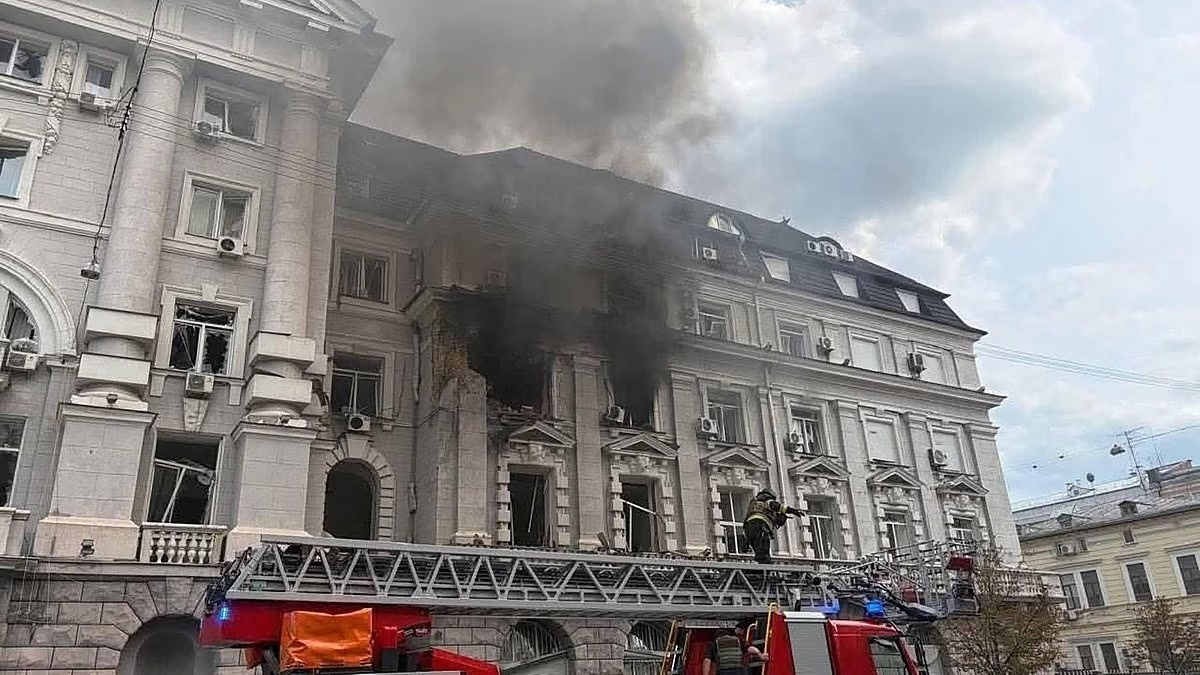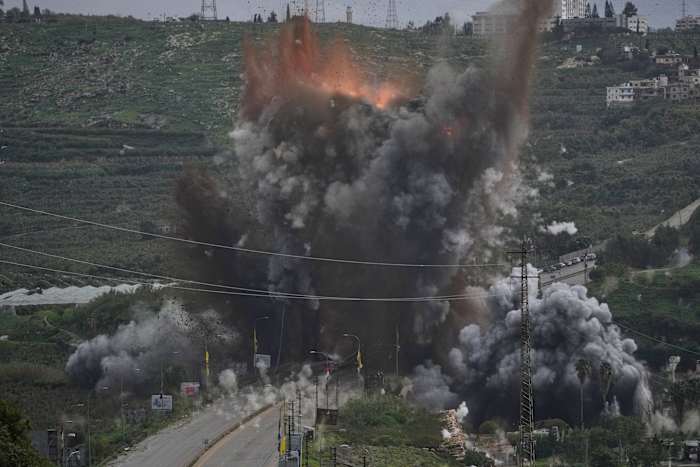

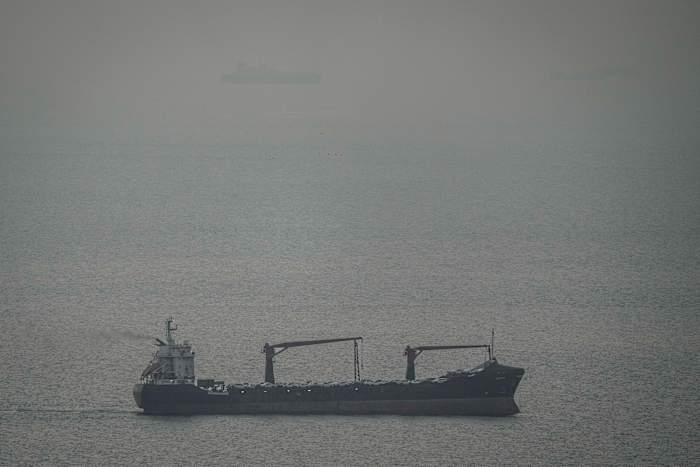
The leading officer of the U.S. military’s Central Command has stated that their campaign against Iran is progressing as planned or even ahead of schedule. This statement coincides with the Israeli military launching what they describe as an extensive assault on infrastructure linked to the Iranian regime early Monday.
Adm. Brad Cooper of the U.S. Navy shared these insights in his inaugural solo interview of the ongoing conflict with Iran International, a Farsi-language satellite broadcaster. The interview aired early Monday, as Iranian outlets reported new airstrikes in Tehran without specifying the targets.
Just a day earlier, Iran issued a warning, threatening potential attacks on American and Israeli energy and infrastructure sites. This came in response to President Donald Trump’s declaration that the U.S. would “obliterate” Iran’s power plants should Iran fail to ensure the Strait of Hormuz remains entirely open.
Facing growing pressure domestically amid rising oil prices, Trump made this assertive statement via social media while spending his weekend at his home in Florida.
The conflict has resulted in a tragic loss of life, with the death toll surpassing 1,500 in Iran, over 1,000 in Lebanon, 15 in Israel, and 13 U.S. military personnel. Additionally, there have been casualties among civilians both on land and at sea in the Gulf region. The violence has displaced millions in Lebanon and Iran.
Here are the most recent developments:
Trump reiterates his ‘peace through strength’ slogan
U.S. President Donald Trump wrote on his Truth Social website early Monday: “PEACE THROUGH STRENGTH, TO PUT IT MILDLY!!!”
US Central Command’s Cooper says Iran ‘operating in a sign of desperation’
The head of the U.S. military’s Central Command says Iran is “operating in a sign of desperation” by targeting civilian sites in the war.
In an interview with the Farsi-language satellite network Iran International aired early Monday, U.S. Navy Adm. Brad Cooper said: “They’re operating in a sign of desperation. … In the last couple of weeks, they’ve attacked civilian targets very deliberately, more than 300 times.”
Cooper also noted the slowdown in Iranian incoming fire across the Mideast as the war has entered its fourth week.
“At the beginning of the conflict, you saw large volumes in the dozens of drones and missiles,” Cooper said.
“You no longer see that. It’s all one or two at a time.”
US Central Command leader says campaign is ‘ahead or on plan’
The top commander of the U.S. military’s Central Command said the U.S. campaign against Iran is “ahead or on plan.”
U.S. Navy Adm. Brad Cooper gave his first one-on-one interview of the war to the Farsi-language satellite network Iran International, which aired it early Monday.
Cooper said Iran’s continued attacks on Gulf Arab states and the wider Mideast put civilians at risk.
He added that the U.S. and Israel were targeting missile and drone manufacturing sites as well.
“We’re also going after the manufacturing,” he said. “So it’s not just about the threat today. We’re eliminating the threat of the future, both in terms of the drones, the missiles, as well as the navy.”
Cooper also said it isn’t time for the Iranian public to come to the streets, although both Israel and the U.S. have said they hope the Iranian public would topple the country’s theocracy as a result of the strikes.
“They’re launching missiles and drones from populated areas and you need to stay inside for right now,” Cooper said. “There will be a clear signal at some point, as the president has indicated, for you to be able to come out.”
Latest reports of live fire
1. An Indian national living in the United Arab Emirates was hurt by falling shrapnel after the interception of a ballistic missile over an industrial area near Al Dhafra Air Base in Abu Dhabi, authorities said Monday.
2. Saudi Arabia’s Defense Ministry said Monday it intercepted a ballistic missile targeting the kingdom’s capital, Riyadh, while another struck an “uninhabited area.”
3. The United Arab Emirates said its air defenses were working to intercept incoming missiles from Iran early Monday, without elaborating.
4. Both Bahrain and Kuwait sounded missile alerts early Monday over incoming Iranian fire, though it wasn’t clear if there was any immediate damage from the barrages.
Copyright 2026 The Associated Press. All rights reserved. This material may not be published, broadcast, rewritten or redistributed without permission.