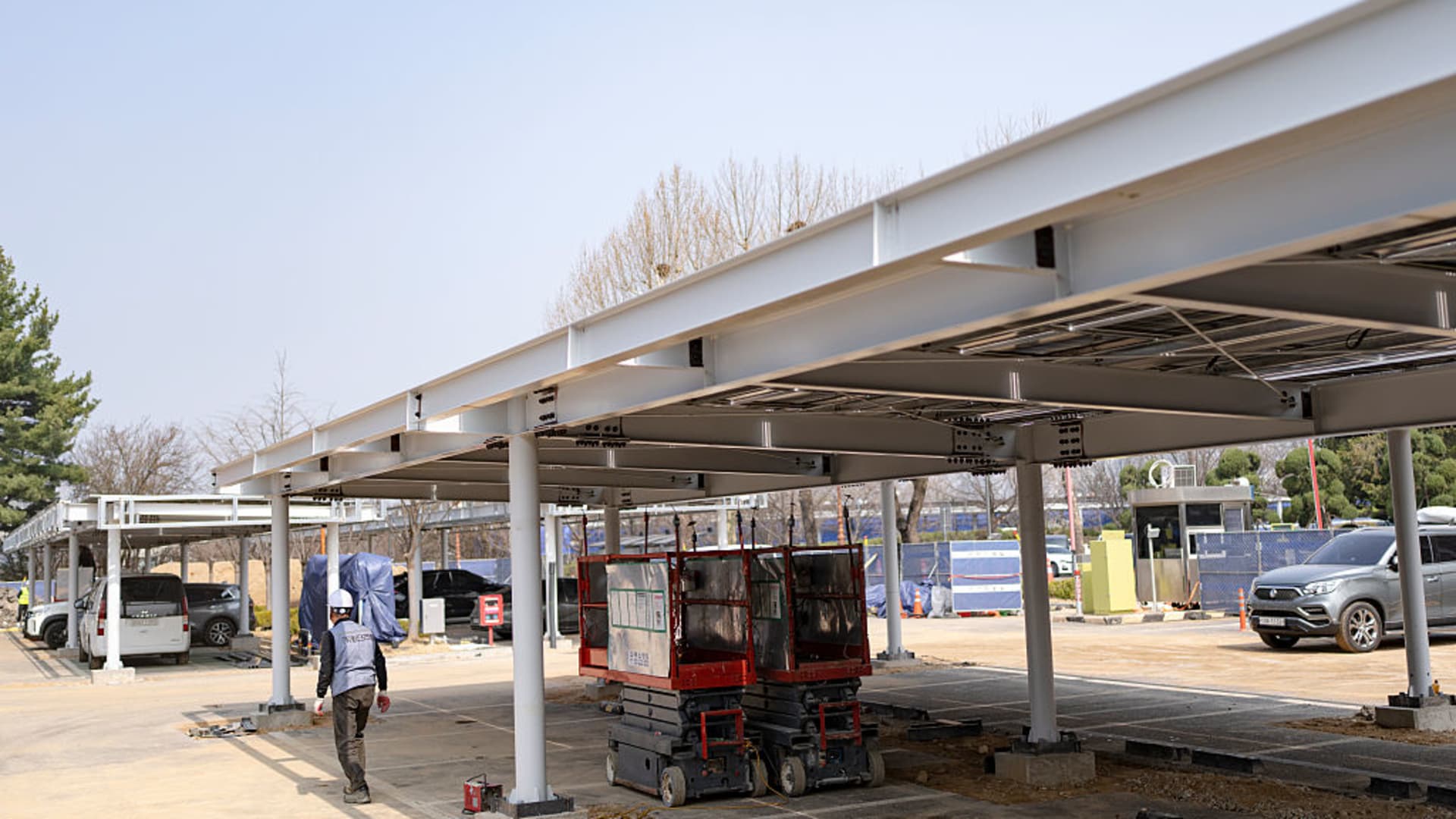

On March 26, 2026, workers were busy setting up solar power systems at a public parking facility located within the National Assembly grounds in Yeouido, Seoul.
Image Credit: Nurphoto | Getty Images
In response to soaring energy costs exacerbated by the ongoing conflict in the Middle East, South Korea unveiled a significant supplementary budget on Tuesday. This package, amounting to 26.2 trillion won (approximately $17.1 billion), is designed to alleviate financial pressures on both households and industries.
A substantial portion of the budget, around 10.1 trillion won, is specifically allocated to mitigate the impact of high oil prices. The budget document, translated via Google from Korean, also highlights additional support for exporters and increased grants for local governments.
Park Hong-geun, the Minister of Planning and Budget, emphasized the urgency of the situation, stating, “Swift fiscal intervention is crucial to relieve the immediate hardships faced by our citizens and to sustain the momentum of economic recovery that the current administration has diligently nurtured.”
Recent military actions by the U.S. and Israel against Iran on February 28 have driven crude oil prices higher, leading to a supply shortage that has heavily impacted Asian economies reliant on Middle Eastern imports.
South Korea, Asia’s fourth-largest economy, imports 94% of its energy, according to a 2024 report from the Korea Energy Statistics Information Systems, and almost 72% of its crude oil comes from the Middle East.
At the heart of the 10.1 trillion won package is a 5 trillion won tranche for a petroleum price cap, which was announced by President Lee Jae Myung on March 9.
Seoul will also hand out a higher refunds for public transportation passes nationwide. The country will allocate 4.8 trillion won for consumer vouchers of between 100,000 won to 600,000 won per person, for the bottom 70% of the earners, depending on income and region.
Other measures in the relief package include fuel subsidies for farmers and fishermen, as well as for small-scale cargo ship operators.
About 9.7 trillion won will be used to boost grants for local governments.
This budget will be funded by tax revenue from the boom in chip exports and the stock market rally, Park said.
South Korean media reported the bill has been submitted to the National Assembly, and is expected to be supported by the opposition People Power Party. It is expected to be passed by April 10.