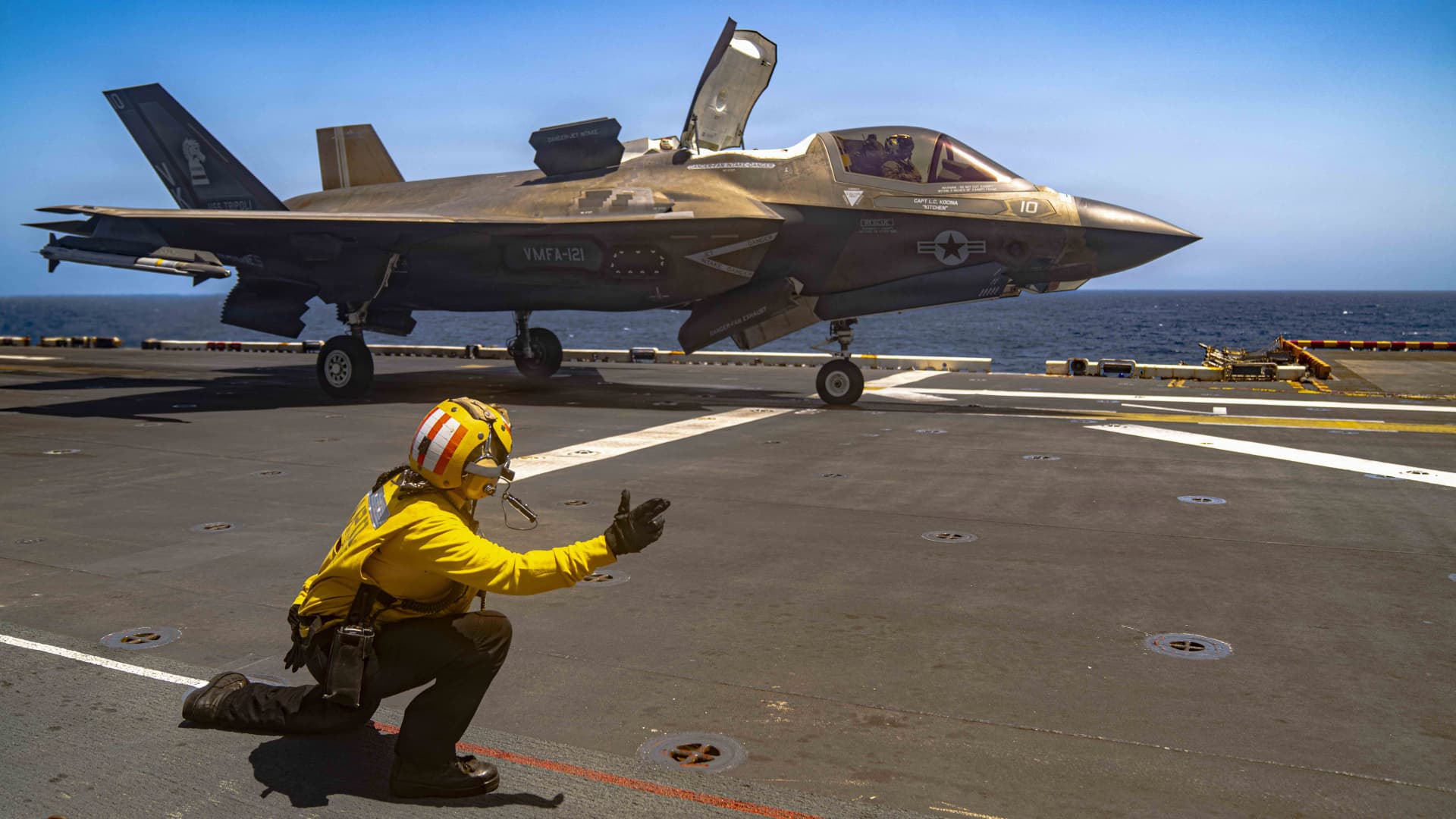

An F-35B Lightning II, from Marine Fighter Attack Squadron 121, roared off the flight deck of the America-class amphibious assault ship USS Tripoli on May 13, 2026. This operation is part of the squadron’s ongoing maritime exercises.
Photo credit: U.S. Navy
In a decisive move early Tuesday local time, U.S. forces launched “self-defense” strikes in southern Iran. According to the U.S. Central Command, these military actions were necessary to “safeguard our troops from threats posed by Iranian forces.”
CENTCOM spokesperson Tim Hawkins revealed that the strikes targeted missile launch sites and Iranian vessels involved in laying mines.
“While adhering to the current ceasefire, U.S. Central Command remains committed to protecting our forces with measured restraint,” Hawkins emphasized.
These strikes occurred even as U.S. President Donald Trump commented on ongoing negotiations with Iran. On Monday, he remarked that discussions were “progressing well.” However, he cautioned that the outcome must be “a Great Deal for everyone,” or he would revert “Back to the Battlefront with more force than ever before.”
U.S. Secretary of State Marco Rubio, who is in India, said that the Strait of Hormuz has to be open, “one way or the other,” referring to U.S. action against Iran, Reuters reported. He added that the deal with Iran could take a few days. Fox News, citing senior U.S. officials on Monday said that the Iran deal was “95% there.”
This is not the first instance of military action since a ceasefire was reached between Washington and Tehran on April 8. Later that month, U.S. marines seized the Touska, an Iranian cargo ship, and in May, both sides traded fire in the Strait of Hormuz, with each side claiming the other initiated the attack.
In a separate Truth Social post, the U.S. president said Iran’s stockpile of enriched uranium will be “immediately turned over to the United States to be brought home and destroyed,” destroyed in Iran or “at another acceptable location.”
Trump also urged Arab nations to sign the Abraham Accords, which would normalize their relations with Israel. However, Pakistan roundly rejected the proposal, with a source telling Reuters that the two issues were “not interlinked and cannot be made so.”
Oil prices were mixed Tuesday morning, with U.S. West Texas Intermediate futures down about 5% at $91.87 per barrel, but international benchmark Brent was up 2.14% at $98.2.
Chen Lanhee, partner at advisory firm Brunswick, told CNBC’s “Squawk Box Asia” that a majority of the American public wants the war to be over.
“It doesn’t matter what Iran does or doesn’t have, it doesn’t matter what the contours of the deal are. They just want the war over to bring petrol or gas prices down,” Chen said.


