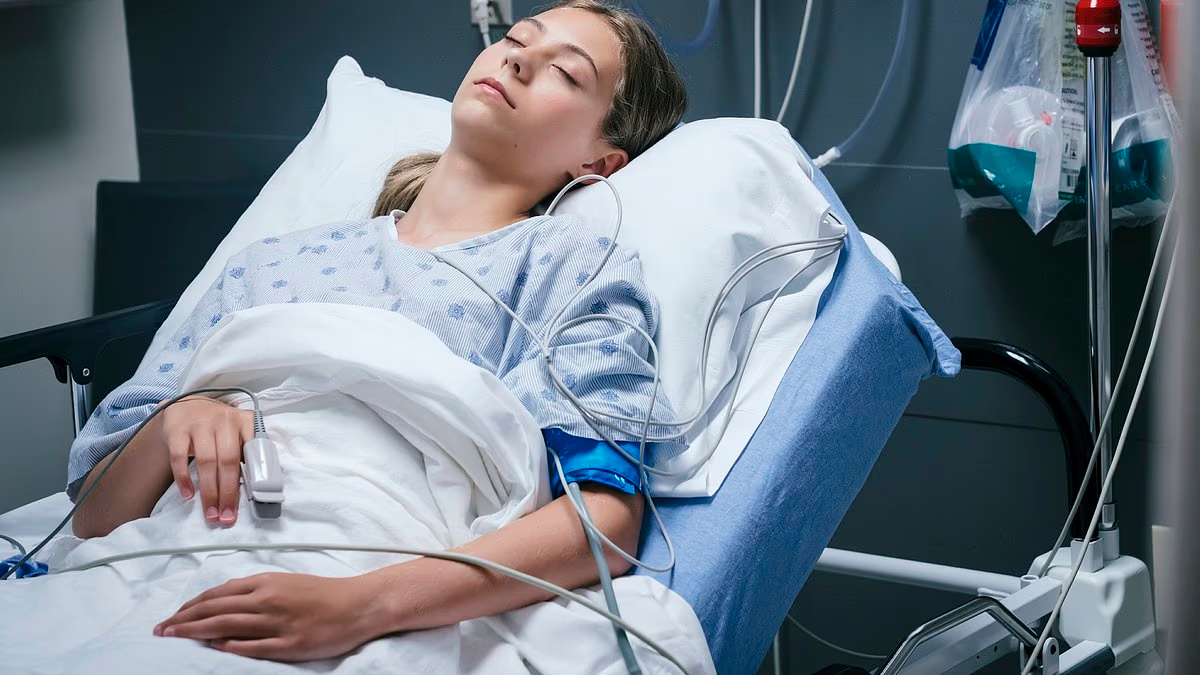


Drivers must inform the DVLA about conditions that could affect their driving (Image: GETTY)
New data has revealed the DVLA refused to renew or revoked 32,944 drivers’ licences over a four-year period due to eyesight-related health conditions. The figures, obtained through a Freedom of Information request by Marshall Motor Group, disclosed the action taken by the DVLA after being notified of drivers with visual impairments, as the Government prepares to strengthen regulations surrounding eyesight tests, particularly for elderly motorists.
Recent statistics indicate that over a span of four years, the DVLA either refused to renew or withdrew 32,944 drivers’ licenses due to eyesight-related health issues. These insights, obtained by Marshall Motor Group through a Freedom of Information request, highlight the DVLA’s response to being informed about drivers with vision impairments. This comes as the Government considers tightening regulations on eyesight assessments, especially for older drivers.
Nevertheless, vision impairments aren’t the sole issues that can pose challenges for drivers. Failing to report certain medical conditions to the DVLA could lead to a fine of up to £1,000, and may also invalidate your insurance if an accident occurs.
The DVLA provides a comprehensive list of ‘notifiable’ conditions, which require drivers to promptly inform the agency upon diagnosis. This list includes nearly 200 medical conditions, with the DVLA emphasizing seven that are particularly common.
Further reading: DVLA revokes 33,000 licenses due to health issues
Diabetes
Further reading: DVLA could ban drivers using common medications
Diabetes affects millions in the UK, but for most, it doesn’t interfere with their driving privileges unless it leads to complications like hypoglycemia that affect driving capabilities.
Syncope
Drivers who experience blackouts, fainting or loss of consciousness may be required to notify the DVLA. You can also consult your GP to determine whether your condition could affect your ability to drive.
Heart conditions
A range of cardiac conditions can impact your driving and must be declared to the DVLA. These include arrhythmias, heart failure, vascular dementia, having a pacemaker or implantable cardioverter defibrillator and strokes or transient ischaemic attacks.
Sleepiness
Any condition that results in excessive daytime drowsiness must be reported to the DVLA, as it can seriously impair your driving ability. This includes narcolepsy, cataplexy or obstructive sleep apnoea syndrome.
The DVLA guidance warns: “You must not drive until you’re free from excessive sleepiness or until your symptoms are under control and you’re strictly following any necessary treatment.”
Epilepsy
If you have suffered epileptic seizures or blackouts while awake, your licence may be revoked, though you can reapply once you have remained seizure-free for a period of time, subject to your individual circumstances.
If seizures have only occurred during sleep, or you do not lose consciousness during episodes, the DVLA will advise whether you remain eligible for a licence. However, you must refrain from driving until an official decision has been reached.
Strokes
Following a stroke, you must cease driving for a minimum of one month and can only resume once your doctor or healthcare professional has given you clearance. If you’ve made a full recovery from a stroke, you may not need to notify the DVLA.
However, if you continue to experience symptoms such as weakness in your limbs, problems with your vision, or required brain surgery during treatment, you must inform the department.
Eye conditions
You must tell the DVLA about these conditions:
- Blepharospasm
- Diabetic retinopathy (with laser treatment)
- Diplopia (double vision)
- Glaucoma
- Nyctalopia (night blindness)
- Retinitis pigmentosa
If you report a medical condition that affects your vision, DVLA may refer you for an eyesight test with their contracted optician. You do not have to pay for the test.
After informing the DVLA of any ‘notifable’ condition, it will decide if you must:
- Get a new licence
- Get a medical driving licence which has a shorter expiration period
- Have an adapted vehicle
- Stop driving and give up your licence