
Share this @internewscast.com
In Brief
- Iran’s plans to charge tolls in the Strait of Hormuz would breach a core principal of international maritime trade.
- Transport Minister Catherine King said the government would be “very concerned” about any toll on the strait.
Iran’s proposal to levy charges on vessels passing through the Strait of Hormuz has sparked controversy, as experts argue it contravenes fundamental tenets of international maritime law and is unprecedented in recent history.
President Donald Trump announced on social media that he instructed the Navy to “identify and intercept any ship in international waters that has paid Iran’s toll. No vessel involved in this unlawful fee will be guaranteed safe passage.” He hinted at collaboration with other countries, though he did not specify which ones.
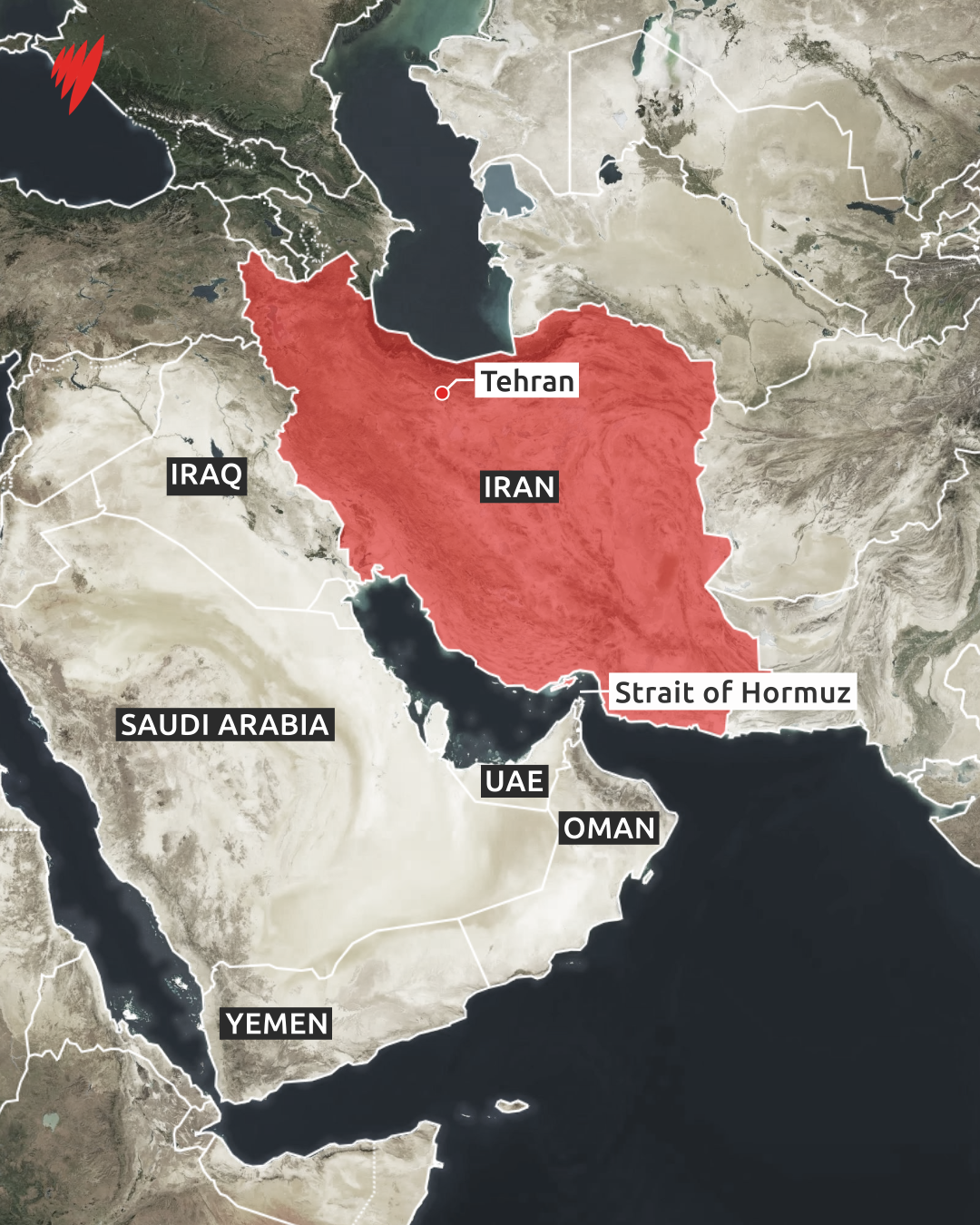
During peaceful times, the strait is a critical conduit for nearly 20% of the world’s oil supply. However, following US and Israeli strikes on February 28, Iran’s de facto blockade of the passage has led to significant international oil shortages and disruptions in global commerce.
As tensions ease with a tentative ceasefire, Iran insists that any enduring peace agreement must permit it to impose fees on vessels traversing the strait. This demand is part of its strategy to leverage the vital maritime route in its ongoing conflict with Israel and the United States.
Iran’s 10-point plan to conclude the conflict includes a clause that would enable both Iran and Oman, which is situated across the strait, to collect fees from passing ships, according to a regional official who spoke to the Associated Press recently.
The funds generated from these charges would be directed toward reconstruction efforts, as stated by the official.
Many countries, including Australia, have opposed such a move.
“We’d be very concerned about it,” Transport Minister Catherine King said of a potential toll system on ABC’s Insiders on Sunday.
“It’s not something I think Australian communities would be very happy with, not something the Australian government would be very happy with, and I don’t think the global community would either.”
“It’s really important that we do have free navigation of the seas, that’s a principle of international maritime law.”
The United Nations International Maritime Organisation said introducing such a measure would “set a dangerous precedent” and there is “no international agreement where tolls can be introduced for transiting international straits”.
What are Iran’s rights to charge for transit through to strait, and has it ever been done before?
What international maritime law says
Charging tolls in the strait would breach a core principle of international maritime trade: freedom of peaceful navigation.
The United Nations’ Convention on the Law of the Sea (UNCLOS), in force since 1994, guarantees the right of transit passage through international straits.
The Strait of Hormuz is classified as an international strait. While parts of it fall within the territorial waters of Iran and Oman, ships retain the right of passage.
Even in territorial waters, UNCLOS provides for “innocent passage”, allowing vessels to move through unimpeded so long as they do not threaten the coastal state or engage in activities like fishing, serious pollution or research.
“You cannot legally impose a toll,” Australian National University international law expert Donald Rothwell told SBS News.
“And we say that it cannot do that because, under the Law of the Sea, a country like Iran, which borders the strait, cannot what’s called, ‘hamper’, transit passage.”
“The key word there is ‘hamper.’ That word has been universally understood as one that prohibits the imposition of a toll.”
Is there precedent for charging a toll?
There is no precedent in modern history for unilaterally charging vessels to transit a strait, according to shipping industry officials.
Iran has reportedly demanded, in some cases, multi-million dollar fees for transit through the strait, in addition to compliance with a verification procedure governed by the Islamic Revolutionary Guards Corps.
Tankers in the Gulf received a radio broadcast message warning on Wednesday that they would be targeted with military strikes if they attempted passage without approval from Iranian authorities, the shipping journal Lloyd’s List reported.
“Should you start to see a trend that reduces freedom of navigation … it would fundamentally change the way we think about maritime trade,” said Jennifer Parker, an adjunct professor at the University of Western Sydney’s Defence and Security Institute, and former naval officer with experience in the Middle East.
What other waterways impose tolls?
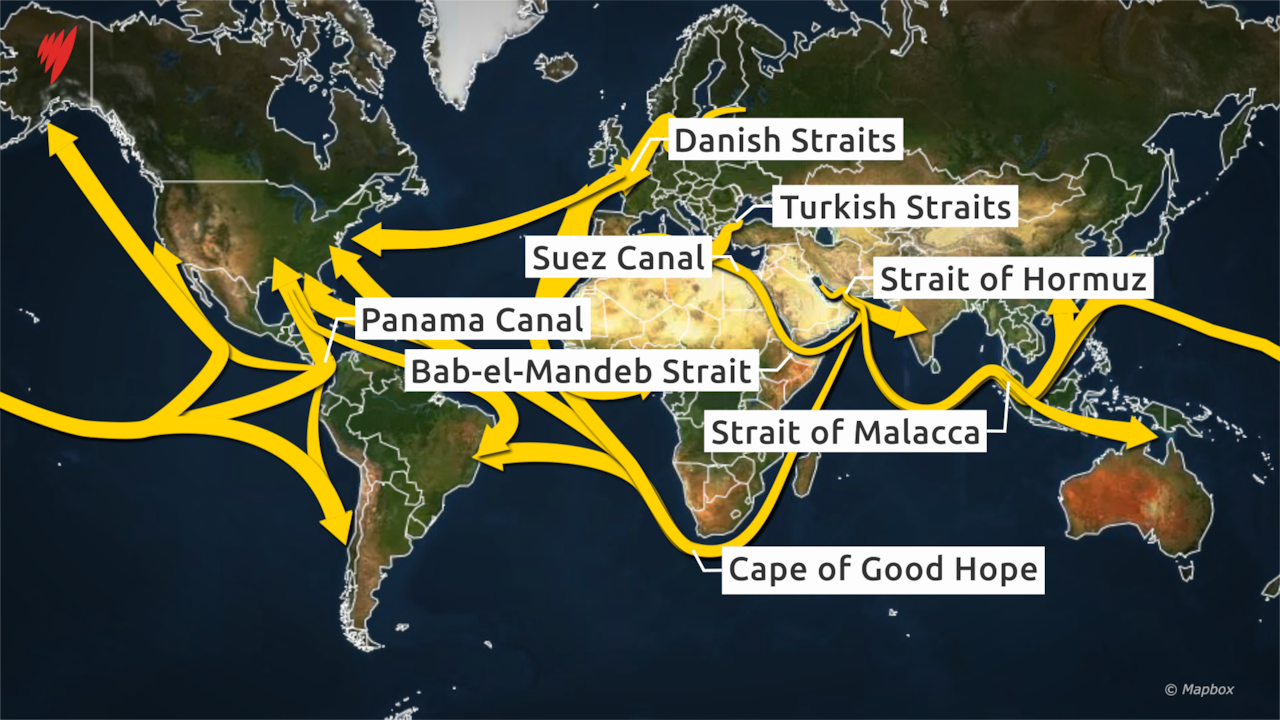
The Strait of Hormuz is not the only maritime corridor to have become a recurring flashpoint on the international stage.
Freedom of navigation has become a subject of concern in both the South China Sea and the Taiwan Strait, where attempts to assert control over transit — rather than impose tolls — have driven tensions.
Less controversially, Egypt and Panama charge fees for ships to pass through the Suez and Panama canals.
Those waterways were dug, rather than occurring naturally, and are treated differently to international straits.
Australia requires certain vessels transiting the Torres Strait, an international waterway, to pay for a licensed coastal pilot who guides ships through shallow, hazardous waters and sensitive marine environments.
The International Maritime Organisation has endorsed this regime as a safety and environmental protection measure.
Could Iran do it anyway?
It could try.
After the US and Israel launched war against Iran, it laid mines in the Strait of Hormuz and threatened traffic with air strikes.
A small number of vessels have been able to pass through, and there have been reports that some vessels from friendly nations were allowed to transit after paying tolls.
“Most shipping companies will refuse to do that because of the precedent that you would set around the world. It would not be in their interest to do so,” said Parker.
The imposition of an ongoing toll would almost certainly trigger international backlash.
Last week, Greek Prime Minister Kyriakos Mitsotakis said the international community would not be willing to accept such a measure, describing it as “completely unacceptable”.
The United Arab Emirates has said the waterway “cannot be held hostage by any country” and free navigation must be part of any settlement of the war.
Qatar’s foreign ministry said all countries in the region have the right to use the Strait freely and any discussions about future financial mechanisms should wait until after it is reopened.
What can the international community do?
The first method would be diplomatic conversation, Parker said. Should that fail, economic pressure could be applied.
“The international community could look at sanctions on Iran,” she said.
Iran has been subject to international sanctions for decades, however, and has demonstrated resilience to those pressures.
Should those efforts fail, the third step would be to eliminate Iran’s ability to target ships, Parker suggested.
“Certainly, their geography allows them to physically dominate that strait,” Parker said.
A military effort to keep the strait open could require a major operation along a mountainous coastline against Iranian forces capable of striking vessels from far inland.
Peace talks between the US and Iran ended without a deal on Sunday. Despite a ceasefire, and US demands for a reopening of the strait as a key condition, only a few ships have crossed the shipping lane.
The US military said on Sunday that two of its destroyers had transited the strait as part of a plan to start removing mines, while Iran’s state media denied that any US ships had passed through.
Iran’s Tasnim news agency said the waterway remained among the main points of “serious disagreement” in talks between Iranian and US delegations in Islamabad.
— With additional reporting by Reuters news agency
For the latest from SBS News, download our app and subscribe to our newsletter.