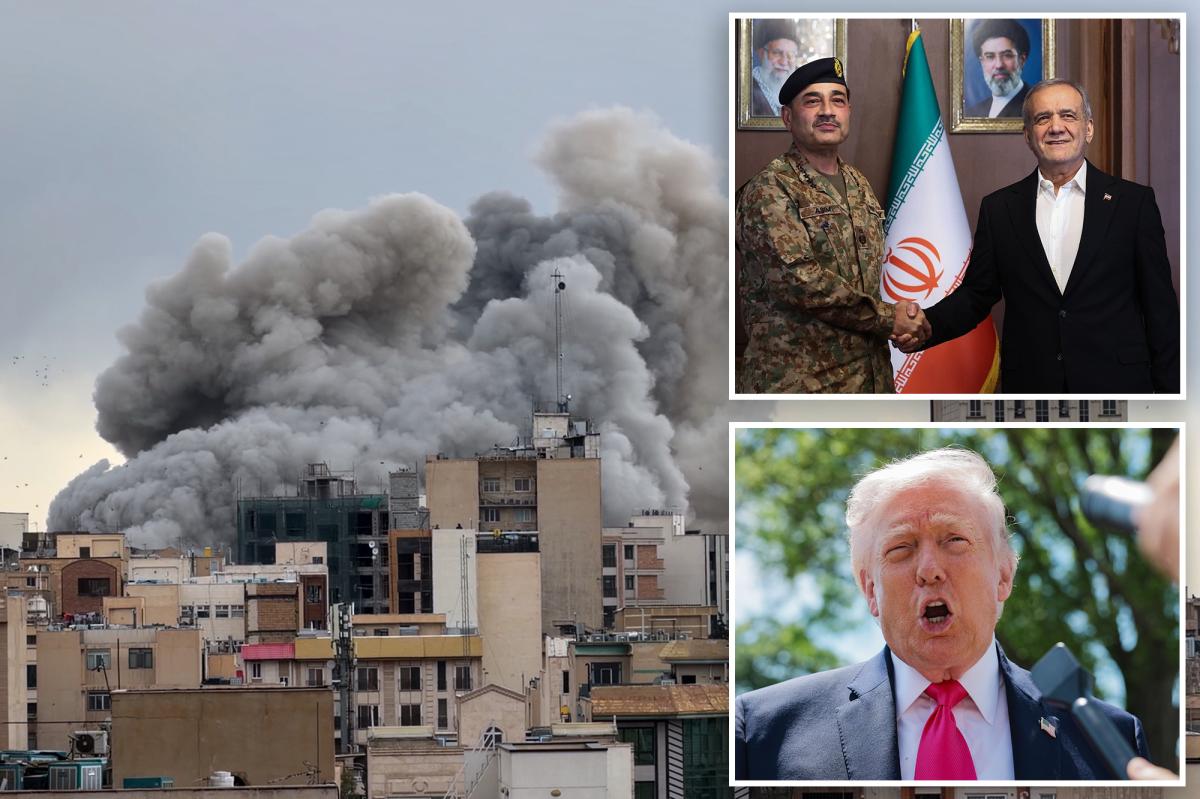


WASHINGTON – On Thursday, President Trump expressed optimism about the possibility of reaching a peace agreement with Iran in the near future. This development follows Iran’s acceptance of two significant conditions set by the White House. Trump even suggested he might personally visit Pakistan to finalize the deal.
“Preventing Iran from acquiring a nuclear weapon is crucial, and they have agreed to that,” Trump remarked to reporters while departing the White House for a brief trip to the western states.
“Iran has accepted this condition, and they have done so emphatically,” he added.
Furthermore, Trump asserted that Iran had agreed to return “the nuclear dust hidden deep underground,” referencing the approximately 970 pounds of enriched uranium located beneath three Iranian nuclear facilities, which were impacted by U.S. military strikes in June 2025.
The Post has yet to verify the specifics regarding Iran’s commitment to relinquish its enriched uranium, including the terms and the intended recipient of the material.
Nevertheless, the president maintained that Iran’s leadership is now open to negotiations and actions they previously resisted just two months earlier.
“Something’s going to happen, very positive,” he added. “We’re moving very fast. It could happen pretty quickly.”
Trump, in an exclusive interview with The Post Tuesday, predicted talks would resume in Pakistan this weekend.
Islamabad officials are engaged in a round of shuttle diplomacy, travelling to Iran and other countries in the Middle East to help make discussions happen.
Pakistani Field Marshal Asim Munir went to Tehran on Wednesday and Prime Minister Shehbaz Sharif is on a four-day tour to Saudi Arabia, Qatar and Turkey, to garner support for a deal.
“I might go,” Trump suggested Thursday. “Pakistan has been great. They’ve been so good.”
With the war in its seventh week, both sides are coming under economic pressure while the cost of gas has skyrocketed around the world. US forces have assassinated Iran’s supreme leader and other senior officials, along with hitting 13,000 targets — including more than 150 Iranian ships.
An initial round of talks in Pakistan last weekend failed to produce a deal after more than 20 hours of discussion, with Vice President JD Vance leading the US side.
On Sunday, Trump announced an American military blockade of the critical Strait of Hormuz, which is the key waterway by which Iran distributes its oil and brings in needed cargo.
Officials believed closing the strait would increase economic pressure on Iran and motivate them to come back to the bargaining table.
The move turned into an economic game of chicken, with Iran suffering from food shortages and rampant inflation while global oil prices rose above $100 a barrel and US gas prices topped $4.12 for a gallon of regular fuel.
Trump predicted an end to all that, saying the final deal with Tehran will result in “free oil and free Hormuz Strait.”
He also argued the cost of gas was actually lower than predicted.
“If you look at the oil and you look at the price we’re paying, it’s about half what people thought it would be if you did what I had to do,” he claimed.
“I think we have a very successful negotiation going on right now, and I think if it happens it’ll be announced fairly soon and it will give us free oil and free Hormuz Strait. Everything will be nice and I think your oil price will go down lower than it was before.”
Trump also did not rule out extending the two-week cease-fire between the US and Iran, which expires April 22.