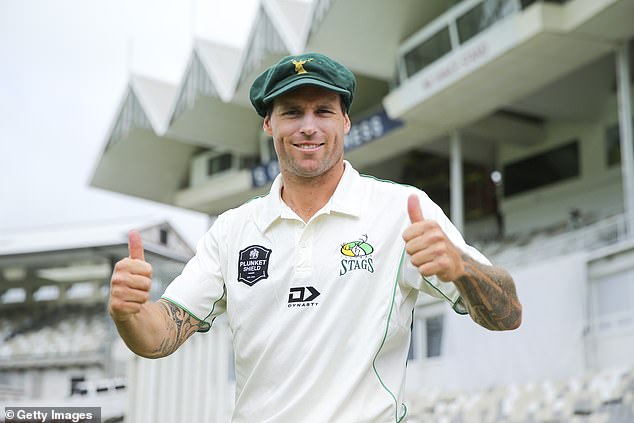

Doug Bracewell, a former cricketer for New Zealand, has been given a two-year suspension from cricket after testing positive for cocaine during an English County Championship match. This penalty comes even though he has already retired from professional cricket.
The 35-year-old all-rounder was found to have used the drug following a positive test result on September 25, 2025. This test took place during a match between Essex and Somerset in Chelmsford. Bracewell later confessed to consuming cocaine after the first day’s play and continuing into the early hours of the second day.
In that match, Bracewell opened the bowling for Essex on the first day and successfully took two wickets, contributing to Somerset’s score of 339-6. Although he did not bat during the match, Essex secured a victory by seven wickets.
The Cricket Regulator was informed of the test result in November, and on December 8, Bracewell admitted to using cocaine. Shortly afterward, on December 28, Bracewell made the decision to retire from professional cricket.
Despite his retirement, the former Black Caps player has been subjected to a two-year ban. This suspension has been backdated to November 24, 2025, the date when his provisional suspension began, and will last until November 23, 2027.
Despite stepping away from the game, the former Black Caps player was still issued with a two-year suspension, backdated to November 24, 2025, the date of his provisional ban, and running through to November 23, 2027.

Former New Zealand all-rounder admitted using cocaine after day one of Essex match before returning positive drug test

Bracewell opened bowling and took two wickets before later admitting cocaine use between days of Championship fixture
Bracewell has accepted the sanction.
‘Essex can confirm that Doug Bracewell failed a routine drugs test in September 2025,’ the county said in a statement.
‘The club supports the Cricket Regulator’s decision to impose a period of ineligibility of two years. All employees are required to meet the highest standards of professional conduct.
‘While the club does not condone Bracewell’s behaviour, we are committed to supporting him through rehabilitation in line with our policies and procedures.’
The latest ban follows a previous drugs violation in 2024, when Bracewell tested positive for cocaine after a domestic Twenty20 match in New Zealand.
In that case, he had produced a standout performance, taking 2-21, claiming two catches and scoring 30 from just 11 balls to earn man-of-the-match honours.
He was initially facing a three-month suspension, but this was reduced to one month after completing a treatment programme, with authorities ruling the substance had been taken out of competition and not for performance enhancement.
Sport Integrity Commission chief executive Rebecca Rolls warned at the time that athletes must act as role models.

Essex confirmed failed drugs test and backed regulator decision while committing to supporting Bracewell through rehabilitation process
‘Athletes have a responsibility to set a positive example, especially for the tamariki and rangatahi who look up to them,’ she said.
‘Recreational drugs, including cocaine, are illegal and can pose a real threat to the health and safety of athletes and their teammates.’
New Zealand Cricket chief executive Scott Weenink also expressed frustration over the incident, stating that Bracewell had ‘let himself down’ but had accepted responsibility for his actions.
Bracewell played 69 matches for New Zealand across all formats, including 28 Tests, 21 one-day internationals and 20 T20 internationals.
He remains part of a well-known cricketing family, with uncle John Bracewell a former New Zealand international and coach, while cousin Michael Bracewell is a current Black Caps player.
One of the defining moments of his career came in 2011, when he produced a match-winning spell of 6-40 in Hobart to help New Zealand defeat Australia by seven runs — the nation’s only Test victory on Australian soil since 1985.
Essex confirmed the club would not face any punishment over the failed test.


