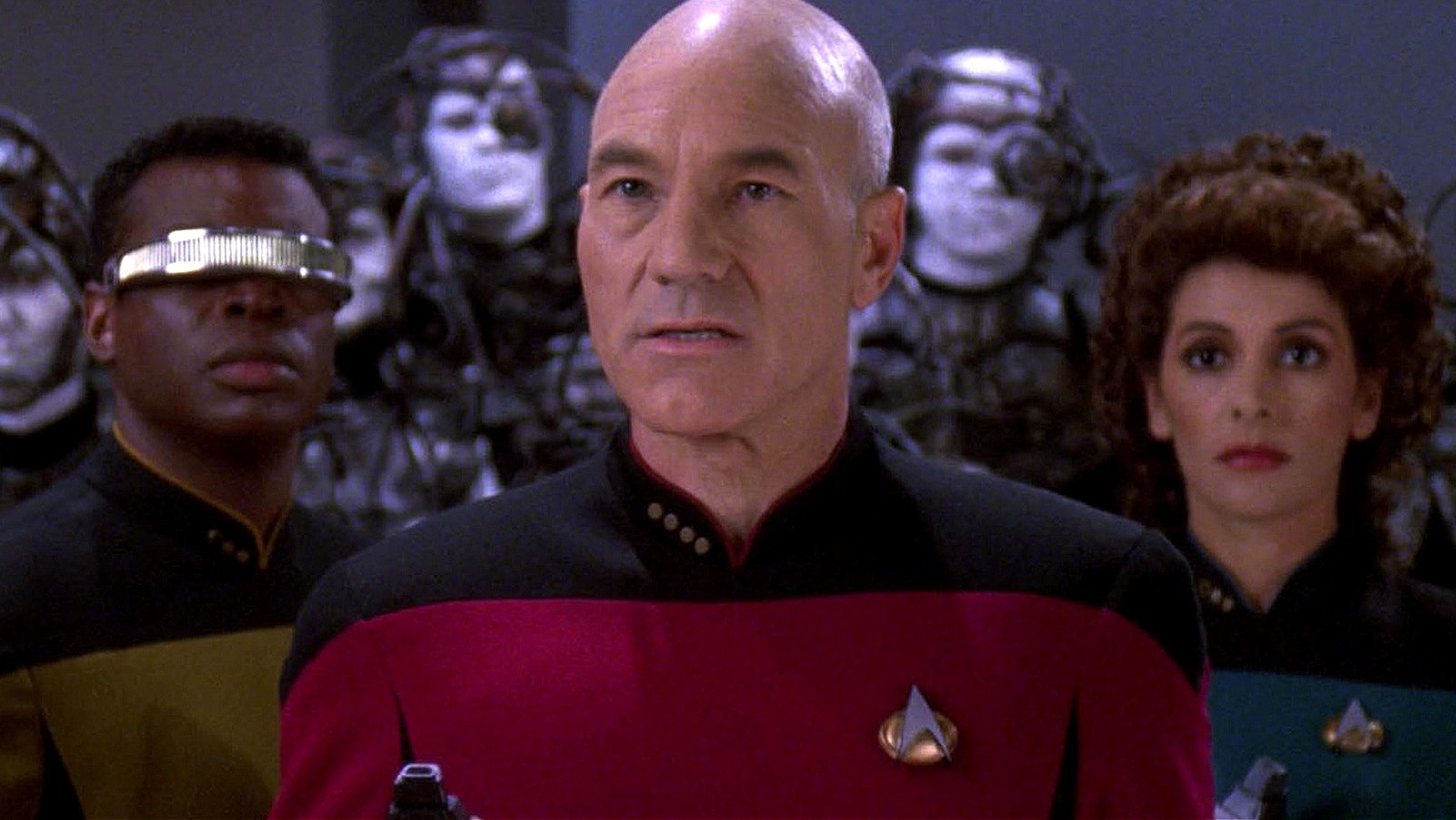

Ever since its debut in 1966, “Star Trek” has fascinated audiences, weaving a tapestry that spans generations and continues to flourish. With a vast array of series, films, and shorts, diving into the “Star Trek” universe can be an overwhelming task, especially for newcomers. The franchise frequently revisits its own mythology, offering fresh takes on iconic species such as the Klingons and Trill, and delving into the origins of the Federation. Several series also intricately overlap, adding layers to its complex narrative.
For those embarking on their “Star Trek” journey, or even seasoned fans revisiting it, experiencing the series in the order of its release is recommended. This method allows viewers to appreciate the organic evolution of the franchise, as each new installment builds on the foundations laid by its predecessors.
Still, since each new entry into the world of Starfleet tends to build on what’s already established, watching each story by ship and captain in its release order is the best way to get the authentic, organic Trekkie experience.
- “Star Trek: The Original Series” (“TOS”)
- “Star Trek: The Animated Series” (“TAS”)
- “Star Trek: The Motion Picture”
- “Star Trek II: The Wrath of Khan”
- “Star Trek III: The Search for Spock”
- “Star Trek IV: The Voyage Home”
- “Star Trek V: The Final Frontier”
- “Star Trek VI: The Undiscovered Country”
- “Star Trek: The Next Generation”
- “Star Trek: Generations”
- “Star Trek: First Contact”
- “Star Trek: Insurrection”
- “Star Trek: Nemesis”
- “Star Trek: Deep Space Nine” (“DS9”)
- “Star Trek: Voyager” (“VOY”)
- “Star Trek: Enterprise” (“ENT”)
- “Star Trek”(2009)
- “Star Trek Into Darkness”
- “Star Trek Beyond”
- “Star Trek: Discovery” (“DIS”)
- “Star Trek: Short Treks” (“ST”)
- “Star Trek: Section 31” (“31”)
- “Star Trek: Picard” (“PIC”)
- “Star Trek: Lower Decks” (“LOW”)
- “Star Trek: Prodigy” (“PRO”)
- “Star Trek: Strange New Worlds” (“SNW”)
- “Star Trek: Very Short Treks” (“VST”)
- “Star Trek: Starfleet Academy” (“SFA”)
Despite the seemingly non-linear approach to storytelling, with time travel often playing a pivotal role, certain series act as prequels to earlier ones, and writers have occasionally taken creative liberties with the established canon. Some elements have been entirely retconned or reimagined, but this adds to the richness of the “Star Trek” saga.
Watching the series in the order they premiered provides a genuine glimpse into how the franchise has developed over the years. It mirrors the experience of early “Star Trek” fans and offers insight into the franchise’s ongoing narrative evolution. This chronological journey allows viewers to witness how each new group of writers has expanded upon the universe, respecting and reinventing the legacy left by previous creators.
Why is that the correct way to watch Star Trek?
However, for those new to the series, it’s important to acknowledge that some of the earlier episodes, particularly from “Star Trek: The Original Series” and the initial season of “Star Trek: The Next Generation,” can feel somewhat dated with their campy sci-fi elements. If this style isn’t to your liking, consider starting with the second season of “TNG” and returning to the earlier episodes once you’ve familiarized yourself with the broader “Star Trek” universe.
“Star Trek: The Original Series” set the stage for everything that followed, chronicling the adventures of the Enterprise crew on their five-year mission. Under the command of Captain James T. Kirk, played by William Shatner, the series broke new ground during the fervor of the 1960s space race. It presented an optimistic future where diversity thrived, featuring a multicultural crew that included, notably during the Cold War, a Russian officer. This vision of a harmonious, post-scarcity society captivated audiences and laid the groundwork for the franchise’s enduring legacy.
However, it’s worth noting that earlier “Star Trek” — primarily “Star Trek: The Original Series” and earlier episodes of “Star Trek: The Next Generation” — can be a bit tough to stomach for viewers who are sensitive to campier sci-fi. If this describes you or someone you’re introducing to the franchise, just find the spot where you’re comfortable as a starting point (usually “TNG” Season 2) and return to those earlier episodes after you’ve caught up on everything else.
Star Trek: The Original Series (TOS)
The series that started it all, “Star Trek: The Original Series” follows the crew of the Enterprise on their five-year mission to explore strange new worlds and to seek new life and new civilizations under the leadership of Captain James T. Kirk (William Shatner). When “TOS” first aired in 1966 in the middle of the space race, its optimistic vision of a post-scarcity civilization and diverse cast of characters of different races and nationalities (including, notably for the Cold War, a Russian) presented a picture of the world as it could be.
“TOS” introduced Starfleet and many of the franchise’s rules and most iconic story elements, from alien races like the Klingons and Vulcans to the Mirror Universe. While the show’s colorful 1960s aesthetic, period prosthetics, and occasionally hammy acting might feel a bit dated for viewers, the show was exceptional for its time as it metaphorically tackled tough sociopolitical topics (even if they were sometimes mishandled).
Star Trek: The Animated Series (TAS)
Think of the 1973 animated “Star Trek” program as two unofficial bonus seasons to “The Original Series.” The show brought back almost every member of the original main cast, including James T. Kirk, Spock (Leonard Nimoy), ship’s doctor Leonard “Bones” McCoy (DeForest Kelley), Chief Engineer Scotty (James Doohan), communications MVP Uhura (Nichelle Nichols), helmsman Hikaru Sulu (George Takei), and Nurse Chapel (Majel Barrett). Just about the only major player who is missing from the first series is Pavel Chekov (Walter Koenig).
Produced under the direction of former Disney animator Hal Sutherland (who worked on films like “Sleeping Beauty” and “Peter Pan”), in the 1970s Saturday morning cartoon animation style that was the trademark of the Filmation company (which Sutherland co-founded), the art is beautiful and still holds up today. Freed from the need to rely on clunky 1970s practical effects, the series was able to pull off some of the franchise’s most imaginative sci-fi storytelling without limitation.
The TOS Movies
The “TOS” films pick up with the original Enterprise crew as they set out on new, far more cinematic adventures. The quality varies dramatically between the first film and its sequels, so don’t let the production quality of “The Motion Picture” deter you from moving forward.
- “Star Trek: The Motion Picture” (1979): The Enterprise takes on a sentient space cloud.
- “Star Trek II: The Wrath of Khan” (1982): Ricardo Montalban returns as a legacy character from “TOS,” Khan Noonien Singh, a genetically augmented former dictator bent on taking revenge against Kirk.
- “Star Trek III: The Search for Spock” (1984): In the wake of one the Enterprise crew’s most emotionally gutting moments, drama over a new terraforming technology causes everyone to spin out.
- “Star Trek IV: The Voyage Home” (1986): The crew time travels to the 1980s to befriend some whales.
- “Star Trek V: The Final Frontier” (1989): Spock’s obnoxious brother shows up to talk about God.
- “Star Trek VI: The Undiscovered Country” (1991): Bones is arrested for killing a Klingon and it’s up to Spock to bail him out of trouble.
Star Trek: The Next Generation
Set in the 24th century, “Star Trek: The Next Generation” premiered in 1987 and picks up around 100 years after the original Enterprise crew’s adventures with the crew of the Enterprise-D, the Starfleet equivalent of a floating cruise ship right down to its crew complement of more than 1000. Led by Captain Jean-Luc Picard (Patrick Stewart), the Enterprise-D crew is charged with continuing the mission begun by the original Enterprise.
The series shares the same generally episodic storytelling style as “TOS,” but adds a holodeck for LARPing, a bunch of families, and a general emphasis on diplomacy over the fisticuffs we often saw in “TOS.” First officer William Riker (Jonathan Frakes) takes over the mac daddy role owned by Kirk in the first series, and we get an adorable android and a whole bunch of cool new aliens like the Q, the Borg, the Pacleds, and the Ferengi.
The TNG Movies
A few months after “TNG” ended, we got the first of four big-screen “TNG” movies, beginning with “Star Trek: Generations.” The film was meant to serve as a transition between the two eras, but ended up becoming infamous for the unceremonious death of Captain Kirk that left William Shatner wishing for a do-over.
- “Star Trek: Generations” (1994): Malcolm McDowell plays a scientist obsessed with a purgatory-like energy ribbon.
- “Star Trek: First Contact” (1996): The Borg try to keep first contact from happening and we meet the hard-partying inventor of the warp drive.
- “Star Trek: Insurrection” (1998): The Enterprise meets a race obsessed with badly overdoing anti-aging plastic surgery and a planet that makes people immortal, where Picard meets a hot lady friend.
- “Star Trek: Nemesis” (2002): The Romulans have been cloning around again, and this one really likes pleather and revenge.
Star Trek: Deep Space Nine
“Star Trek: Deep Space Nine” is tonally much different from “The Next Generation.” Rather than focusing on space exploration, the series revolves around the remote space station Deep Space Nine, newly under the custodianship of the Federation as part of the post-war agreements brokered between the Federation, Bajorans, and Cardassians. Heading up the station is Commander (later Captain) Benjamin Sisko (Avery Brooks), who arrives at the station with his son Jake (Cirroc Lofton) to find himself entangled in some pretty deep Bajoran wormhole religion drama.
With a colorful and morally flexible cast of characters like an espionage-dabbling Cardassian tailor (Andrew J. Robinson), a Ferengi bar owner (Armin Shimerman), a shapeshifting constable (René Auberjonois), and any number of shifty-eyed travelers, “DS9” — which ran from 1993 to 1999 — is much less shiny and diplomacy-shaped than the first three “Star Trek” series.
Star Trek: Voyager
Heading out from Deep Space Nine hot on the trail of a Maquis crew — that’s the fighters resisting enforcement of the recent Cardassian treaty — the USS Voyager’s maiden trip goes awry when both ships end up deposited in the Delta Quadrant more than 70,000 light years from Earth.
To make matters worse, a big chunk of their crew gets wiped out along the way, forcing the two ship’s crews to merge and work together as they desperately try to make their way home. “Star Trek” Voyager,” which premiered in 1995, put a woman (Kate Mulgrew as Kathryn Janeway) in the captain’s seat for the first time and explored a previously unmapped quadrant of the galaxy.
Star Trek: Enterprise
“Star Trek: Enterprise” follows a pre-United Federation of Planets Starfleet’s first Warp 5 starship mission aboard the NX-01, the first ship of its kind to bear the name Enterprise. The ship is no lemon, but she is incredibly stripped down: Transporter tech is barely out of beta testing, there’s no fancy holodeck, the universal translator is laggy, and the crew members have to oil each other up in the decon room after every away mission.
As the ship sets out under the command of Captain Jonathan Archer (Scott Bakula) and his reluctant Vulcan Sub-commander T’Pol (Jolene Blalock), they find themselves spending less time studying planets than they would have liked as they warp saucer-first into a temporal cold war.
The Kelvin Timeline films
Beginning in 2009 with “Star Trek,” the rebooted “Star Trek” series, which stars Chris Pine as Captain James Kirk, imagines an alternate reality where Kirk’s father (Chris Hemsworth) is killed aboard the USS Kelvin on Kirk’s first day of life. Called the “Kelvin timeline” series among fans, this darker universe also sees young Spock (Zachary Quinto) watch his home planet destroyed early in his his career. Also filling other iconic roles are Karl Urban as Dr. McCoy, Simon Pegg as Scotty, John Cho as Sulu, and Zoe Saldana as Uhura.
-
Star Trek (2009): After losing his family to a supernova, Romulan commander Nero (Eric Bana) travels back in time and takes his revenge against the Federation’s failure to intervene.
- Star Trek Into Darkness (2013): Khan Noonien Singh (Benedict Cumberbatch) shows up to do some terrorism.
- Star Trek Beyond (2016): The Enterprise crew battles a new enemy: swarm ships controlled by a mutated former human (Idris Elba).
Star Trek: Discovery, Star Trek: Short Treks, and Section 31
The first of a newer generation of “Star Trek” series, “Star Trek: Discovery” begins as a “TOS” prequel series aboard the experimental spore drive ship the Discovery. A former science officer whose efforts to stop a bad Klingon encounter, Michael Burnham (Sonequa Martin-Green) finds herself given a second chance that leads to a Section 31 secret in the distant future.
A controversial series from the start, “Discovery” freely retconned “Trek” lore and drifted further away from Gene Roddenberry’s utopian vision of the future. “Short Treks” and the “Section 31” TV film were spinoffs of this show.
Star Trek: Picard
“Star Trek: Picard” finds the “TNG” captain struggling in the aftermath of an attack orchestrated by anti-synthetic terrorists on Mars that left the Federation too spooked to help rescue the Romulans from their sun’s supernova.
After retiring in protest and facing death from a terminal illness, Picard finds himself called once more to space aboard the La Sirena, after he meets a woman (Isa Briones) revealed to be Data’s (Brent Spiner) daughter. This series gets better as it progresses after Terry Matalas joins the show as showrunner in Season 2, leading to a full-blown “TNG” reunion in the third and final season.
Star Trek: Lower Decks
Created by “Rick and Morty” writer and producer Mike McMahan, “Star Trek: Lower Decks” looks at life among the lower-deck officers aboard the U.S.S. Cerritos, a ship not nearly as glamorous as the Enterprise-D.
Starring Tawny Newsome and Jack Quaid, the hilarious series deals with things like cargo bay loading and second contact in an irreverant adult animation style that’s absolutely jam-packed with Easter eggs and “Star Trek” references. Plus the show gave us two of the weirdest characters in “Star Trek” history in the Great Koala and Peanut Hamper (Kether Donohue).
Star Trek: Prodigy
“Star Trek: Prodigy” is an animated series aimed at a much younger audience, but don’t let that stop you from watching this outstanding series. The story follows a crew of Delta Quadrant teens who escape from a prison colony by way of a prototypical Federation ship.
The two-season arc brings back veterans Kate Mulgrew, Wil Wheaton, Robert Picardo, and Robert Beltran, alongside stars Jimmi Simpson, John Noble, Jameela Jamil, Ella Purnell, and Jason Mantzoukas. It’s complex, beautifully animated, and well worth the watch, with two of the best main villains in “Star Trek.”
Star Trek: Strange New Worlds (SNW) and Very Short Treks
Old school Trekkies know that Christopher Pike (Anson Mount) was the “TOS” Enterprise’s first captain before he was replaced by Captain Kirk after an unfortunate accident. “Star Trek: Strange New Worlds” is the story of the Enterprise under his command leading up to that accident, with Pike fully aware of what’s in store for him.
It’s one of the most charming and old-school “Star Trek” series in the canon, with an emphasis on standalone episodes rather than season-long arcs. And keeping experts on hand has helped ensure that the science in “Strange New Worlds” is among the franchise’s least complicated.
Star Trek: Starfleet Academy (SFA)
The only “Star Trek” series so far to come after the giant time jump in “Discovery,” “Starfleet Academy” deals with the first generation of Starfleet graduates following the return of warp travel, a technology lost for many years following the distastrous Burn that saw all the world’s dilithium turn inert at once, creating a mass casualty event and instantanously ending faster-than-light space travel.
It may be the 31st century, but kids are still kids and villains are still villains — especially the smarmy, charismatic Nus Braka (Paul Giamatti). Holly Hunter also stars as the faelike Lanthanite academy chancellor. It’s just a shame that “Starfleet Academy” had to get canceled after only two seasons.
Is there another way to watch Star Trek?

Paramount+
After they’ve finished their first watch, some fans enjoy watching chronologically just for fun, even if this can get a little weird in a series with a lot of time travel. For example, First Contact Day is a “TNG”-era story that technically comes before everything else in the timeline, and “Discovery” hops straight from pre-“SNW” to post-“Picard.”
A few notes to remember when watching chronologically: The timelines of “VOY,” “DS9,” and “TNG” tend to overlap and some shows occasionally aired out of order due to production issues; technically, the Kelvin timeline occurs after “LD” begins with the Romulan supernova; and “Very Short Treks” and “Calypso” are non-canonical, so we just sandwiched them in close to where they are hypothetically set. With all that in mind, here’s one example of a chronological watch:
- All of “ENT” except Season 4, Episodes 18-19
- “ST” Episode 2, Season 5: “The Girl Who Made the Stars”
- “ST” Season 1, Episode 3: “The Brightest Star”
- “DIS” Season 1
- “ST” Season 1, Episode 1: “Runaway”
- “ST” Season 1, Episode 4: “The Escape Artist”
- “TOS”: “The Cage” (Original Pilot)
- “ST” Season 2, Episode 1: “Q & A”
- “ST” Season 2, Episode 2: “The Trouble With Edward”
- “DIS” Season 2
- “VST” – “Skin a Cat”
- “ST” Season 2, Episode 3: “Ask Not”
- All of “SNW”
- “VST” – “Holiday Party”
- “TOS” Season 1 (begin with “Where No Man Has Gone Before” and circle back)
- “TOS” Season 2 – Season 3, Episode 9: “The Tholian Web”
- “ENT” Season 1, Episode 18-19
- “TOS” Season 3, Episode 10 – 24
- “ST” Season 2, Episode 4: “Ephraim and Dot”
- “TAS”
- All Kelvin universe movies
- All “TOS” movies
- “Generations” – watch only until the words “78 Years Later” appear
- “31”
- “TNG” Season 1 through Season 6, Episode 11
- “VST” – “Worst Contact”
- “TNG” Season 6, Episode 12 – Season 7
- Finish “Generations”
- Alternate “DS9” and “VOY” (skip Season 4, Episode 23)
- “First Contact”
- “VST: Holograms”
- “Nemesis”
- “LD”
- “Prodigy”
- “ST” Season 2, Episode 6: “Children of Mars”
- “PIC”
- “VOY” Season 4, Episode 23
- “ST” Season 1, Episode 2: “Calypso”
- Finish “DIS”
- “STA”


