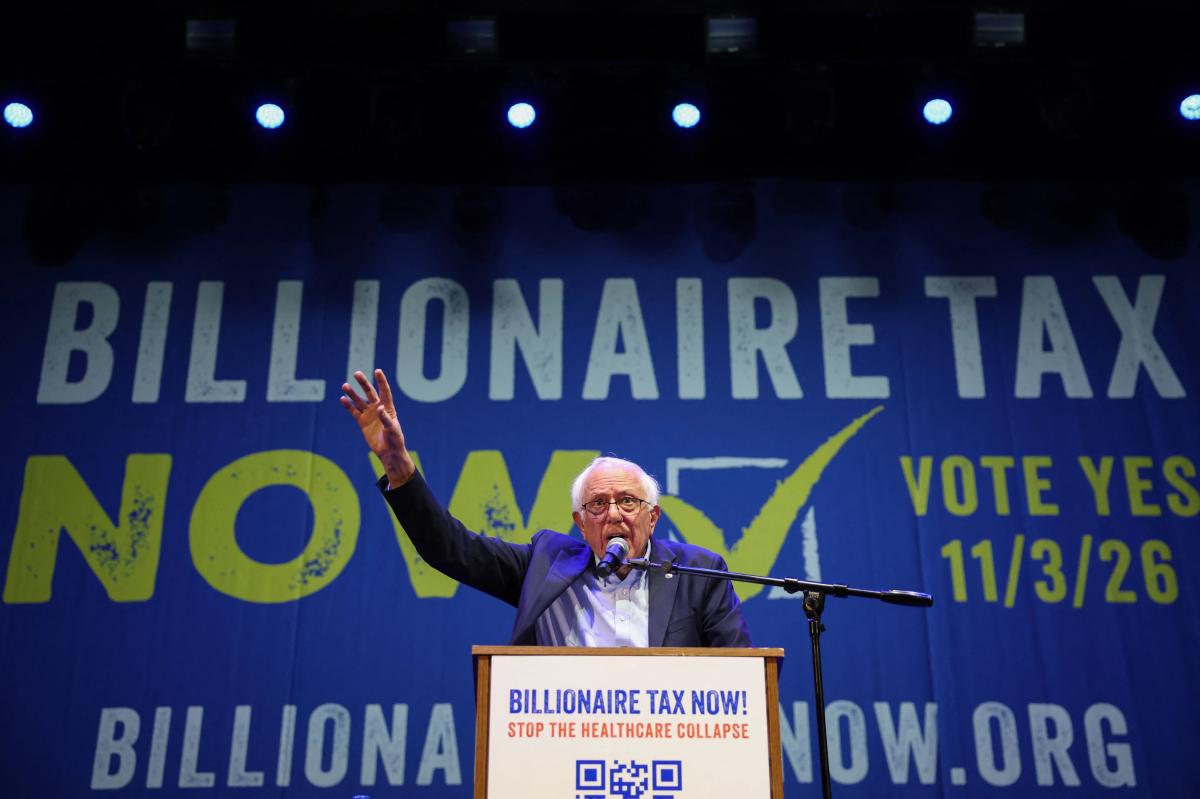

A contentious proposal to tax billionaires has cleared a significant hurdle, securing enough signatures to be included on the November ballot, as announced by the union spearheading the initiative.
In a statement released Sunday, the group behind the Healthcare Executive Compensation Act declared, “Supporters have submitted over one million signatures to the California Attorney General and county registrars statewide, marking a crucial step toward placing the measure on the November 2026 ballot.”
Spearheaded by the Service Employees International Union–United Healthcare Workers West, the proposed tax would enact a one-time 5% levy on Californians with assets surpassing $1 billion.

The proposal has met strong opposition, notably from key Democrats such as Governor Gavin Newsom. He has expressed concerns that it might lead to a mass departure of affluent individuals and businesses from the state.
“There is no doubt in my mind that this will be defeated,” Newsom stated earlier this year. “I am committed to doing what is necessary to safeguard the state’s interests.”
Resistance is also coming from Silicon Valley heavyweights, including Sergey Brin and Ron Conway, who have financially supported campaigns to thwart the measure and back alternative proposals designed to weaken its impact.
Several billionaires have already left California ahead of the proposal, including Larry Page, Brin, Peter Thiel, Don Hankey, Travis Kalanick and Steven Spielberg.
While the measure has qualified for the ballot, it still needs voter approval — a potential challenge as polling shows mixed views.
About half of voters support it, while 28% oppose it and 23% remain undecided. At the same time, many expressed concern about businesses leaving the state, billionaires relocating, and possible future tax increases.
National figures like Bernie Sanders have rallied support in California, arguing that billionaires have an “addiction” to wealth. The independent senator in vermont was in Los Angeles in February pushing for the wealth tax.
Supporters, including SEIU-UHW, say the tax is needed to address healthcare funding gaps tied to cuts to Medicaid and other federal programs implemented last year.
“Every signature represents a patient, a family member, a healthcare worker who is fed up,” said Zelda Aaron, a social worker at Community Hospital of San Bernardino.
“People understand that healthcare costs keep rising while executives take home millions. This measure will finally redirect those dollars where they belong – into patient care and the caregivers who deliver it.”
If approved, the measure is expected to trigger a costly political fight, with opponents backing rival initiatives to weaken it — including proposals to ban taxes on personal assets, redirect revenue to schools, and impose strict oversight rules that could invite legal challenges.
“It’s gambling a potential one-time revenue bump in exchange for massive ongoing losses, which would force cuts to schools and health care,” said Dan Newman, a spokesman for an opposition group backed in part by Conway.
Under California law, if competing measures pass, the one with the most “yes” votes prevails, a dynamic that could also confuse voters.


