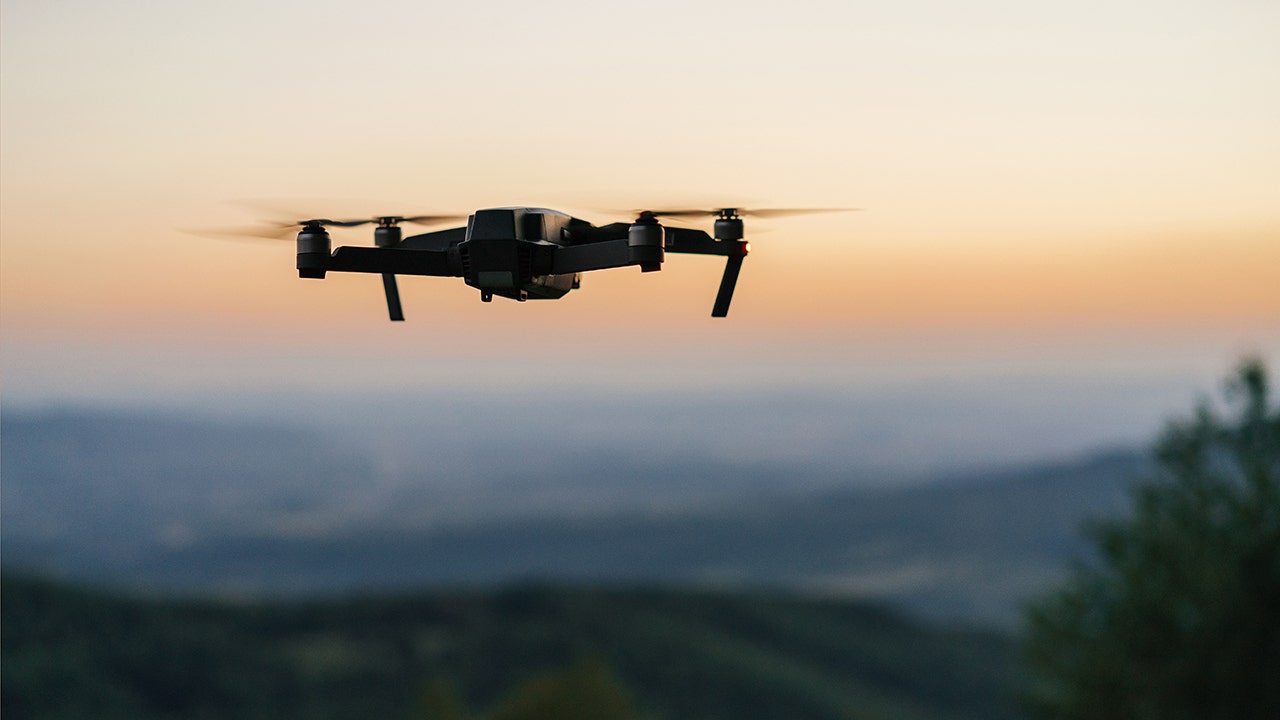

Federal agents have successfully retrieved 15 missing industrial drones, originally designed to dispense liquid chemicals. However, lingering concerns persist as a former Department of Homeland Security official raises a critical question: were these drones stolen for mere financial gain, or do they signal a more sinister intent to compromise national security?
The 15 Ceres Air C31 spray drones vanished from CAC International, a logistics and shipping firm based in Harrison, New Jersey, on March 24. According to The High Side Substack, the drones were eventually found over a month later, on April 27, in Dover, New Jersey.
The New Jersey State Police earlier informed Fox News that the drones were located at Prudent Corporation, a trucking firm with a warehouse at the recovery site.
In a statement, the New Jersey State Police elaborated, “On April 27th, the Cargo Theft Unit of the State Police recovered 15 agricultural drones and spray systems. These devices are categorized as agricultural drones due to their primary role as registered crop dusters. The theft incident, originating from CAC International in Harrison, NJ, occurred on March 24th. The drones were found at Prudent Corporation in Dover, NJ. The investigation remains active, with Homeland Security Investigations and Customs and Border Patrol providing assistance. No further details are available at this time.”
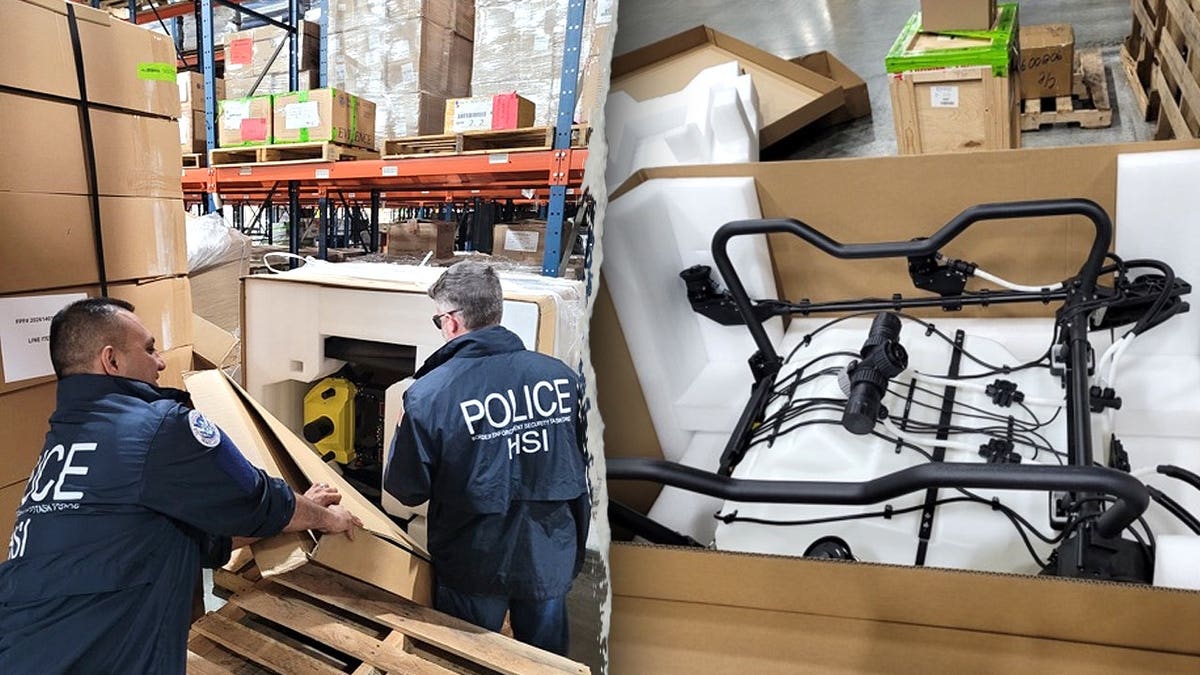
Homeland Security Investigations (HSI) agents successfully recovered the drones on April 27. (HSI Newark)
Although the drones have been retrieved, Vincent Martinez, a former member of DHS’s tactical terrorism response team and current director of service enhancement at ZeroEyes, conveyed to Fox News Digital the significant risk these events represent, stressing the importance of addressing the situation seriously.
While Martinez said it’s good the drones were recovered, he warned the biggest questions remain unanswered.
“Where were these intended to land? Who is the ultimate end user? Were they meant simply as a quick buck — or to facilitate action against the homeland?” he said.
In the wrong hands, Martinez warned, the drones could “absolutely” pose a “substantial threat,” particularly if loaded with a chemical agent and deployed over a populated area, which he believes is the primary concern.
A drone is pictured flying over a residential neighborhood. (iStock)
“Because of its design and nature, that is the absolute primary concern in and of itself. Who’s actually conducting the thefts, where they’re going to, who’s funding and financing these? It’s a litany of different phases of escalation that we have to actually look at when we’re conducting the investigation,” Martinez said.
He said it’s “not difficult” for an adversary to weaponize these kinds of drones with the proper training and knowledge.
“It doesn’t take a rocket scientist to go into the root menu of a lot of these hardware systems. What it does take is a lot of open source knowledge and an acumen to be technically savvy and technically sound. You can break into almost any drone platform. And there are a lot of laws and regulations specifically by the FAA that prevent that. But I would argue that using these against an adversary or against a homeland, let’s just say, it’s not difficult. You just have to know how to research how to do it,” Martinez said.
In a statement to Fox News Digital, Ceres Air said “at no point was there a risk of unauthorized use.”
A drone flies over the ocean at dawn, capturing aerial views as the sun rises. (iStock)
“Ceres systems are built with multiple layers of control, including secure activation protocols, remote lock capability, and separated battery logistics. Without proper authorization, these units cannot be operated,” the company said.
“This situation highlights a broader reality in the drone industry. When systems are built and supported domestically, there is accountability. Our equipment is fully traceable through serial tracking and coordinated support networks, all of which exist within the USA. It doesn’t disappear, and it doesn’t operate outside of controlled channels. We build our systems in the United States so they can be tracked, secured, and supported here. That’s exactly what allowed this situation to be resolved quickly and without risk.”
In total, a Ceres Air C31 costs around $58,000, meaning that nearly $870,000 of equipment was allegedly stolen.
The drones were allegedly stolen by a delivery driver who duped the company, according to The High Side Substack. The report said that a fraudulent bill of lading was shown when picking up the drones, and CAC International allegedly considered them legitimate.