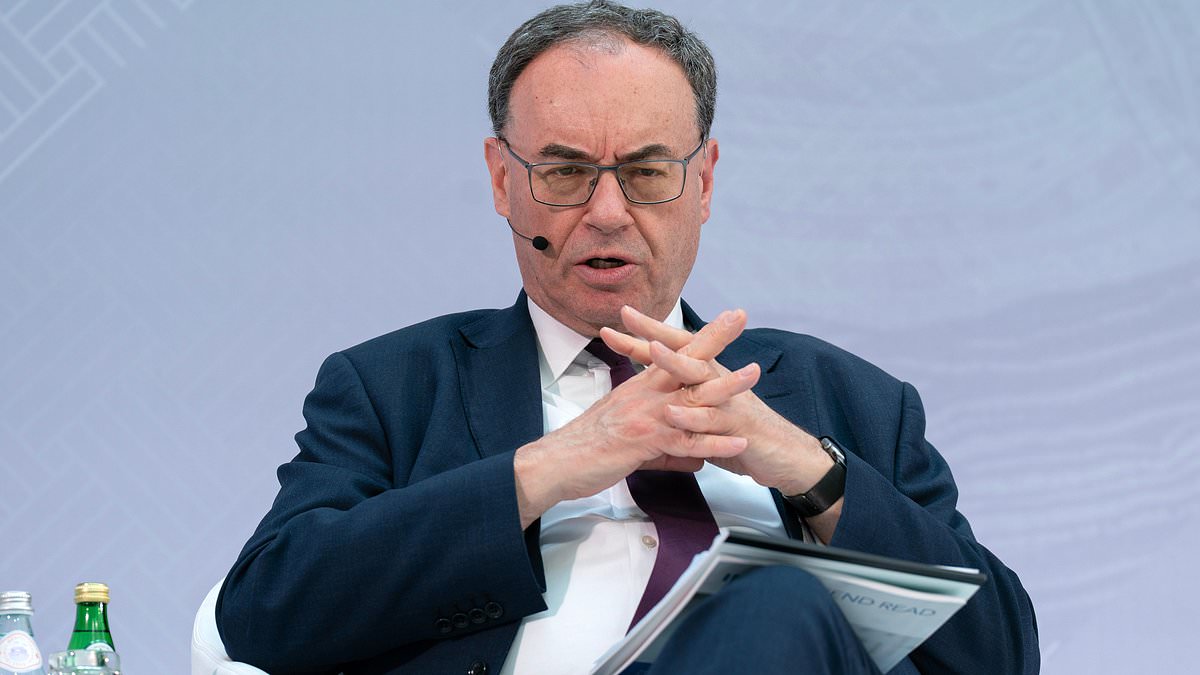
The Bank of England is grappling with a challenging decision regarding interest rates, as escalating tensions in the Middle East drive up costs, the Governor has cautioned.
Andrew Bailey has highlighted a significant energy shock that is set to burden UK citizens. However, the central bank plans to take a measured approach and avoid hastily increasing interest rates.
Although rising oil and gas prices might contribute to inflation, Bailey explained to the BBC during the International Monetary Fund (IMF) summit in Washington that there are numerous factors complicating the decision-making process.
Prior to the conflict, expectations were that the Bank of England might reduce rates this year, considering the signs of a cooling job market and declining inflation levels.
Nonetheless, the looming risk of heightened prices due to disruptions in oil supplies has led markets to anticipate that rates may remain stable or even climb this year.
This scenario poses additional challenges, potentially exacerbating issues in a period marked by sluggish growth and elevated unemployment.
‘There’s really difficult judgments to be made,’ he said. ‘We’re not going to rush to judgments on those things, because there are a lot of uncertainties around this, not just how it’s going to play out, but also how it’s going to pass through into the UK economy.’

The Bank of England boss has said it faces a ‘difficult’ decision on interest rates
The IMF slashed its growth forecast for the UK this year to 0.8 per cent – the biggest downgrade of all G7 nations – as it warned the global economy could face a recession if oil stays above $100 a barrel through next year.
And on Wednesday, the IMF warned central banks should not rush to hike interest rates to head off rising inflation – Bailey said he was taking into account the ‘serious advice’.
The Bank’s Monetary Policy Committee will meet at the end of this month, with traders expecting interest rates to stay at 3.75 per cent.
At its last meeting, when the BoE held rates, Bailey said the financial markets were getting ahead of themselves in expecting rate hikes.
Economists agree and say conditions in the UK today are different from when Russia invaded Ukraine, which sent energy prices soaring.
In 2022, inflation stood at more than 6 per cent while the Bank rate stood at 0.5 per cent, compared to 3.75 per cent today.
There are concerns, however, that the damage caused by the war is somewhat baked in with higher inflation expected in the second half of the year and slower growth.
Figures published by the ONS today showed an unexpected jump in GDP growth in February, but experts warn that
‘Even before the war, we doubted that the economy could enjoy a sustained acceleration,’ said Andrew Wishart, senior UK economist at Berenberg.
‘Flat employment, decelerating pay growth and a rising personal tax burden were set to reduce real household spending power.
‘Now we can add higher energy prices and mortgage interest rates to the list of headwinds.’
He added: ‘The new energy price shock means the UK must now endure both weaker growth and higher inflation, postponing bank rate cuts but not derailing them.’
Bailey warns of financial meltdown
In a letter to the IMF’s main steering committee, the Bank of England Governor warned of threats to financial stability that chimes with 2008.
Bailey pointed to elevated share prices, stresses in the private credit markets and liqudiity issues.
‘Put simply, there is an increased likelihood that multiple vulnerabilities could crystallise at the same time, thereby amplifying the threat to financial stability and the provision of critical financial services,’ Bailey said.
It echoes the Bank’s comments earlier this month, warning that the Middle East conflict threatened to increase instability in the financial system.
Cautioning against dismissing recent private credit failures, Bailey said there could be ‘a wider loss of confidence, reminiscent of the 2008 financial crisis’.
DIY INVESTING PLATFORMS
AJ Bell
AJ Bell
Easy investing and ready-made portfolios
Hargreaves Lansdown
Hargreaves Lansdown
Free fund dealing and investment ideas
interactive investor

interactive investor
Flat-fee investing from £4.99 per month
Freetrade

Freetrade
Investing Isa now free on basic plan
Trading 212

Trading 212
Free share dealing and no account fee
Affiliate links: If you take out a product This is Money may earn a commission. These deals are chosen by our editorial team, as we think they are worth highlighting. This does not affect our editorial independence.
Compare the best investing account for you


