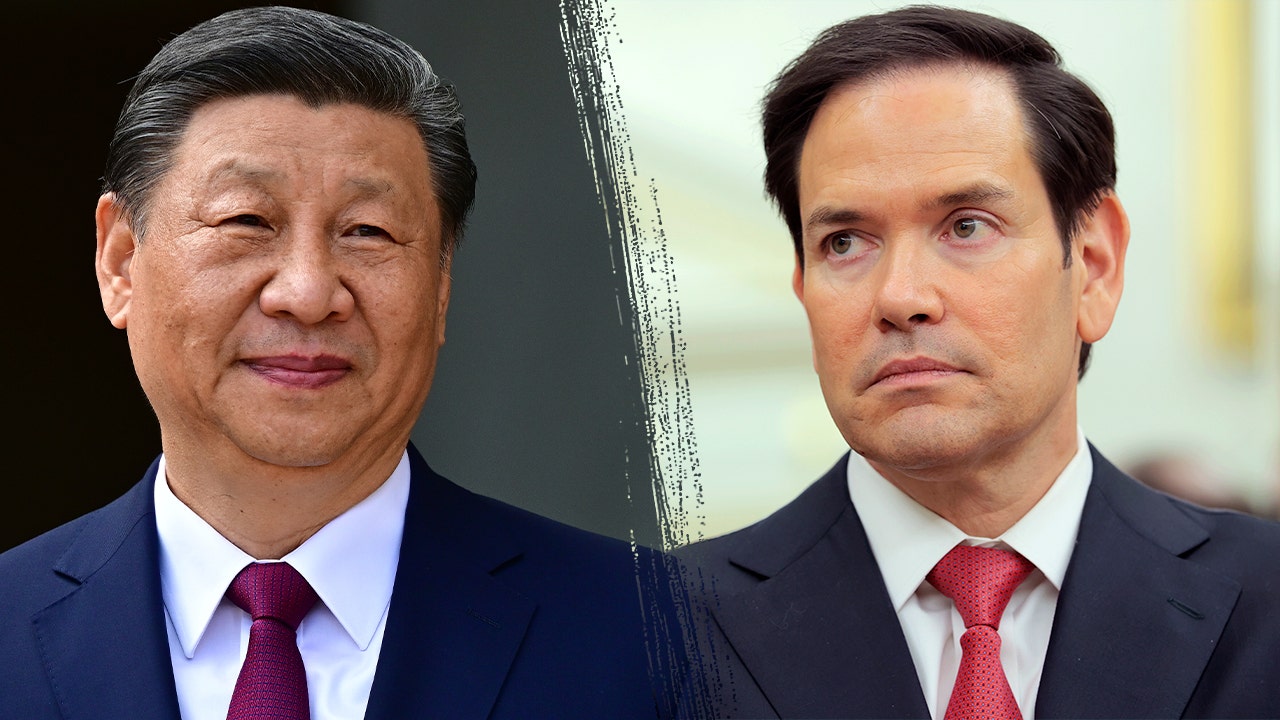

In a strong rebuke to China, Secretary of State Marco Rubio stated unequivocally that “the sovereignty of our hemisphere is non-negotiable.” This declaration came after a coalition of the United States and several regional allies accused China of detaining ships registered under the Panama flag, amid a simmering dispute over the control of canal ports.
In a collaborative denunciation with Bolivia, Costa Rica, Guyana, Paraguay, and Trinidad and Tobago, the United States criticized China’s targeting of Panama-flagged vessels. The joint statement described these actions as a “blatant attempt to politicize maritime trade,” asserting that they threaten regional sovereignty. The situation is being seen as part of a larger strategic challenge over who will dominate one of the world’s most vital commercial routes.
Though the conflict in Panama involves the detention of ships rather than an outright blockade, analysts are increasingly drawing parallels with other strategic chokepoints like the Strait of Hormuz. This issue is perceived as part of an expanding rivalry over who will dictate the norms governing global trade and energy channels—Beijing or Washington.
Containers and cranes at the Port of Balboa, situated at the Pacific entrance of the Panama Canal in Panama City, provide a backdrop to these developments.
The current tensions follow a ruling by Panama’s Supreme Court earlier in 2026, which nullified the legal framework granting control to Hong Kong-based CK Hutchison over the Balboa and Cristobal terminals that flank the Panama Canal. This waterway processes approximately 5% of global maritime trade, making it a critical junction.
Since March 8, U.S. regulators have observed nearly 70 vessels flying the Panama flag being detained by Chinese authorities, according to reports from Reuters. American officials suggest this uptick is a strategic move by China to retaliate against Panama and exert pressure on international shipping routes.
“China has used Iran to destabilize the Middle East. In effect, Iran has been China’s proxy,” China expert Gordon Chang told Fox News Digital, arguing Beijing’s actions in Panama fit a broader global pattern in which China uses economic leverage, trade pressure and regional partners to expand influence while condemning similar tactics from Washington.
Chang said Beijing is now facing growing resistance as the U.S. increasingly moves not only against China directly, but also against governments and geopolitical flash points he argues have strengthened Beijing’s hand.
“Trump apparently decided that he would counter this sly tactic by taking China’s proxies — Venezuela, Cuba and Iran — off the board,” Chang said.
An aerial view shows the port of Rodman in Panama City Jan. 30, 2026. (Martin Bernetti/AFP)
He also framed pressure on Iran and threats to the Strait of Hormuz as part of a larger strategic effort aimed at both Tehran and Beijing.
“Closing the Strait of Hormuz is a two-fer, starving Iran’s regime and shaking China’s already fragile economy,” Chang said. “Trump is using energy to reorder the world.”
Chang also accused Beijing of hypocrisy over trade.
“China’s Communists invented hypocrisy. Nobody does hypocrisy better than the Chinese Communists,” he said, arguing that China long benefited from a global trading system it increasingly weaponized for geopolitical purposes.
“The elemental truth is that China started this cycle of action and retaliation,” Chang said. “If China had not threatened America, America would not have leaned on Panama. If America had not leaned on Panama, China would not have detained Panamanian vessels.”

Two cargo ships enter the Miraflores Locks of the Panama Canal in Panama City on Jan. 22. (Martin Bernetti/AFP)
China has rejected accusations that it is politicizing trade, with its foreign ministry arguing U.S. criticism reflects Washington’s own strategic ambitions around the canal.
China’s Foreign Ministry called the statement on Wednesday “entirely baseless and misleading”, said it would take steps to safeguard China’s interests in Panama, and accused the United States of politicizing ports, according to Reuters.
The Chinese Embassy in Washington, D.C., spokesperson Liu Pengyu told Fox News Digital that, “Chinese competent authorities conducted routine inspections of vessels in accordance with laws and regulations. The allegations are completely unfounded and merely a distortion of facts. It is the United States that has framed normal affairs concerning relevant terminals as issues about politics and security, making pretenses and slandering others with rumors. China’s position on the Panamanian ports issue is clear and will firmly defend its legitimate rights and interests. We urge relevant countries not to be blinded and utilized by those with ill intentions.”
Reuters contributed to this article.


