IN BRIEF
- The WHO said an investigation was ongoing but that at least one case of hantavirus had been confirmed.
- Hantavirus infections are typically linked to exposure to the faeces or urine of infected rodents.
Tragedy struck on the high seas as three individuals lost their lives aboard a cruise ship in the Atlantic Ocean, according to a statement from the World Health Organization (WHO) on Monday AEST. Among the deceased, one was confirmed to have contracted hantavirus, a disease typically spread to humans through contact with rodents.
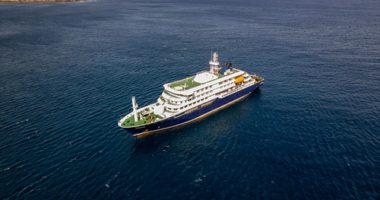
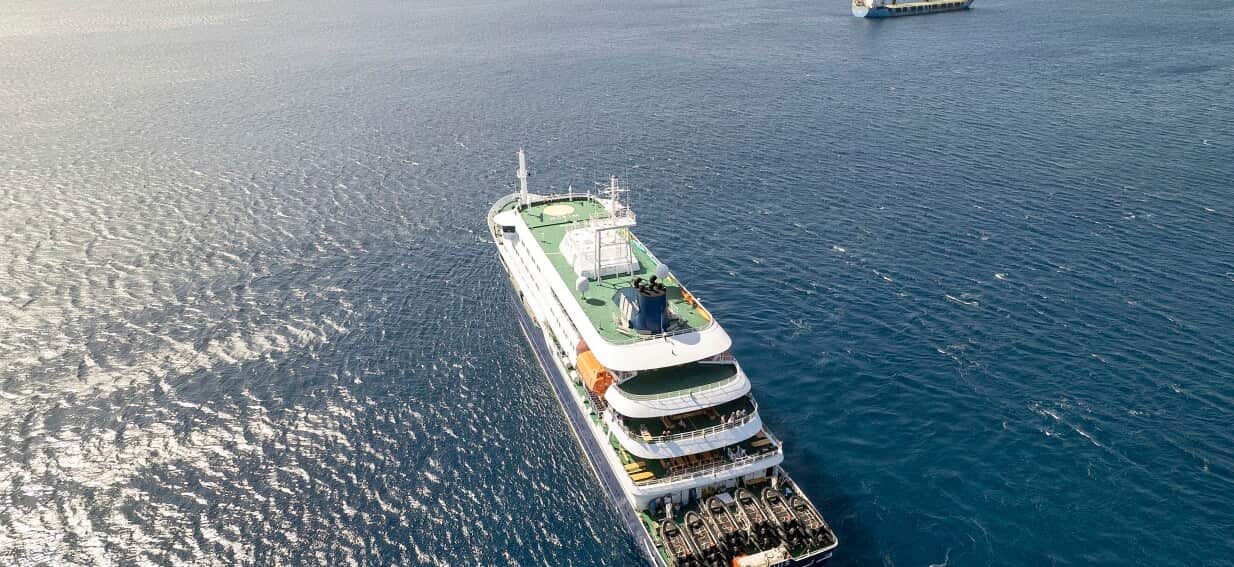
The incident unfolded on the MV Hondius, which was on a voyage from Ushuaia, Argentina, to Cape Verde.
The WHO reported to Agence France-Presse that “so far, one case of hantavirus infection has been confirmed through laboratory testing, along with five other suspected cases.”
Of these six individuals, three have succumbed to the illness, while one remains in intensive care in South Africa.
Earlier on Monday, South Africa’s health ministry shared with Agence France-Presse that they were dealing with an outbreak of a “severe acute respiratory illness,” which had already claimed at least two lives, with a third individual receiving intensive care treatment in Johannesburg.
The individual being treated in Johannesburg has tested positive for hantavirus, a virus family known to cause hemorrhagic fever, as confirmed by South African spokesperson Foster Mohale.
What is hantavirus?
In its statement, the WHO said: “Hantavirus infections are typically linked to environmental exposure (exposure to infected rodents’ urine or faeces).”
“While rare, hantavirus may spread between people, and can lead to severe respiratory illness and requires careful patient monitoring, support and response.”
Humans can catch hantaviruses from contact with infected mice or rats, or from their droppings, or from being bitten or inhaling contaminated dust.
There are multiple types of hantaviruses in different parts of the world, with different symptoms.
Husband and wife among the dead
The first person to develop symptoms was a 70-year-old passenger. He died on board the ship and his body was currently on the island of Saint Helena, a British territory in the South Atlantic, Mohale said.
His 69-year-old wife also fell ill on board and was evacuated to South Africa, where she died in a Johannesburg hospital, he said, adding that they were not yet able to confirm the victims’ nationalities.
The third case, a 69-year-old Briton, was also evacuated to Johannesburg, where he had been treated in intensive care.
WHO chief Tedros Adhanom Ghebreyesus said in a post on X that the agency was working with the ship’s operators and member states affected.
“WHO is facilitating medical evacuation of two symptomatic passengers, conducting a full risk assessment, and supporting affected people onboard,” he added.
“Rapid, coordinated action is critical to contain risks and protect public health.”
Earlier on Monday, a source close to the case, speaking on condition of anonymity, had said a Dutch couple were among the dead. The third fatality was still on board the ship.
Discussions were underway to decide whether two other sick passengers should be placed in isolation in a hospital in Cape Verde, after which the ship would continue to Spain’s Canary Islands, the anonymous source said.
What do we know about the ship, MV Hondius?
The MV Hondius is listed as a polar cruise ship on the websites of several travel agencies. It is operated by a Dutch-based tour company, Oceanwide Expeditions.
One of the cruises offers an itinerary departing from Ushuaia for Cape Verde, with stops at the islands of South Georgia and Saint Helena.
According to several online ship-tracking sites, the MV Hondius was just off the port of Praia, the capital of Cape Verde, on Sunday local time.
The vessel can accommodate around 170 passengers and has some 70 crew members.
AFP contacted the cruise operator Oceanwide Expeditions but has not yet had a reply.
For the latest from SBS News, download our app and subscribe to our newsletter.