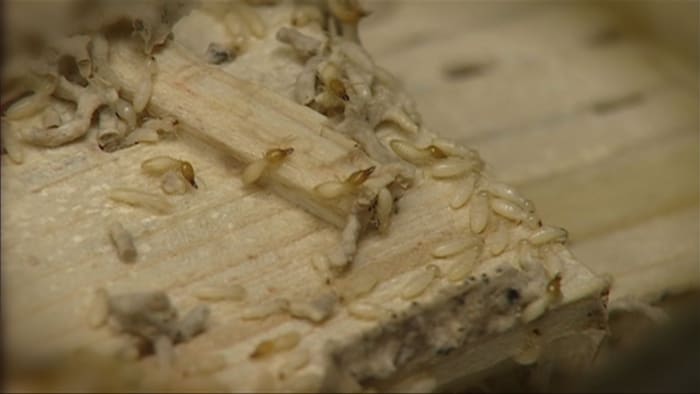


ORLANDO, Fla. – A recent investigation conducted by the University of Florida has uncovered that two non-native termite species have been expanding their territory in Florida more rapidly than scientists had anticipated.
In a blog entry from last week, UF/IFAS Public Relations Manager, Lourdes Mederos, shed light on these two species, known as Formosan and Asian termites.
Traditionally confined to South Florida, Mederos highlighted that these termites are now venturing beyond their usual boundaries within the state.
“Decades of surveillance data indicate a quickening pace in their expansion, with the Asian subterranean termite progressively advancing northward, and the Formosan termite now prevalent in most coastal counties and major urban areas. This trend could potentially place the entire state of Florida at risk by the middle of the century,” according to her blog post.
Consequently, Mederos emphasizes that fostering long-term collaborations with pest control experts will be crucial. These partnerships are essential for effectively tracking the movement of these termites.
WHO ARE THESE INVASIVE TERMITES?
In an interview with News 6 last summer, Thomas Chouvenc, an associate professor of urban entomology with the UF/IFAS, explained that the Formosan and Asian termites hail from parts of Asia.
According to the UF/IFAS, Chouvenc and other researchers have determined that humans may be helping these termites “conquer the world” by unwittingly ferrying them around via private boats.
“Now, South Florida is one of the few places in the world where these species have established independently,” Chouvenc said. “They’re requested to be two of the most destructive termite species in the world.”
WHY ARE THEY SUCH A PROBLEM?
The Formosan species can form colonies with millions of individual termites, potentially causing tens of thousands of dollars’ worth of damage to homes.
State officials also report that Formosan termites will forage aggressively, making them much more destructive than native subterranean termite species.
But while these invasive Formosan termites can be found in a wide range of states — including Alabama, Georgia, Florida, Louisiana, Hawaii, Mississippi, Tennessee, Virginia, Texas, Arizona and California — that’s not the case for the Asian termites.
Similarly to Formosans, they’ve been responsible for home damage and the deaths of plenty of healthy trees in the region.
“I like to call (Asian termites) the tropical cousin of a Formosan termite because they are adapted to truly warm temperatures, cannot survive cold temperatures,” Chouvenc stated. “So it’s been restricted to South Florida.”
According to Chouvenc, Asian termites have spread north as far as places like Tampa, Orlando and Melbourne.
“I always say that 99.9% of all infestations in houses will be either Asian termites or Formosan termites,” he added.
But thanks to the Asian variety interbreeding with Formosan termites, this problem could spread much farther.
THEY’RE BREEDING!?
Recent research has revealed that two invasive species of termites in Florida have managed to produce a hybrid, raising concerns about the destructive potential this new breed brings to the table.
Last year, Chouvenc and other researchers finally found a hybrid colony infesting a tree in Fort Lauderdale, leading to the revelation that this new hybrid species has established itself in South Florida.
However, Chouvenc said that could change, as further crossbreeding may create hybrids that are better adapted to different temperatures, potentially increasing their range across Florida and even into neighboring states.
That being said, it may not be a problem many people today will have to worry about.
“In the very long term — this is beyond our lifetime, I hope — these two species will become ubiquitous in Florida because of their own special ability to spread,” he said.
In the meantime, Chouvenc explained, researchers are still looking into measures to mitigate the spread of termites and deal with infestations.
For more information on how to prevent a termite infestation in your home, click here.