
By 2048, cervical cancer, historically a major cause of cancer-related deaths among women in the UK, could be eradicated in high-income countries, according to recent research.
Despite this optimistic projection, researchers caution that without increased HPV vaccination and screening, women in less affluent nations will continue to be at significant risk.
The findings, published in The Lancet, are based on a study that evaluated existing cervical cancer vaccination and screening programs to assess the prevalence of the disease.
The study highlights that in low- and middle-income nations, progress against cervical cancer is expected to be sluggish, resulting in only minor declines in cases over the coming century.
This disparity is likely to grow, as women in these less wealthy regions face a much higher incidence of a disease that is largely preventable.
“Globally, HPV vaccination and screening can reduce cervical cancer cases by over 90% in a cost-effective manner,” the study authors noted.
‘The driving factor of inequalities in cervical cancer incidence between lower-middle income countries and high income countries is the large difference in access to cervical cancer.
‘Unacceptably, these inequalities are set to increase through unequitable global distribution of vaccination.’
High-income countries are on track to eliminate cervical cancer by 2048, a study has found
Pictured: Projected population-level impact of HPV vaccination and screening strategies on cervical cancer incidence and inequalities between high income and low- and middle-income countries over time
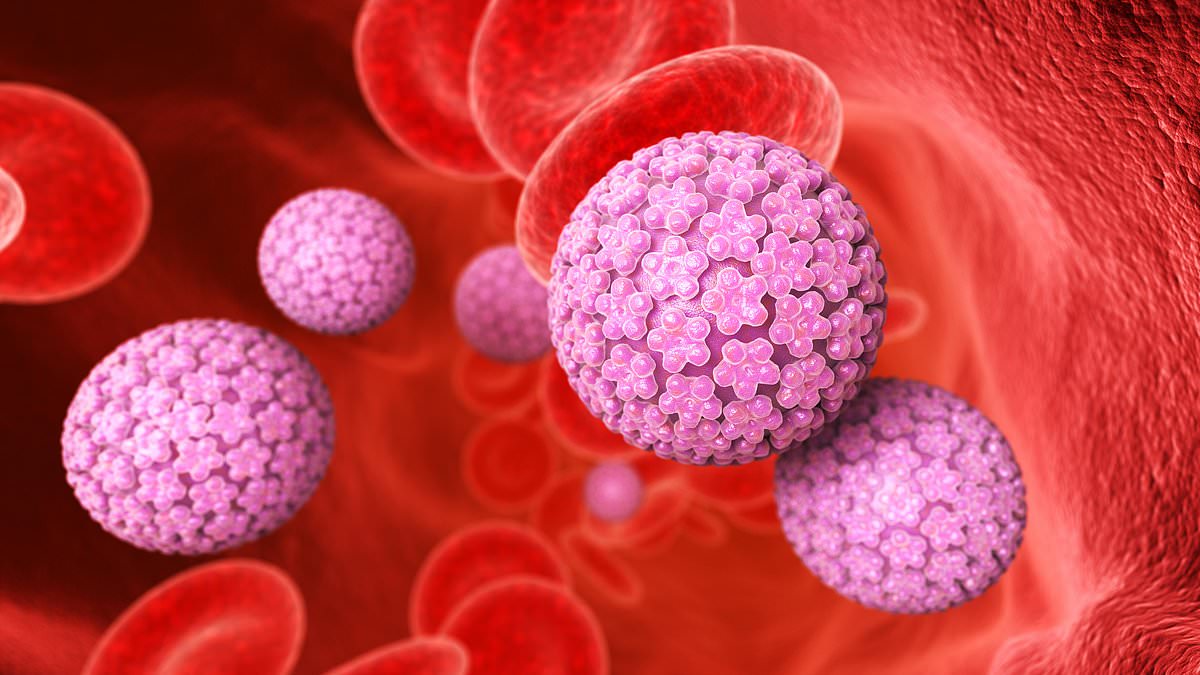
Human papillomavirus, or HPV, is an extremely common virus spread through skin-to-skin contact
Around eight in 10 people will get HPV at some point in their life and their body will clear it without any problems, according to the NHS.
However, 13 out of the 150 varieties of the virus stay in the body for a long time and are known to cause 99.7 per cent of cervical cancers.
The study highlights the World Health Organisation’s (WHO) goals of vaccinating 90 per cent of girls, screening 70 per cent of women and treating 90 per cent of pre-cancer and cancer cases.
Achieving these goals could avert 37 million cervical cancer cases over the next century and accelerate progress toward elimination.
However, the models also suggest that many poorer countries are unlikely to reach these targets without increased investments in elimination efforts.
There are three types of cervical pre-cancer: CIN1 (mild), CIN2 (moderate) and CIN3 (severe). These are all abnormal cells that line the cervix.
If left untreated, roughly a third of CIN3 cases develop into cervical cancer within 10 years. The figure stands at roughly half after 30 years.
The majority of CIN3 cases are caused by a specific strain of HPV known as HPV16.
The authors say that recent advancements, such as lower-cost and single-dose vaccines, expanded screening programmes, multi-age vaccination cohorts, and efforts to include boys vaccination campaigns, can help make cervical cancer elimination feasible worldwide.
But this requires global, coordinated efforts from governments and international health agencies.
Cervical cancer symptoms to look out for include unusual vaginal bleeding, pain during sex and lower back or pelvic pain

Pictured: A bar graph comparing cervical cancer rates for different age groups between 2010 and 2020 in England. It shows a sharp drop for 25 to 29-year-olds
In the UK, mortality rates for cervical cancer have fallen by approximately 80 per cent since the 1950s.
This reduction is primarily due to the introduction of the national cervical screening programme and the highly successful HPV vaccination programme, with NHS England aiming to eliminate the disease by 2040.
However, the disease still leads to approximately 685 deaths a year in England.
The HPV vaccine has been offered to all British schoolgirls in year eight since September 2008 and targets high-risk strains linked to cervical, genital and head and neck cancers. Eligibility was expanded to boys in year eight from September 2019.
Experts have credited the HPV vaccine for helping to virtually eradicate the disease among women.
However, the jab, like all vaccines, does not offer 100 per cent protection, so women who have it are still recommended to have their regular smear tests.
One of the most famous people who had cervical cancer was Big Brother’s Jade Goody, who tragically died from the disease in 2009 at the age of 27.
Her public battle with the disease led to a significant increase in screening uptake in the UK, known as the ‘Jade Goody effect’.
Currently, women aged 25 to 49 in the UK are invited for a cervical screening check at their GP surgery every three years. For those aged between 50 and 64, it is offered every five years.
Screening is arguably all the more important for women aged 34 and above, who did not receive a vaccine that protects against the vast majority of cervical cancers as part of the school programme.