
The Transport Secretary has recently revoked a contentious ban that prevented fishermen with higher body weights from working at sea, following significant opposition from the fishing community. This move has been warmly received by those within the industry.
Mark Harper, the current Transport Secretary, has put an end to regulations that required all crew members on fishing vessels to possess a health certificate before setting sail. These rules, introduced last November, dictated that trawlermen must have a body mass index (BMI) under 35 to be eligible to work on fishing boats. A BMI of 30 or above is typically categorized as obese.
Under this regulation, an average man standing at 5 feet 10 inches and weighing more than 17 stone 6 pounds, or a man who is 6 feet tall and around 19 stone, would have been disqualified from fishing boat duty. This stipulation was met with widespread disapproval from the fishing sector, which deemed it ‘ludicrous’.
In response to the industry’s outcry, Harper announced the removal of this requirement during a visit to Newlyn Harbour in Cornwall. He stated that the decision reflects the government’s support for the fishing industry, a sentiment that has been echoed by fishermen who have welcomed the change.
But after a huge backlash from the fishing industry, the Transport Secretary announced yesterday in Newlyn Harbour in Cornwall that this requirement would be removed.
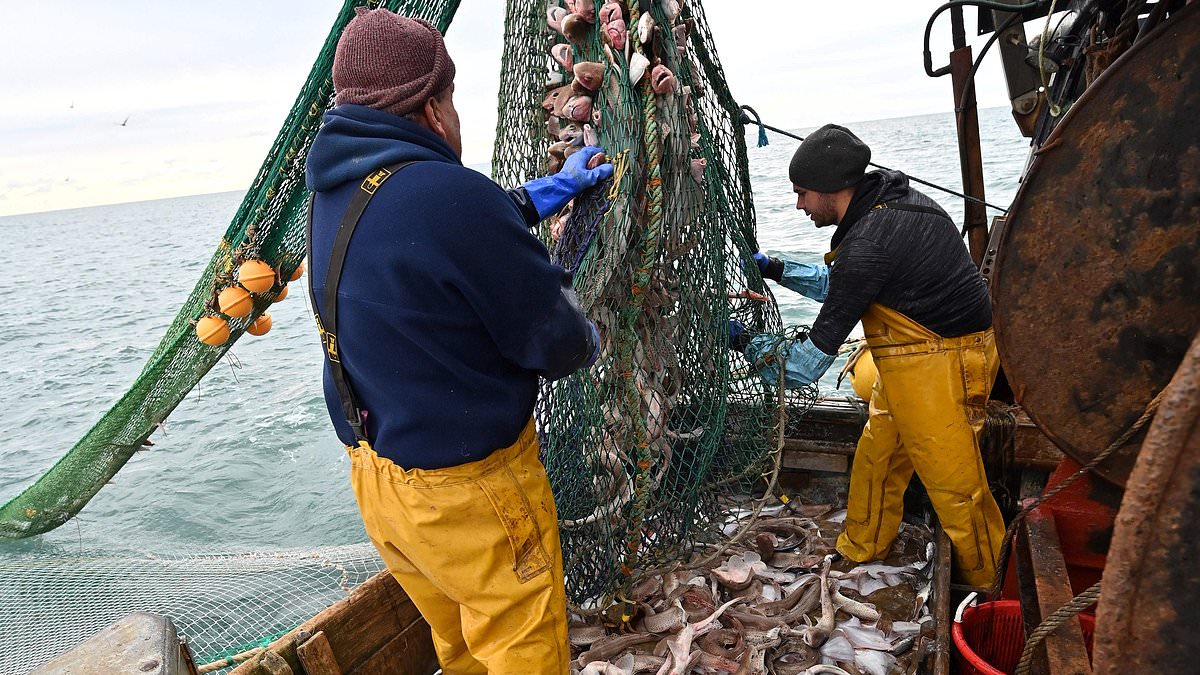
Fat fisherman have caught a break after a ban on them working at sea if they are too heavy has been lifted by the Transport Secretary after complaints from the industry (file photo)
Mark Harper (pictured) has ended rules which mean that all crew members of fishing boats have to get a certificate of health before they head to the waters.
He said the decision, which was ‘welcomed’ by fishermen, shows the ‘government backs our fishing industry’.
Mr Harper said: ‘This government backs our fishing industry, which is why we have listened to fishing communities and are easing the burden on small-scale fishermen to make sure they can continue their work unhindered.
‘Our fishing sector will be able to continue operating safely, protected by our world leading safety standards while supporting the UK fishing industry that forms the backbone of so many coastal economies.’
The Department for Transport initially said the decision was made to stop fishermen risking their own lives at work.
But now, the DfT says that waiving the requirement for routine medical checks for fishermen on vessels measuring 10 metres and under ‘will ease financial burden and provide support to the UK’s fishing communities’.
It said the decision was being made ‘so that small-scale fishing businesses aren’t unduly forced ashore and financially burdened by the cost of medical assessments’.
The rules could also have led to a shortage of fishing staff, industry leaders had said.

The ‘ludicrous’ law, which was implemented last November, said that trawlermen could not be on board fishing boats unless they had a body mass index (BMI) of less than 35
Fisheries Minister, Mark Spencer, said: ‘Vessels of 10 metres and under form a vital part of the UK’s fishing industry, and today we’re taking action to ensure those who work on them will not face the cost of medical assessments.
‘Following our consultation, we’ve listened to the industry, and these changes will allow fishermen to continue their important work productively and as safely as possible.’
The UK agreed to take on the rules, which came from Geneva-based UN agency the International Labour Organisation , after a Work in Fishing Convention in 2018.
But after criticism from the industry, the rules will now only apply to larger boats which are bigger than 10 meters long.