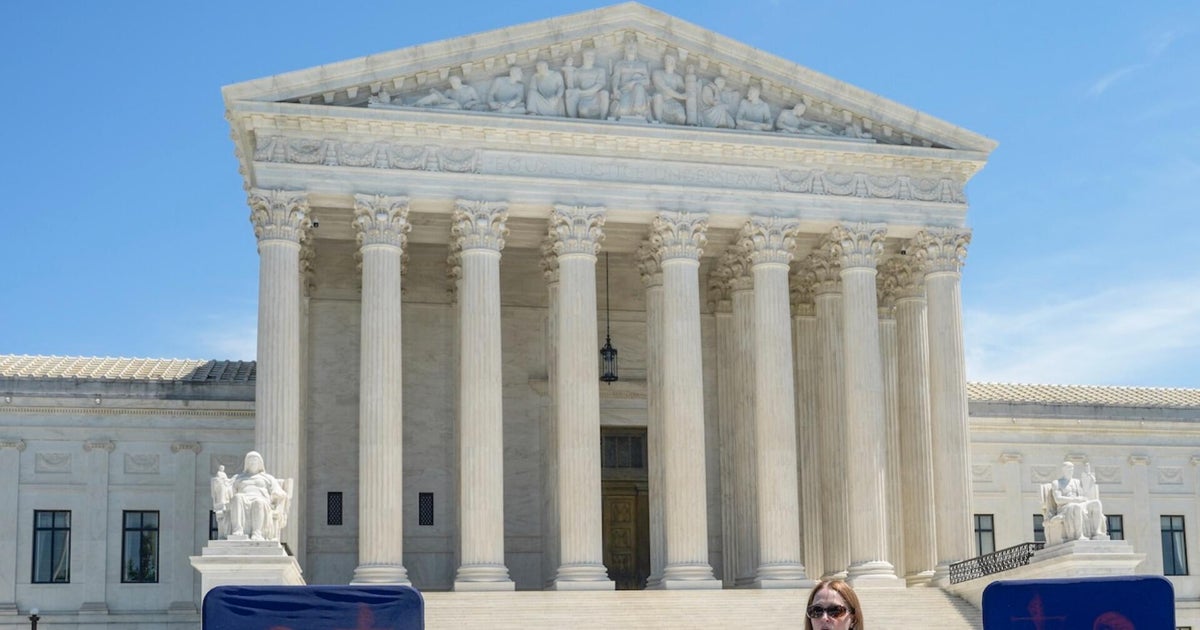

The Supreme Court’s decision on Monday to immediately enforce its recent ruling against Louisiana’s congressional map has created a wave of urgency among state officials. As the state scrambles to redraw the map ahead of upcoming elections, a spirited debate has emerged between two justices.
In the case of Louisiana v. Callais, the court, in a 6-3 decision, deemed the existing Louisiana U.S. House map unconstitutional as it includes two majority-Black districts represented by Democrats. In response, Louisiana officials promptly suspended the scheduled House primaries this month, setting in motion the redrawing of the map.
The group of voters who initially contested the validity of Louisiana’s map requested the justices expedite the usual 32-day interval between the announcement of a ruling and the formal passing of the decision to a lower court. With the elections fast approaching, they argued the urgency of returning the issue to the district court to ensure a seamless process for creating fair maps.
On Monday, the Supreme Court acceded to this request, stating that the typical wait period is flexible and can be adjusted by the court’s discretion.
Justice Ketanji Brown Jackson, one of the court’s liberal voices, criticized the decision as “unwarranted and unwise.” She argued that the court’s move effectively allows Louisiana to cancel its primaries and proceed with a new map amid ongoing legal disputes about the suspended primaries. Jackson cautioned against the court’s involvement, suggesting it risks projecting partiality, especially given the court’s usual hesitance to intervene close to an election.
Jackson said the court should “stay on the sidelines” to “avoid the appearance of partiality,” citing the court’s traditional reluctance to make changes right before an election.
“And just like that, those principles give way to power,” she wrote.
Justice Samuel Alito, who wrote the majority opinion in the Callais case, pushed back strongly in a concurrence joined by fellow conservative Justices Clarence Thomas and Neil Gorsuch.
Alito called Jackson’s concerns about an appearance of bias “baseless and insulting,” and argued that, if anything, it could create an appearance of partiality if the court lets Louisiana’s old maps stand by “running out the clock.” He also said her suggestion that the court was abandoning its principles was “groundless and utterly irresponsible.”
“What principle has the Court violated?” he wrote. “The principle that Rule 45.3’s 32-day default period should never be shortened even when there is good reason to do so? The principle that we should never take any action that might unjustifiably be criticized as partisan?”
Alito argued that Jackson is essentially calling for Louisiana to be forced to use a congressional map that the Supreme Court had deemed unconstitutional. Jackson denied that charge, responding in a footnote that her “preference is for the Court to stay out of all this, and the best way to do that is to stick with our default procedures.”
The anger between the two justices highlights the high stakes of the Callais decision, which could have seismic impacts well beyond Louisiana. Two other states — Tennessee and Alabama — launched last-minute redistricting efforts that could result in fewer Democratic seats.
The decision narrowed Section 2 of the Voting Rights Act of 1965, which has long been used to challenge congressional maps as racially discriminatory.
In the past, southern states have frequently needed to draw majority-minority districts in order to comply with the Voting Rights Act and overcome allegations that their congressional maps illegally diluted minority votes. But in the court’s majority opinion, Alito wrote that maps only violate the Voting Rights Act when there is a “strong inference that the State intentionally drew its districts to afford minority voters less opportunity because of their race.”
That new standard, Alito argued, aligns with the text of Section 2 and reflects “important developments” over the last few decades, including much higher turnout by Black voters and the abolition of racially discriminatory voting laws.
In a dissent, Justice Elena Kagan wrote that the Callais ruling “eviscerates” Section 2 and renders it “all but dead-letter,” arguing that proving intentional racial discrimination in a state’s map-drawing process is “well-nigh impossible.”
“I dissent because the Court’s decision will set back the foundational right Congress granted of racial equality in electoral opportunity,” Kagan wrote, joined by Jackson and Justice Sonia Sotomayor.