
PORTLAND, Ore. – With the cost of living continuing to rise, Democrats are centering their midterm election campaigns on addressing voter concerns about economic pressures. However, a primary ballot question in Oregon is challenging their strategy.
Last fall, the Democrat-led state legislature decided to increase the gas tax and various fees to fund road upgrades and address a gap in Oregon’s transportation budget. In response, Republicans initiated a petition to reverse these hikes, leading to a referendum that coincides with escalating gas prices across the U.S., fueled by the ongoing conflict involving Iran.
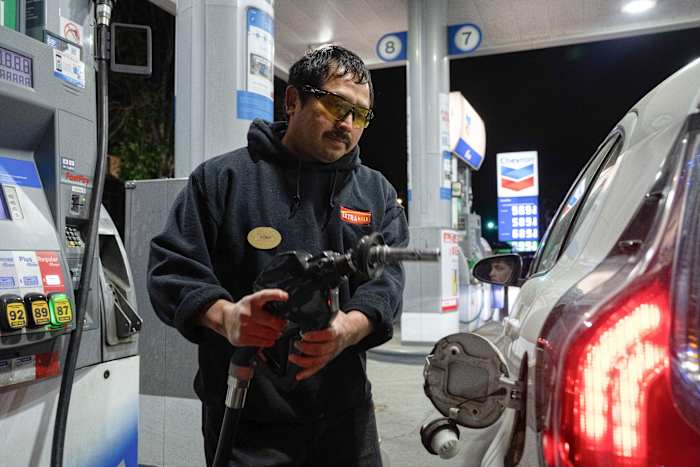
“It is a hell of a time to be raising gas taxes on people,” remarked Jeanine Holly while refueling her vehicle one recent morning in Portland.
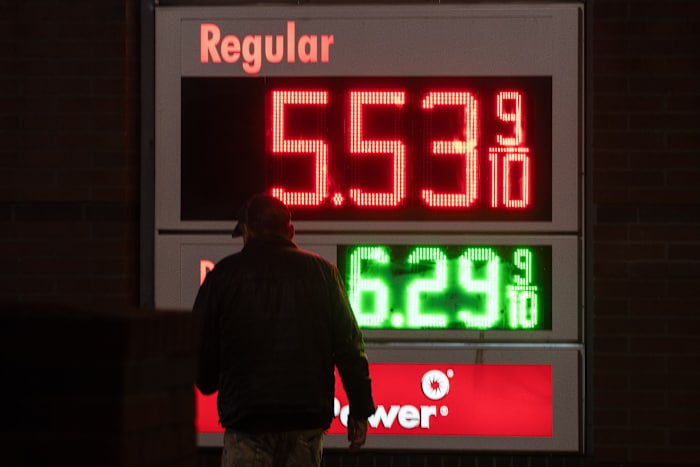
This upcoming gas tax repeal vote, scheduled for Oregon’s May 19 primary, unfolds against the backdrop of significant oil market disruptions due to the conflict with Iran, ignited by actions from Israel and President Donald Trump. The situation has led to widespread frustration among consumers nationwide as gas prices have surged past $4.50 per gallon on average, with Oregon seeing prices climb approximately 80 cents higher.
The referendum offers voters an opportunity to express their stance on a pressing financial issue during a period marked by elevated costs for essentials, from housing to groceries. On a national scale, Democrats are honing in on affordability issues reminiscent of those that contributed to Trump’s 2024 electoral success. Some Democratic candidates are even suggesting tax cuts to advance their platform and counter a typical Republican tactic.
“It’s difficult to imagine a worse situation for … a gas tax increase than right now in American politics,” commented Chris Koski, a political science and environmental studies professor at Reed College in Portland.
Republicans sense an opportunity
Republicans wasted no time in appealing to voters after the Legislature and Democratic governor signed off on the tax increase, which also included a higher payroll tax for transit projects and a boost in vehicle registration and title fees.
They needed 78,000 voter signatures to qualify the referendum for the ballot. They quickly got 250,000.
“That is a remarkable number,” said Republican strategist Rebecca Tweed.
Republicans in Oregon have countered Democrats’ affordability messaging by portraying the tax and fee increases as further fueling the high cost of living.
“Do Oregonians want to pay more? The answer is no,” said GOP state Sen. Bruce Starr, who helped lead the referendum campaign. “Everything they’re looking at is expensive.”
Under the legislation, Oregon’s gas tax would rise from 40 cents to 46 cents a gallon. That would make it tied with Maryland for the eighth highest gas tax of any state when factoring in other state taxes and fees, according to figures from the U.S. Energy Information Administration.
At the Portland gas station, Michael Burch said he used to spend $70 to fill three-quarters of his pickup truck’s tank, but now pays $80 for just over half a tank.
“I’m sick and tired of taxes,” the 76-year-old retiree said. “Gas is certainly dampening the spirits and the coffers of folks that aren’t as well off.”
Hannah Coe, a 30-year-old student, said she was not sure how she would vote on the primary ballot referendum.
“I think I would be in favor of it if it was going to go to the things that it was saying it was going to go to, such as fixing our roads,” she said. “I also kind of feel like that’s just a grab at trying to get more money from the people who live here.”
Democrats blame the Iran war
Oregon Democrats spent much of last year fighting to pass a transportation funding bill to help raise money for services such as road paving and snow plowing. The debate came amid projections of declining gas tax revenue as more people adopt electric, hybrid and fuel-efficient cars.
They finally passed a narrower version of their plan during a special session called by Democratic Gov. Tina Kotek.
She recently acknowledged the challenging timing of the referendum.
“Certainly, the conversation at the ballot this year … is a tough sell right now, because I think everyone is feeling a pinch on their household budgets,” she told reporters.
But she and other Democrats said the root cause of the spike in gas prices is Trump’s decision to go to war with Iran. She suggested the federal government consider reducing the federal 18 cent-a-gallon gas tax if it wants to provide relief at the pump for Americans.
Some Oregonians are receptive to the Democrats’ reason for passing the legislation last year. Kurt Borneman, 68, said he would support the gas tax increase, even though he’s now paying at least $10 more to fill up his tank.
“I realize that money’s tight and roads need to be improved,” he said at the Portland gas station. “I want less government, but I also want nice roads.”
Democratic state Rep. Paul Evans said his party lost the battle over how to frame the gas tax increase to the public. So far, there has been no organized effort from Democrats and their allies to oppose the ballot referendum.
“When anything is reduced to, ‘Do you want a tax or not?’ Most people are going to say no,” he said. “The messaging got away from us, and it became focused upon the price instead of the value.”