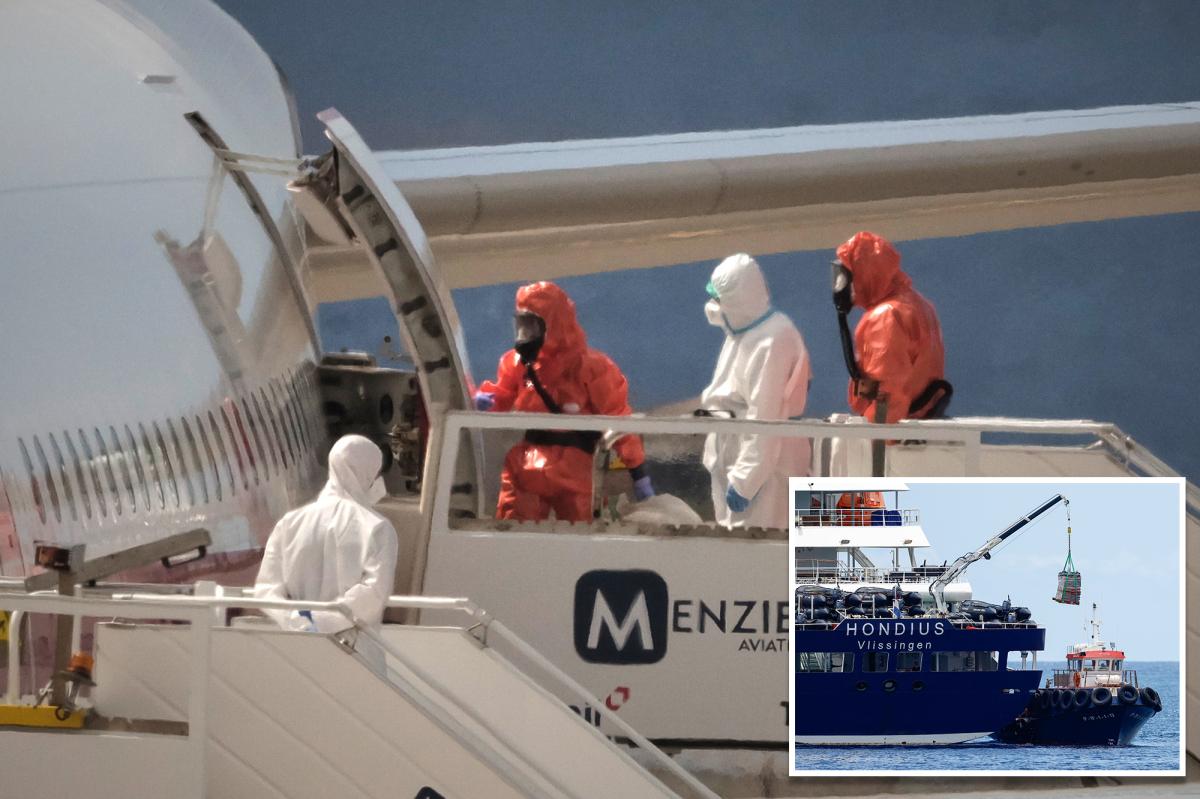


Health authorities are closely observing at least five Americans on both the East and West coasts for potential symptoms of hantavirus, despite their absence from the MV Hondius cruise ship, which was recently plagued by an outbreak.
The individuals under observation include two residents from New Jersey, two from Maryland, and one from California. They are currently in isolation, under close supervision by health officials, following international flights that carried passengers who were aboard the virus-stricken cruise.
As of now, none of these individuals have shown any symptoms, and it remains uncertain whether they have contracted the virus.
The Dutch expedition cruise ship, MV Hondius, has been identified as the focal point of a hantavirus outbreak involving the rare Andes strain, which can be transmitted from person to person. This outbreak resulted in the death of three passengers and heightened the risk of infection for many others.
Typically, hantavirus infections are associated with contact involving an infected rodent or its waste products.
Out of the 17 American passengers on the cruise, only one tested positive for the virus following their evacuation. This individual, along with another passenger exhibiting symptoms, has been transferred to Emory University for further medical assessment. Meanwhile, the remaining 15 are undergoing quarantine at a leading medical facility in Nebraska.
Health officials have repeatedly assured that the virus poses no real threat to the public at this time.
“Such transmission is rare and generally requires close, prolonged contact with an infected individual or their bodily fluids,” officials said.
Hantavirus symptoms generally show between four and 42 days after contact, while people who are asymptomatic are generally not considered contagious.
The cruise ship first departed from Argentina on March 20 and worked its way up the Atlantic Ocean as the outbreak spread onboard.
Patient zero was identified as ornithologist Leo Schilperoord, who likely contracted the virus while birdwatching in a landfill in Argentina. He and his wife both died during the voyage.
A group of passengers left the boat between April 22 and 26 — more than a week after the Schilperoord died — prompting fears they could spread the strain across the world.