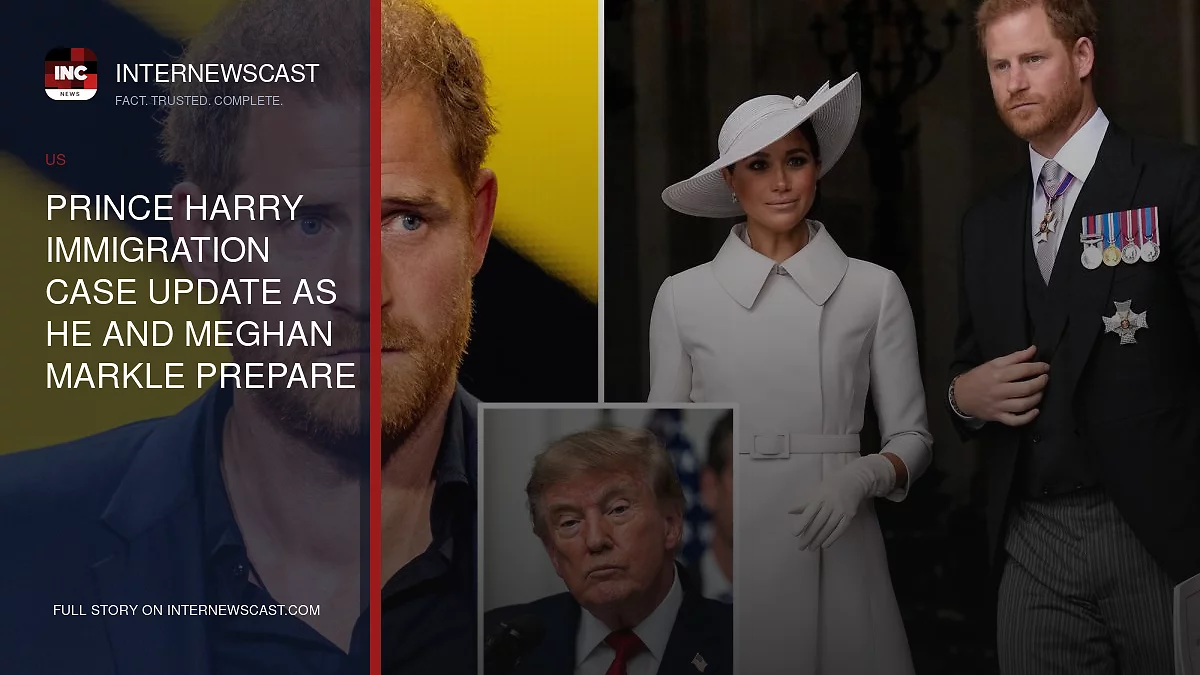

WASHINGTON — Questions over whether Prince Harry was fully candid on his U.S. immigration paperwork may never be answered, after two federal court challenges seeking details about his visa status languished in the months before he and Meghan Markle announced Wednesday that they plan to return to the UK.
Attorneys for the conservative Heritage Foundation filed lawsuits against the Department of Homeland Security and the State Department in 2023, pressing the agencies to release records from the Duke of Sussex’s immigration file after Harry wrote in his memoir, “Spare,” that he had used drugs.
When Harry moved to the United States in 2020, the royal outsider would have been expected to disclose any history of substance use — including experimentation with cocaine, cannabis and psychedelic mushrooms — on paperwork that would ultimately be reviewed by DHS.
The 41-year-old prince’s visa application submitted to the State Department could also have raised legal concerns if he failed to include those past drug-related episodes.
But the Heritage Foundation’s Freedom of Information Act cases did not produce records from either agency shedding light on Prince Harry’s immigration status before the duke and duchess revealed they would head back across the Atlantic, six years after stepping away from official royal duties.
“We still want all the documents,” said Mike Howell, a former Heritage Foundation staffer who is now president of the government accountability group Oversight Project and is also a party to the litigation.
“Prince Harry may be leaving, but our fight for the truth goes on,” Howell said. “Maybe he won’t be able to come back.”
President Trump had previously dismissed the idea of deporting Harry early in his second term, quipping to The Post’s Miranda Devine: “I’ll leave him alone. He’s got enough problems with his wife.”
A well-placed DC source claimed that while the legal battles challenged Harry and Meghan’s presence in the US, the couple was really forced to exit after what this person called their “grift” — including an ill-fated bid to become Netflix stars and Meghan’s attempt to carve out a Martha Stewart-esque niche as a lifestyle brand — ran out of steam.
“Spare” broke records by becoming the fastest-selling nonfiction book of all time when it was published in January 2023.
In March 2025, the Heritage suit against DHS yielded a handful of heavily redacted court declarations from federal agents who had personally reviewed Harry’s immigration file.
The agency only confirmed that it held “entry and exit records to the United States” for Harry but declined to discuss other documents due to “the Duke’s right to privacy.”
A federal judge had already ruled out releasing information from the file itself, writing in a September 2024 opinion that “the public does not have a strong interest in disclosure of the duke’s immigration records.”
An earlier declaration by a DHS Freedom of Information Act officer claimed that the public also wasn’t entitled to the records if their release could submit Harry to “harm” or “harassment.”
Heritage attorneys subsequently sued the State Department for a broader range of documents that amounted to all records on the royal since January 2020.
Department officials revealed in late July that just 18 records were responsive to the initial request but would all be withheld due to FOIA and immigration laws.
Heritage lawyers theorized that Harry likely came to the US on a so-called O-1 visa, which is reserved for people “of exceptional talent or ability.”
To obtain an O-1 visa, applicants must provide a petition from a sponsor with evidence of “exceptional talent or ability.” In Harry’s case, attorney Samuel Dewey previously told The Post, that sponsor could have been one of the prince’s foundations and the visa may have been granted based on his “fundraising” prowess or any other skill deemed “exceptional.”
Both suits were also filed under suspicion that Harry may have received special treatment from the feds, regardless of how truthful he was about his confessed drug use.
Reps for DHS and the State Department did not respond to requests for comment.