
On Tuesday, Pakistan firmly dismissed claims that it had granted Iranian aircraft access to its airfields amidst growing tension with the United States. These claims insinuated that such a move might have protected the planes from possible airstrikes. Notably, Islamabad has been playing a prominent role as a mediator between the conflicting parties.
A report dated May 11 also hinted at the possibility that Tehran had dispatched a civilian aircraft to Afghanistan during the ongoing conflict. However, Pakistan was quick to counter these assertions.
In a statement, the Ministry of Foreign Affairs labeled the CBS report as “misleading and sensationalized.” They emphasized that such speculative narratives seem designed to disrupt ongoing efforts to achieve regional peace and stability.
The ministry elaborated, stating, “Following the ceasefire and the initial round of the Islamabad Talks, several aircraft from both Iran and the United States arrived in Pakistan. Their purpose was to facilitate the movement of diplomatic personnel, security teams, and administrative staff involved in the talks.” They further clarified that “some aircraft and support personnel remained temporarily in Pakistan in preparation for subsequent engagement rounds.”
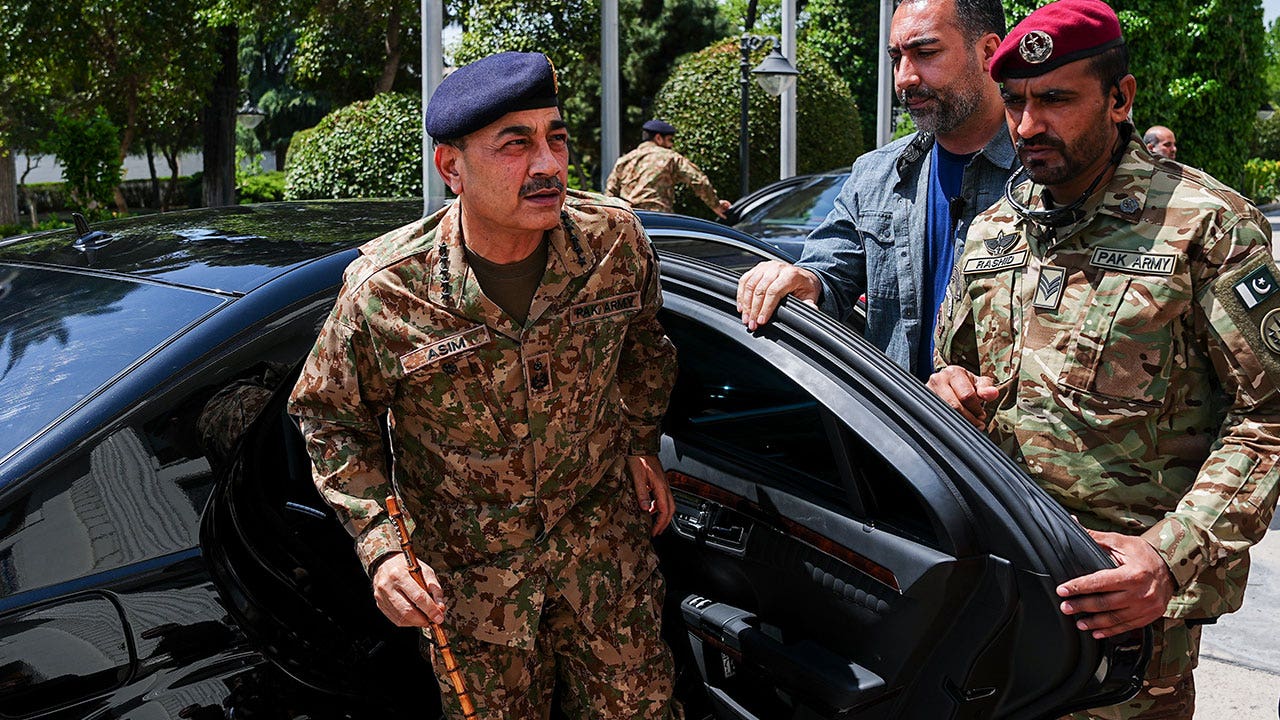
On April 16, 2026, Iranian President Masoud Pezeshkian held discussions with Pakistan’s Chief of Army Staff, Field Marshal Asim Munir, in Tehran. The focus of their meeting was on strengthening bilateral ties and addressing regional developments.
The alleged movements of Iranian assets had sparked speculation that Iran might be attempting to hide some of its remaining aerial capabilities. Meanwhile, Pakistan continued its efforts behind the scenes to mediate a ceasefire between Iran and the United States.
President Donald Trump also confirmed Tuesday he was satisfied with the mediation work carried out by Pakistan, telling reporters ahead of his trip to China that they were “great.”
“I think the Pakistanis have been great. The field marshal and the prime minister of Pakistan have been absolutely great,” Trump clarified.
In April, Pakistan had emerged as a key mediator in efforts to de-escalate tensions between Washington and Tehran amid the Strait of Hormuz crisis and the regional conflict.
Islamabad hosted senior delegations for talks on April 11–12 after helping secure a temporary two-week ceasefire.
Vice President JD Vance shakes hands with Pakistani Deputy Prime Minister and Foreign Minister Mohammad Ishaq Dar in Islamabad on April 12, 2026, after talks on Iran. Pakistan’s Interior Minister Mohsin Naqvi, Chief of Defence Forces Chief of Army Staff Field Marshall Asim Munir, and U.S. Embassy Charge d’Affaires Natalie A. Baker look on as Vance prepares to board Air Force Two. (Jacquelyn Martin/AP)
Pakistan’s position was unique, given its geographic proximity to Iran and its longstanding strategic partnership with the United States.
Mediation efforts were led by Prime Minister Shehbaz Sharif, Army Chief Gen. Asim Munir and Foreign Minister Ishaq Dar.
Officials told CBS that, days after Trump announced a ceasefire with Iran in early April, Tehran sent multiple aircraft to Pakistan Air Force Base Nur Khan.
Nur Khan Airbase, located near Rawalpindi, is said to be a key installation of the Pakistan Air Force and serves as a major logistical and operational hub.
Among the aircraft reportedly moved there was an Iranian Air Force RC-130, a reconnaissance and intelligence-gathering variant of the Lockheed C-130 Hercules, the outlet said.
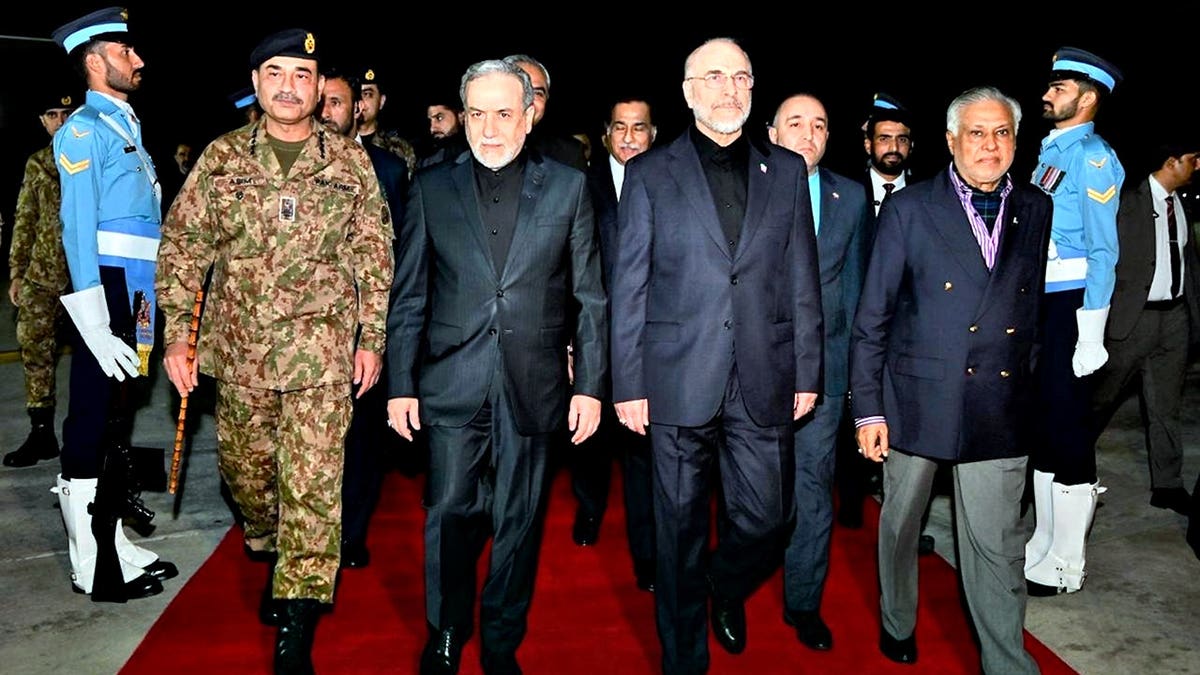
Iran’s Parliament Speaker Mohammad Bagher Qalibaf and Foreign Minister Abbas Araghchi were greeted by Pakistan Foreign Minister Ishaq Dar and Army Chief Field Marshal Gen. Asim Munir upon their arrival at Nur Khan airbase in Rawalpindi, Pakistan, on April 11, 2026. (Pakistan Ministry of Foreign Affairs/AP)
Despite initial progress between the U.S. and Iran, talks in Islamabad on April 11 ultimately collapsed.
However, Pakistani leadership said it felt optimistic. “We are very optimistic that the current momentum will lead to a lasting agreement,” Prime Minister Shehbaz Sharif said.
Trump also praised Pakistan’s mediating role again, stating on May 7, “Pakistan has been fantastic. And its leaders have been fantastic—the marshal and the prime minister.”
As part of the next response, Trump also launched “Project Freedom” to guide vessels through the Strait of Hormuz and to help free up shipping.
Trump’s initiative to help thousands of stranded crew lasted 48 hours, with the president later acknowledging that it was halted “at the request of Pakistan and other countries,” including Saudi Arabia, to avoid jeopardizing ongoing negotiations with Iran.
Sen. Lindsey Graham, R-S.C. said Monday that if Pakistan did shelter Iranian aircraft during mediation then it would force a complete reassessment of Pakistan’s role.
“If this reporting is accurate, it would require a complete reevaluation of the role Pakistan is playing as mediator between Iran, the United States and other parties. Given some of the prior statements by Pakistani defense officials towards Israel, I would not be shocked if this were true,” Graham said in a post shared on X.
Fox News Digital has reached out to the Government of Pakistan, The White House and U.S. Central Command for comment.