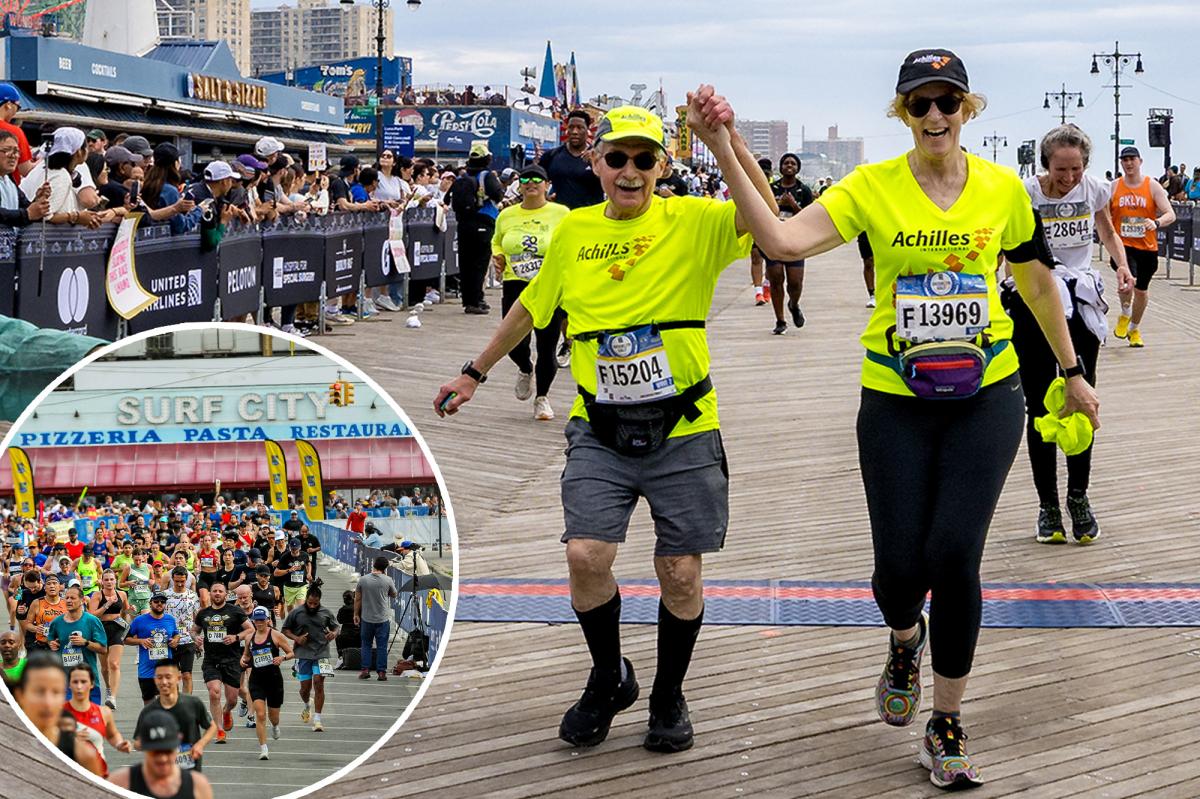


Disabled athletes eager to participate in this weekend’s renowned Brooklyn Half Marathon are feeling sidelined by what they describe as disorganized race preparations, even before collecting their race bibs.
The Road Runners organization has introduced a new policy mandating that visually impaired, paralyzed, and other athletes with special needs must justify their request for a “critical” second guide to accompany them during the annual event, The Post reports.
“Why must individuals with obvious disabilities now appeal for more than one guide? It’s incredibly discouraging,” remarked Sonya Choudhury, a volunteer guide with Achilles International for 12 years.
In March, Road Runners caused confusion by initially stating that no disabled runner would be permitted to have two guides, a sweeping policy that was quickly overturned nine days later following significant backlash from advocates.
The organization clarified to The Post that the email was an error, stating that new guidelines would, in fact, require disabled participants to apply for a second guide, which could be refused.
“Our aim at New York Road Runners is to reduce obstacles and ensure all participants, irrespective of their abilities, can enjoy our events. We understand that new protocols can be challenging, as change often is,” a spokesperson explained in a statement to The Post.
“The law requires our interactive process and to provide individualized interactions with each participant asking for a reasonable accommodation. That means that each request is analyzed on a case-by-case basis — there is no one-size-fits-all solution.
Only three of the 16 requests for a second guide at the Brooklyn Half were denied, Road Runners said, saying those racers’ disabilities only required one guide.
The group said it approved all 26 athletes who requested one guide, but at least one runner reported to Achilles that they were denied just two days before they were set to hit the pavement.
Michael Ring, a partially paralyzed athlete and disability advocate, said he initially denied a second guide for the Brooklyn Half — until he “implied [he] was threatening to sue them.”
“It was frustrating. It really appeared to me that they came up with a cookie-cutter policy without talking to people with disabilities,” said Ring, whose journey racing with acute motor axonal neuropathy — alongside his two guides — was highlighted in Road Runner’s 2025 documentary “Final Finishers.”
Ring, of Park Slope, described his two guides, one of whom is his son, as his “offensive line” and his “Secret Service agents” who keep other races from “jostling” Ring as they speed by.
“I need someone to protect me. If someone runs by and they tap me, I can go down. I can’t get up unless someone helps me. They might even interlock their arms so that no one’s going to run between them,” said Ring, who is calling on Road Runners to establish a standing committee of athletes who can represent a range of various disabilities.
“Without two guides, I would withdraw from the race.”
Susan P. counted herself as one of the lucky ones when she was approved for a second guide — just one week before race day and more than a month after she applied through the arduous process.
“It’s just stressful not knowing, and it’s not fair to my guides who have been training for a race they don’t know if they’re going to get to run. It just seems really unfair and confusing because New York Road Runners haven’t explained why they changed their policy,” said Susan, 60.
The Manhattanite — who is completely blind in one eye and has pinhole vision in the other — described the second guide as “critical” for all her races, but especially the Brooklyn Half.
One spends the 13.1 miles tethered and offering verbal clues for navigating the course, while the second communicates with other runners to clear the path.
The pair also look out for cheering family that Susan might otherwise miss, as well as read the funny signs that bystanders wave along the course.
“Having a second guide can do something that is making the emotional experience more equitable than it is necessarily keeping me safe. It’s why so many people are into running. The achievement feels so good!” said Susan, saying her guides give her the “experience that sighted runners can have.”
Road Runners told The Post it offers disabled runners additional help with completing the new application process and had not received any complaints, but Achilles International told The Post it had received reports “almost daily” of issues — which they would need to re-complete for every race they participate in.
“The path to the start line is already steeper for people with disabilities. The goal should be removing barriers, not adding more,” says Emily Glasser, the group’s president and CEO.
“Athletes with disabilities should not be left wondering whether they will have support or required to repeatedly justify the accommodations they need to participate safely and equitably on race day.”