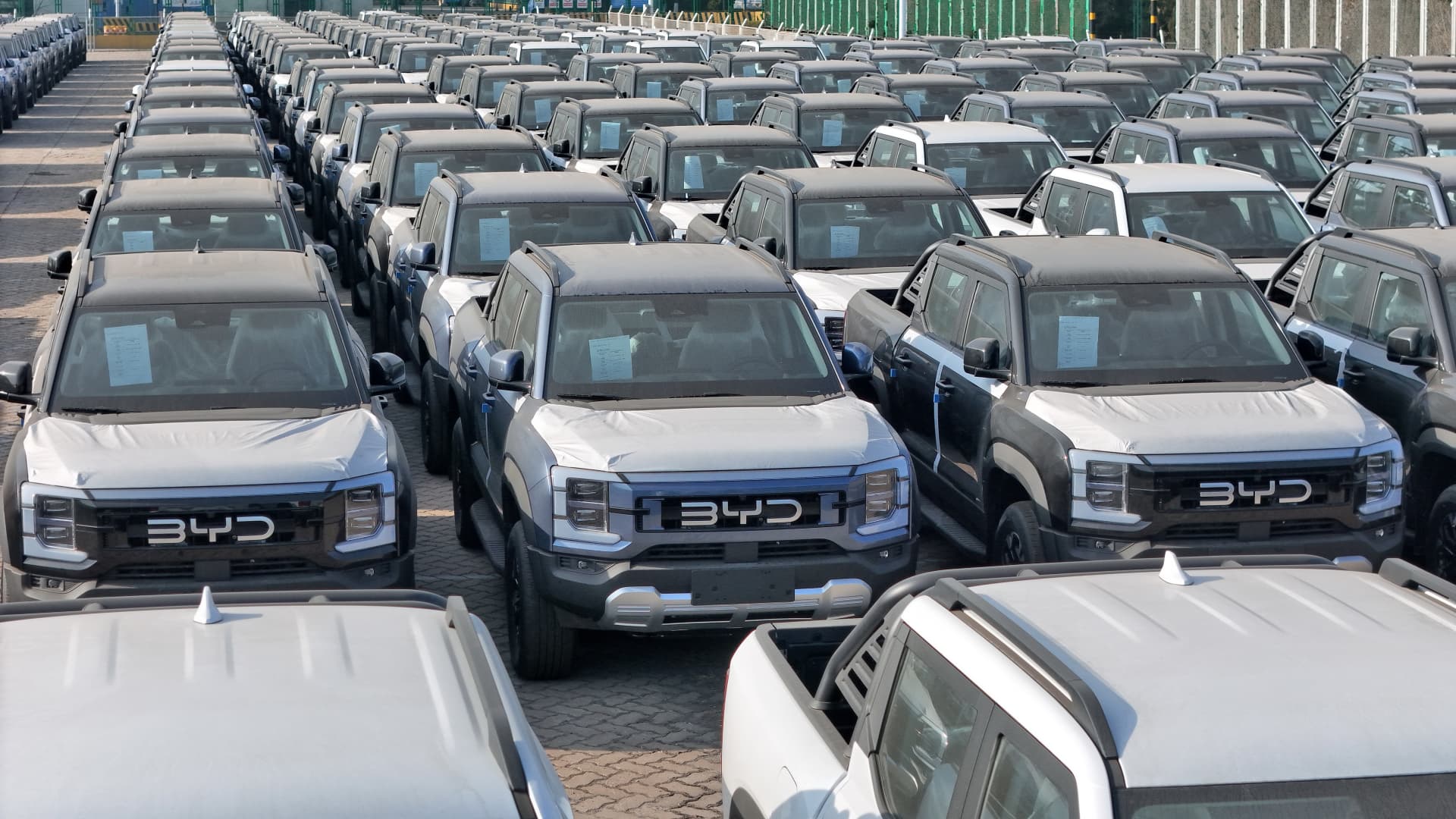


HALIFAX, Nova Scotia — Michael MacGillivray is viewing the introduction of Chinese electric vehicles into the Canadian market as a transformative opportunity.
“I believe it’s going to be quite a revelation,” remarked MacGillivray, who manages a network of 10 car dealerships across Nova Scotia and New Brunswick.
As the head of Century Auto Group and Sigma Auto Group, MacGillivray aims to position himself among the pioneering dealers in Canada to offer these imported Chinese EVs. In pursuit of this goal, he attended the Beijing Auto Show in April alongside other Canadian dealers to forge connections with Chinese car manufacturers and evaluate the vehicles that might soon be available to Canadian consumers.
“During my visit to China, I was thoroughly impressed by their vehicles,” MacGillivray commented. “The quality of materials is unparalleled. The design is striking, and the driving experience is remarkable.”
However, the prospect of Chinese EVs entering the Canadian market isn’t welcomed by everyone.
The Canadian Vehicle Manufacturers’ Association expressed significant concerns over the decision to permit the sale of these Chinese-manufactured electric vehicles.
President Donald Trump is even more harsh, calling the move “a disaster.” U.S. Transportation Secretary Sean Duffy posted on X, “Canada will live to regret the day they let the Chinese Communist Party flood North America with their EVs.”
Officially, Canada is allowing just 49,000 Chinese-made EVs to be imported for retail sales annually at a tariff rate of 6.1%, a fraction of the 100% tariff that is in place for all other vehicles China would export to Canada.
That lower tariff for EVs has convinced Chinese automakers it’s time to set up dealerships.
“We received nearly 400 inquiries from different dealers across Canada who are very interested and excited to represent any of these Chinese brands,” said Farid Ahmad, CEO of DSMA, an auto dealership broker in suburban Toronto.
Ahmad is connecting dealers with Chinese automakers like BYD, Geely and Chery.
“I think from their perspective it gives them a foothold in the North American market,” he said.
General Motors, Ford, Toyota and Hyundai sell the most vehicles in Canada, according to S&P Global. Last year, industry sales topped 1.9 million vehicles, slightly more than all of the vehicles sold in California in 2025.
Limiting the number of China EV sales with a low tariff to just 49,000 vehicles is one way for Canadian leaders to put guardrails on allowing the Chinese to enter Canada’s auto market.
“They’re being careful in terms of how much volume is being allowed in,” said Michael Robinet, vice president of forecast strategy for S&P Global Mobility, an automotive industry consulting firm. “Anywhere between 3% to 5% of the market is sizable but, nonetheless, not something that will change the competitive dynamic significantly.”
On the street here, Canadians told CNBC they are curious and eager to have the chance to buy electric models from China.
“I think they will destroy the market in a good way,” said Canadian Patrick Hunt.
“So, definitely more chances, more options for people to choose different vehicles,” Canadian Daniel Haim said, “With what’s going on with gas prices, I think that it’s going to work out well for any Chinese manufacturer coming here, especially with electric vehicles.”