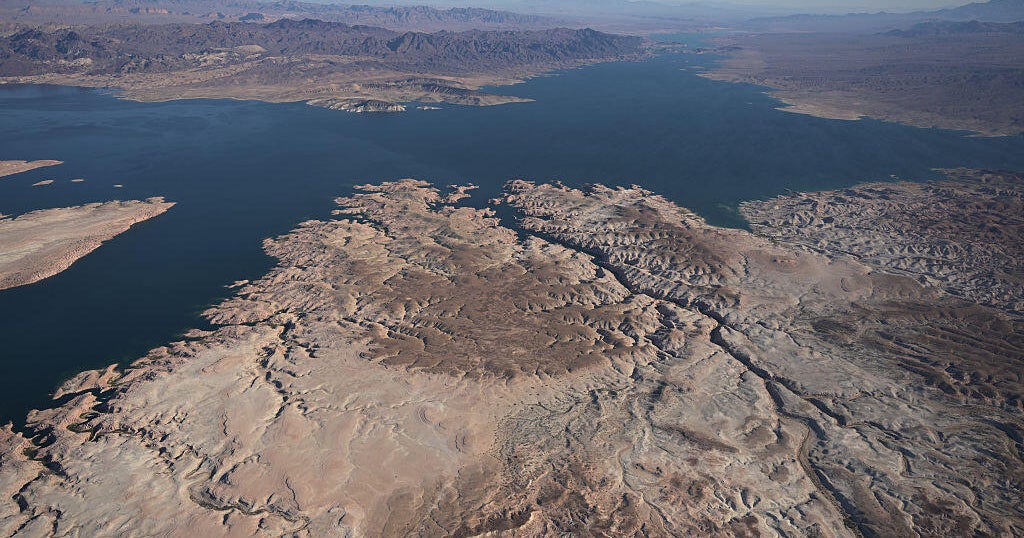

Los Angeles — The Colorado River is grappling with a severe crisis, as an increasing population demands more from its diminishing waters amidst a warming climate.
This winter, the snowpack in the Rockies, which serves as a vital source for the river, hit unprecedented lows. As a result, major reservoirs downstream, including Lake Mead and Lake Powell, are nearing alarmingly low levels.
Every day, around 40 million residents in the Western United States rely on the Colorado River for their water needs, often taking its abundance for granted. However, the region may soon have to implement drastic measures as the river’s water levels continue to dwindle.
“The reasons behind these declining reservoir levels are varied,” explained Sarah Porter, director of the Kyl Center for Water Policy at Arizona State University. “It’s not just one factor, but certainly, this year, Mother Nature hasn’t been on our side.”
In a bid to prevent interruptions in hydropower, federal authorities have begun releasing billions of gallons of water into Lake Powell, straddling Utah and Arizona.
Meanwhile, states like Arizona, California, and Nevada are urgently seeking solutions to conserve water, introducing an emergency plan that incentivizes some users to reduce their consumption.
But without a broader agreement among the states the river flows through, each fighting for more of the share, experts warn mandatory water cuts could deepen. That would threaten farming, hydropower and the water supply millions of people rely on in cities from Phoenix to Los Angeles.
RJ Sangosti/MediaNews Group/The Denver Post via Getty Images 
And with key federal operating rules set to expire later this year, the U.S. Bureau of Reclamation — which constructs and manages dams, power plants and canals across 17 Western states — is expected to decide this summer how future cuts will be divided among states.
Experts warn that without major long-term changes in water use, the Colorado River could become catastrophically overdrawn.
There has been some unexpected relief, however. An unusual May storm brought several feet of snow to the Rockies last week. It will help for now, but experts say it is not enough to end the threat millions of people now face.