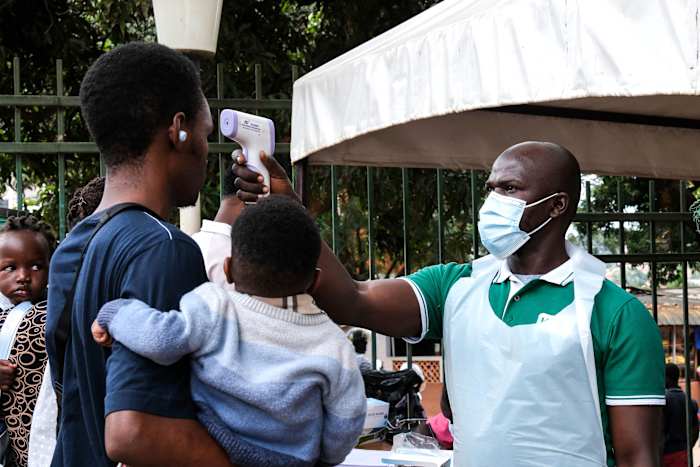


ABUJA – On Sunday, the World Health Organization’s Director-General, Tedros Adhanom Ghebreyesus, announced that the Ebola outbreak sweeping through Congo and Uganda has been classified as a public health emergency of international concern. This declaration follows reports of over 300 suspected cases and 88 fatalities linked to the outbreak.
In a statement shared on the platform X, the World Health Organization clarified that while serious, the outbreak does not meet the criteria for a pandemic emergency, such as that seen with COVID-19. Consequently, the organization advised against closing international borders as a response.
Ebola is an extremely contagious virus, primarily spread through contact with bodily fluids like blood, vomit, or semen. Although occurrences are rare, the disease is notably severe and often leads to death.
The current outbreak has been traced back to the Bundibugyo virus, a relatively uncommon strain of Ebola. Unfortunately, no approved treatments or vaccines are available for this particular variant. Despite the region’s history of dealing with over 20 Ebola outbreaks, this is only the third known instance involving the Bundibugyo virus.
According to the WHO, nearly all cases have been concentrated in Congo, with only two reported in neighboring Uganda.
The initial reports of the outbreak emerged from Congo’s eastern province of Ituri, a region that borders both Uganda and South Sudan. By Saturday, the Africa Centres for Disease Control and Prevention had documented 336 suspected cases and 87 deaths, underscoring the urgency of the situation.
“There are significant uncertainties to the true number of infected persons and geographic spread associated with this event at the present time. In addition, there is limited understanding of the epidemiological links with known or suspected cases,” Tedros said.
Uganda on Saturday confirmed one case it said was imported from Congo, and said the patient died at a hospital in Uganda’s capital, Kampala, and the WHO said that a second case has been reported in Kampala. The two cases had no apparent links to each other and both patients had traveled from Congo, it added.
The Bundibugyo virus was first detected in Uganda’s Bundibugyo district during a 2007-2008 outbreak that infected 149 people and killed 37 people. The second time was in 2012 in an outbreak in Isiro, Congo, where 57 cases and 29 deaths were reported.
WHO’s emergency declaration is meant to spur donor agencies and countries into action. However, the global response to previous declarations has been mixed.
In 2024 when the WHO declared mpox outbreaks in Congo and elsewhere in Africa a global emergency, experts at the time said it did little to get supplies like diagnostic tests, medicines and vaccines to affected countries quickly.