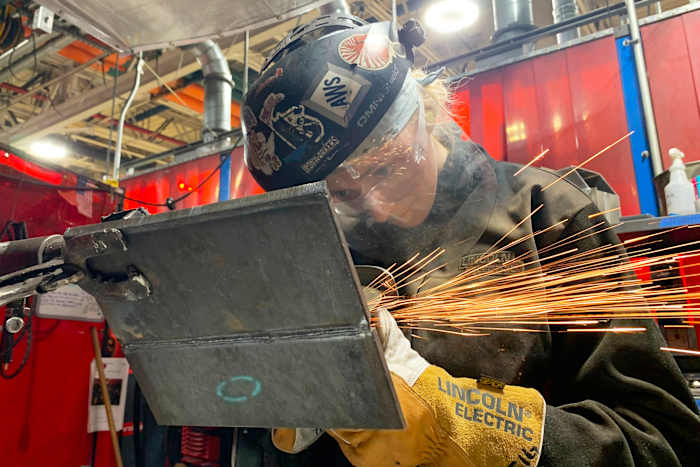

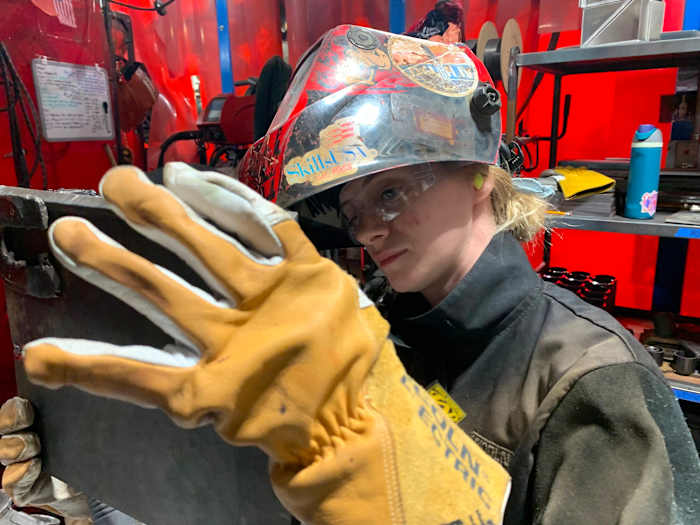
ANN ARBOR, Mich. – As a child, Mikala Sposito harbored aspirations of breaking new ground.
“My ambition was always to become the first woman to achieve something significant,” she reflected.
That ambition is soon to become a reality.
The 21-year-old native of Dexter, Michigan, is set to make history as the first female to represent the United States in welding at the WorldSkills Competition in China.
Sposito secured her place in this prestigious event as a student at Washtenaw Community College, following her victory at the USA Weld Trials held in Huntsville, Alabama, earlier this year.
“The competition was incredibly tight throughout, but ultimately, I was the one heading to Shanghai,” Sposito shared.
Described as the Olympics of the skilled trades, WorldSkills determines the globe’s best in technical disciplines that include construction, information technology, manufacturing and robotics.
And, of course, welding.
Sposito is the sixth Washtenaw Community College student to qualify in WorldSkills history. WCC has produced more WorldSkills welding alums than any other school in the United States, the Ann Arbor college said. One of them, Alex Pazkowski, who finished second in 2013, is Sposito’s instructor and mentor.
He accompanied her to the American championships in Alabama and also will be her coach at a series of competitions that will take them from Canada to Australia in the months leading up to WorldSkills in September.
Add to that 80 hours of welding practice per week at WCC, and Sposito has “a long, hard road” ahead of her, Pazkowski said.
“But at the end of the day, if you’re successful, it’s gonna open up all kinds of doors for you,” he said.
She will be evaluated on technical execution and craftsmanship under stiff time constraints and stringent international standards.
Sposito said she’s looking forward to putting up her skills against the world’s best. And traveling abroad, which she hasn’t done previously.
As for the “first” aspect, she said: “I don’t see the gender aspect of it.
“I mean, welding doesn’t take any brute strength or anything. It’s actually very fine and precise.”
But she does recognize that women are minority participants in a discipline she fell in love with at age 10. And if her world-class success joining together metals using heat and pressure helps pave the way for future welders, then all the better.
“Being the first female to do it is very cool,” said Sposito, whose near-term goal is to earn her bachelor’s degree in welding engineering at Wayne State University in Detroit. Long-term, she might like to follow in Pazkowski’s footsteps and teach at WCC.
Either way, she’s happy to be “inspirational for many women in the trades who have possibly struggled.”


