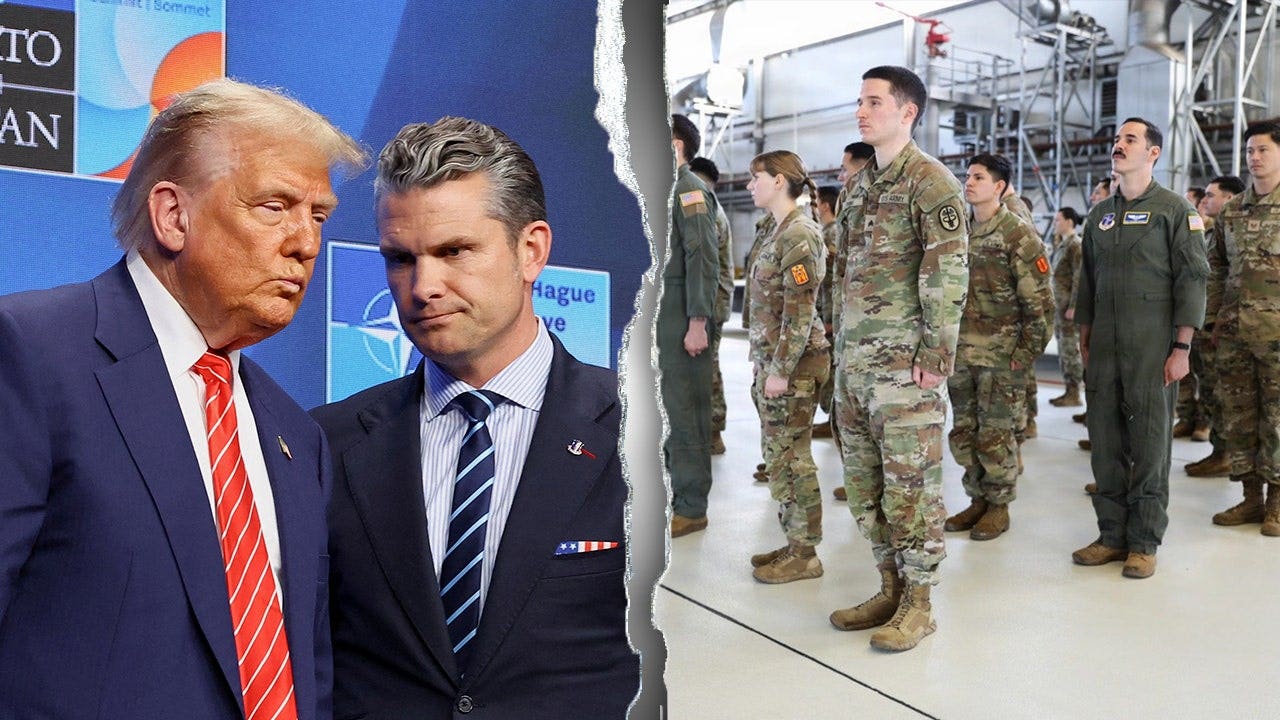

The Pentagon has announced a strategic reduction of Brigade Combat Teams (BCTs) stationed in Europe, scaling back from four to three. This move aligns with the Trump administration’s push for NATO allies to step up their defense spending.
This decision follows President Donald Trump’s persistent urging for European nations to take on more responsibility for their own defense needs, thereby decreasing their dependency on the United States. This announcement also comes on the heels of the Pentagon’s recent halt of a scheduled rotation involving approximately 4,000 U.S. troops to Poland.
While exact numbers were not disclosed, a typical BCT includes around 4,400 to 4,700 soldiers. Officials indicated that this adjustment aims to restore troop levels in Europe to those observed in 2021.
“This decision resulted from a comprehensive, multilayered assessment focusing on the U.S. force posture in Europe,” the Pentagon stated in its release.
President Trump is also contemplating the withdrawal of troops from Germany, Spain, and Italy. (Piroschka Van De Wouw/Reuters: Kirk Frady/Medical Readiness Command Europe)
The Pentagon noted that this decision would lead to a temporary delay in the deployment of U.S. forces to Poland, which it praised as “a model U.S. ally.”
“The Department will determine the final disposition of these and other U.S. forces in Europe based on further analysis of U.S. strategic and operational requirements, as well as our allies’ own ability to contribute forces toward Europe’s defense,” the statement said.
“This analysis is designed to advance President Trump’s America First agenda in Europe and other theaters, including by incentivizing and enabling our NATO allies to take primary responsibility for Europe’s conventional defense,” it added.
In February, President Trump said he would direct War Secretary Pete Hegseth and other relevant departments and agencies to begin identifying and declassifying records. (Saul Loeb/AFP)
War Secretary Pete Hegseth spoke Tuesday with Polish Deputy Prime Minister Władysław Kosiniak-Kamysz, the Pentagon said, adding that the U.S. would remain in close contact with Polish officials throughout the review process.
“Poland has shown both the ability and resolve to defend itself,” the department said. “Other NATO allies should follow suit.”
The announcement came after Reuters reported Tuesday that the Trump administration plans to inform NATO allies this week that the United States would reduce the military capabilities available to support Europe during a major conflict, citing sources familiar with the matter.
The move also comes days after the Pentagon halted a planned rotation of approximately 4,000 U.S. Army troops to Poland, sparking concern in Warsaw and criticism from U.S. lawmakers.
The affected unit, the 2nd Armored Brigade Combat Team, 1st Cavalry Division, had been scheduled to deploy to Poland and other eastern flank positions as part of a routine nine-month NATO rotation.
Around 10,000 U.S. troops are typically stationed in Poland, most serving on rotational deployments lasting several months. Because the American military presence in Poland relies heavily on those rotations, the halted deployment raised concerns among Polish officials.
President Donald Trump spoke with NATO Secretary General Mark Rutte during the North Atlantic Council plenary meeting at the NATO summit in The Hague on June 25, 2025. (Ludovic Marin/AFP)
Poland’s deputy defense minister said Warsaw plans to press U.S. officials in the coming days over the Pentagon’s decision.
“We will ask questions and I guess that we will get answers,” Polish Deputy Defense Minister Paweł Zalewski previously told Fox News Digital in an interview ahead of meetings in Washington with Pentagon officials and members of Congress.
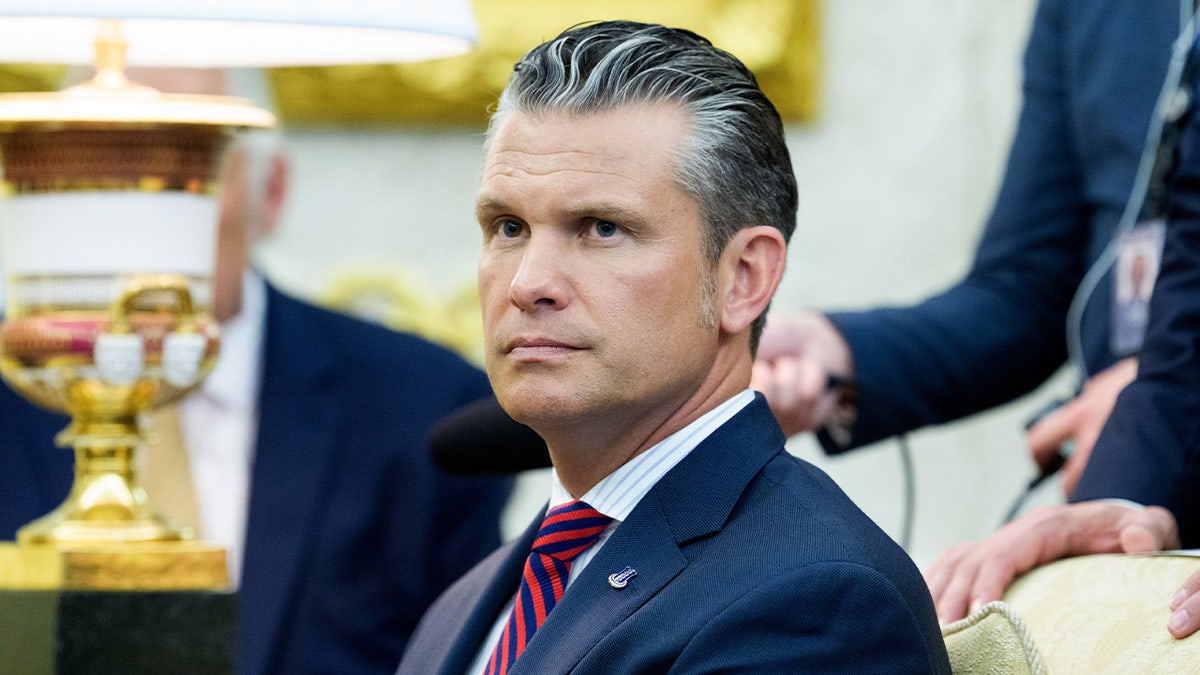
Defense Secretary Pete Hegseth meets with President Donald Trump and Poland’s President Karol Nawrocki in the Oval Office of the White House in Washington, D.C., on Sept. 3, 2025. (Aaron Schwartz/CNP/Bloomberg)
Polish officials have continued describing the country as a “model ally” within NATO and said they expect military cooperation with the United States to continue expanding.
<!–>
–>