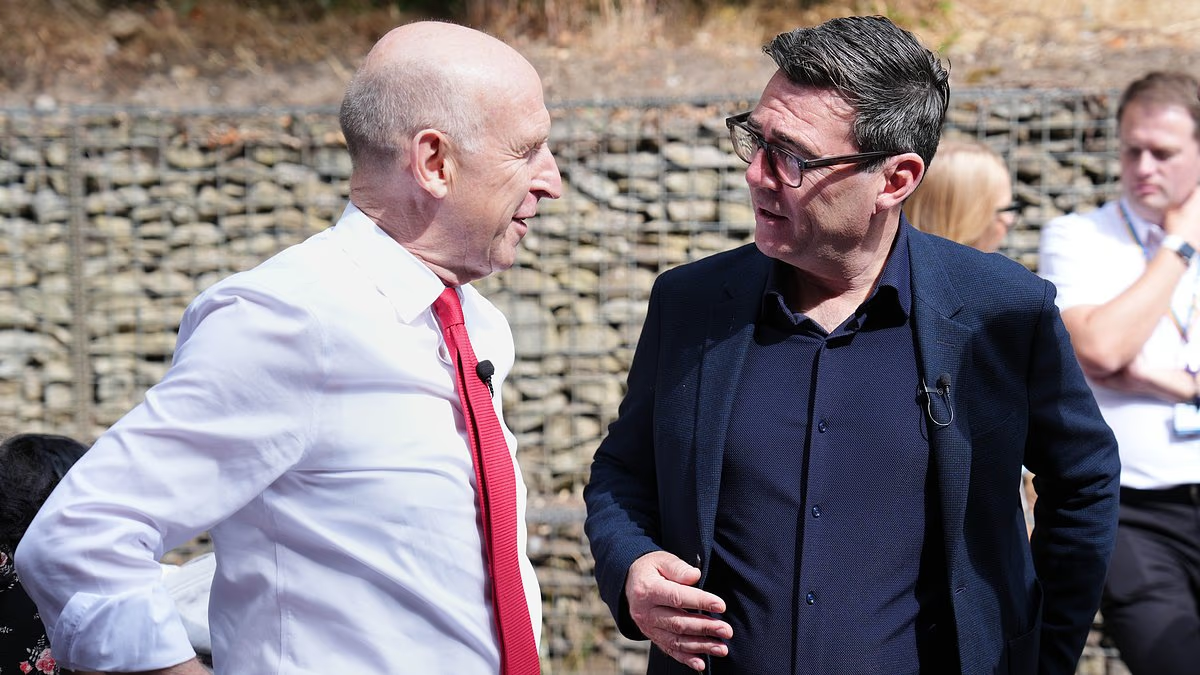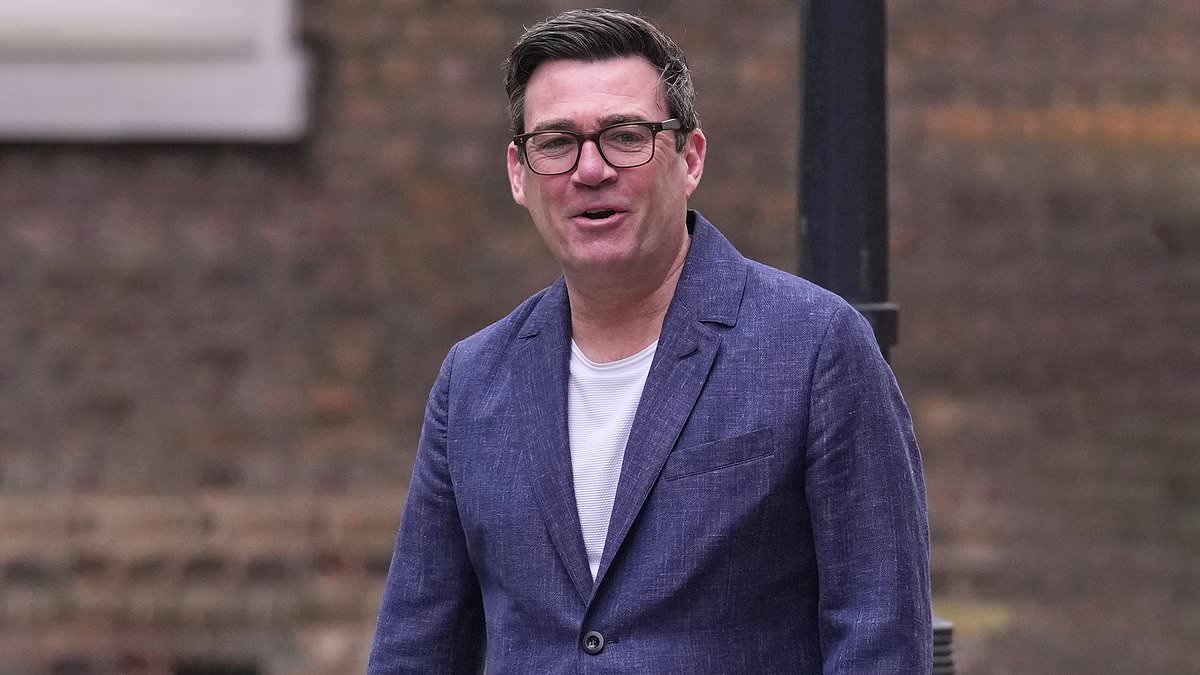

The United Kingdom may soon witness its sixth Prime Minister in a decade, as Andy Burnham is poised to make a return to the Westminster political arena.
Should Burnham manage to secure a Parliamentary seat and mount a challenge to Sir Keir Starmer, it could have far-reaching consequences for the nation’s financial landscape.
A potential victory for Burnham would necessitate the selection of a new Chancellor, though he might opt to retain Rachel Reeves to maintain stability in bond markets. Nonetheless, he is expected to introduce fresh policies to assert his leadership.
Even if Burnham does not ascend to the role of Prime Minister, figures such as Wes Streeting, Angela Rayner, or Ed Miliband may vie for leadership against Starmer, whose grip on authority has weakened.
This development raises questions about the relevance of Labour’s planned manifesto for 2024. Which tax and savings strategies will endure, and which might be abandoned?
Heading for the exit: Sir Keir Starmer is expected to be replaced this year
Fiscal rules
Following the 2024 election, the Chancellor introduced new fiscal rules to gain investor confidence and assure the public of responsible management of national finances.
She has reiterated she will strictly adhere to the rules and has committed to reducing the annual deficit, helping to keep the bond markets largely on side.
Starmer’s replacement will therefore need to decide whether to keep Rachel Reeves or replace her with an equally market-friendly Chancellor.
‘The reaction of the gilt market may depend on the extent it believes the new Chancellor to break links with the fiscal stance Reeves has set out and instead borrow more or adopt looser fiscal rules,’ says Rachel Vahey, head of public policy at AJ Bell.
Economists have warned that a lurch further to the left will exert upward pressure on gilt yields, which will feed through to more expensive mortgage rates for millions of homeowners.
This week, the Tribune group of Labour MPs allied to Burnham, called for the government to change the fiscal rules after the next election if the current ones continue to be met.
Burnham is on record as saying Britain must stop being ‘in hock to bond markets,’ which has already sent UK borrowing costs soaring and seen the pound slump.
‘Markets won’t like the idea of the Labour party anointing a left-leaning PM whose fiscal views are well known – as are his views of the bond market,’ says Neil Wilson of Saxo.
‘Ultimately the bond market is likely to impose fiscal discipline, but it can get messy before that happens.’
Income tax rises
Labour promised not to increase taxes on ‘working people’ during the election, which include income tax, employee national insurance contributions (NICs) and VAT.
Reeves has struggled to balance the books, instead opting to hike employer NICs and freeze income tax thresholds, clawing in more tax through fiscal drag.
Several Labour MPs, as well as Burnham, have been vocal in their opposition to welfare cuts.
If a new Prime Minister vows to keep the current package of benefits and refuses to cut spending, they may be pushed to raise income taxes to boost the Treasury’s coffers.
‘A new PM may be tempted to rip off the fiscal straitjacket and increase the rate of income tax or NI to fund their ambitions,’ says Vahey.
‘However, doing so would be a huge political gamble and would leave them open to accusations of abandoning the manifesto the government was elected to deliver.’
Introduce wealth taxes
Speculation over a wealth tax reached fever pitch last year after a group of campaigners called for higher taxes for the super-rich.
They said that while many high earners pay their fair share of income, those making money from capital gains face a much lower rate.
Capital gains tax is levied on profits from assets ranging from shares to second homes, buy-to-let properties and personal possessions.
The rates for stocks and shares gains were hiked in the 2025 Autumn Budget to 18 per cent for basic rate taxpayers and to 24 per cent for those paying higher rates of tax.
The rises, from 10 per cent and 20 per cent respectively, brought them into line with the already higher levies on property gains and took effect immediately.
The Labour Growth Group, allied to Wes Streeting, has this week called for a rise in capital gains tax to pay for a 2p cut in national insurance.
Burnham has also consistently argued that work is taxed too heavily and wealth too lightly.
He told Sky News in 2025: ‘We’ve overtaxed people’s work and we’ve undertaxed people’s assets and wealth and that balance should be put more right.’
Last year, he said he was in favour of revaluing council tax, which has not been reformed since 1991. He said: ‘If that is perceived as a wealth tax, I’m not going to shy away from [that].’
Neither Streeting nor Burnham have advocated for an outright wealth tax, however.
‘Although it’s generally thought that most Brits would back a wealth tax, perhaps what’s stopping the government is the enormous complexity involved, including the valuation of complicated assets such as art and private companies,’ says Vahey.
‘It would also hit those who are ‘asset rich but cash poor’ disproportionately hard, and after changes to IHT rules in recent years, any new administration may think twice before taking on the farmers again.’
Which policies could be ditched?
There are plenty of unpopular policies that the Labour Party has introduced since 2024.
This includes bringing pensions into the inheritance tax net from April 2027, adding to the administrative burden for grieving families and likely to lead to payment delays.
‘A new PM could instead choose to adopt one of the alternative approaches the pensions industry has put forward that would raise the same revenue for the Government, could be implemented quickly, and would avoid imposing horrendous complexity on millions of people – as well as HMRC,’ says Vahey.
Starmer’s replacement could also ditch the changes to cash Isas –the annual allowance for under-65s will be slashed to £12,000 from next April – and scrap the pension salary sacrifice changes, says AJ Bell.
A new Prime Minister could choose to ditch these unpopular policies and receive a bounce in the polls, but the tricky economic outlook will make this more difficult.
DIY INVESTING PLATFORMS
AJ Bell
AJ Bell
Easy investing and ready-made portfolios
Hargreaves Lansdown
Hargreaves Lansdown
Free fund dealing and investment ideas
interactive investor
interactive investor
Flat-fee investing from £4.99 per month
Freetrade
Freetrade
Investing Isa now free on basic plan
Trading 212

Trading 212
Free share dealing and no account fee
Affiliate links: If you take out a product This is Money may earn a commission. These deals are chosen by our editorial team, as we think they are worth highlighting. This does not affect our editorial independence.
Compare the best investing account for you