
Since its inception in the 1950s with shows like “Rocky Jones, Space Ranger,” science fiction has consistently delivered captivating television. Over the decades, the genre has evolved, giving rise to iconic series from the 1960s’ “Lost in Space” and “Star Trek” to more recent hits such as “Rick and Morty” and “Stranger Things.”
Despite the genre’s success, even top-tier sci-fi shows occasionally falter, producing episodes that fail to meet fan expectations. This is evident in fan-favorites like “Doctor Who” or the anthology series “Black Mirror.” Creating consistently engaging content is a formidable challenge, and even the best shows can occasionally miss the mark.
However, a sci-fi series with a flawless episode record is a rare gem. Across television history, only a select few can boast such an achievement, making them stand out not only within the genre but across all television. Here, we highlight five standout sci-fi shows, celebrated for consistently delivering high-quality episodes, as recognized by both critics and audiences.
The original “Battlestar Galactica” made its debut in 1978 but was short-lived, lasting just one season. An attempt to reboot with “Galactica 1980” also stumbled. However, in 2003, Ronald D. Moore re-envisioned the series with a three-hour “Battlestar Galactica” miniseries that captivated both viewers and critics, paving the way for a full series.
The reimagined “Battlestar Galactica” begins 40 years after a war with the Cylons, quickly thrusting viewers into a renewed conflict marked by the nuclear destruction of the Twelve Colonies. The narrative follows the titular starship and its crew, alongside a fleet of civilian ships carrying roughly 50,000 survivors. As they search for Earth, they are relentlessly pursued by Cylons, some of whom have infiltrated the fleet disguised as humans.
Battlestar Galactica (2004)
The series was a significant triumph for the Sci-Fi Channel (now Syfy), running for four seasons and 76 episodes, plus two made-for-TV movies. It also inspired a web series and a spinoff, cementing its place in popular culture. Praised for its stellar performances, sharp writing, and innovative use of a modest budget, “Battlestar Galactica” remains a critical darling, with a 95% rating on Rotten Tomatoes, maintaining a spotless episode record.
“Battlestar Galactica” spans an extensive timeline, beginning 40 years after the war with the Cylons, though it doesn’t take long for a new one to begin, starting with the nuclear annihilation of the Twelve Colonies. The series centers around its titular starship, the military members onboard, and a large flotilla of civilian spacecraft consisting of around 50,000 survivors. They flee from the Cylons in search of Earth, but they’re constantly pursued by the relentless killing machines, some of which look like humans and have infiltrated the survivors’ fleet.
“Battlestar Galactica” was a huge hit for what was then known as the Sci-Fi Channel (now Syfy), running for 76 episodes over four seasons plus two made-for-TV movies. There was also a web series and a spinoff, with the property permeating popular culture thanks to its excellent acting, writing, and use of a limited budget, which made the show seem more realistic. “Battlestar Galactica” holds a series rating of 95% on Rotten Tomatoes— and none of its episodes are bad.
Invincible
Famed comic book scribe Robert Kirkman’s coming-of-age superhero story, “Invincible,” was first published in 2003 and ran for 144 issues before concluding in 2018. While not as famous as Kirkman’s other hit, “The Walking Dead,” “Invincible” retained a huge fanbase that continued purchasing the trade paperbacks for years. Although a live-action film was greenlit, the animated series beat it to production, premiering in 2021 with “The Walking Dead” alum Steven Yeun voicing the titular superhero.
“Invincible” streamed on Prime Video to amazing success, locking in new fans who’d never heard of the comics while pleasing the ones who had read every book since the beginning. That’s not an easy thing to do, but the series has closely mirrored the story in the comics from the start. Given how bloody and violent the books are, it wouldn’t have been outside the realm of possibility for an animated adaptation to tone it down. Fortunately, that didn’t happen, and the animated “Invincible” is arguably even more violent than its comic book counterpart.
On top of that, “Invincible” features an extraordinary cast, each of whom brings their characters to life as if they were written specifically for them. As of this writing, “Invincible” has aired four seasons, with more to come. While it’s possible that a forthcoming episode might not be up to the standards set thus far, that seems unlikely. Every episode has been brilliantly acted, beautifully animated, and excellently written, earning the series a 99% on Rotten Tomatoes.
Severance
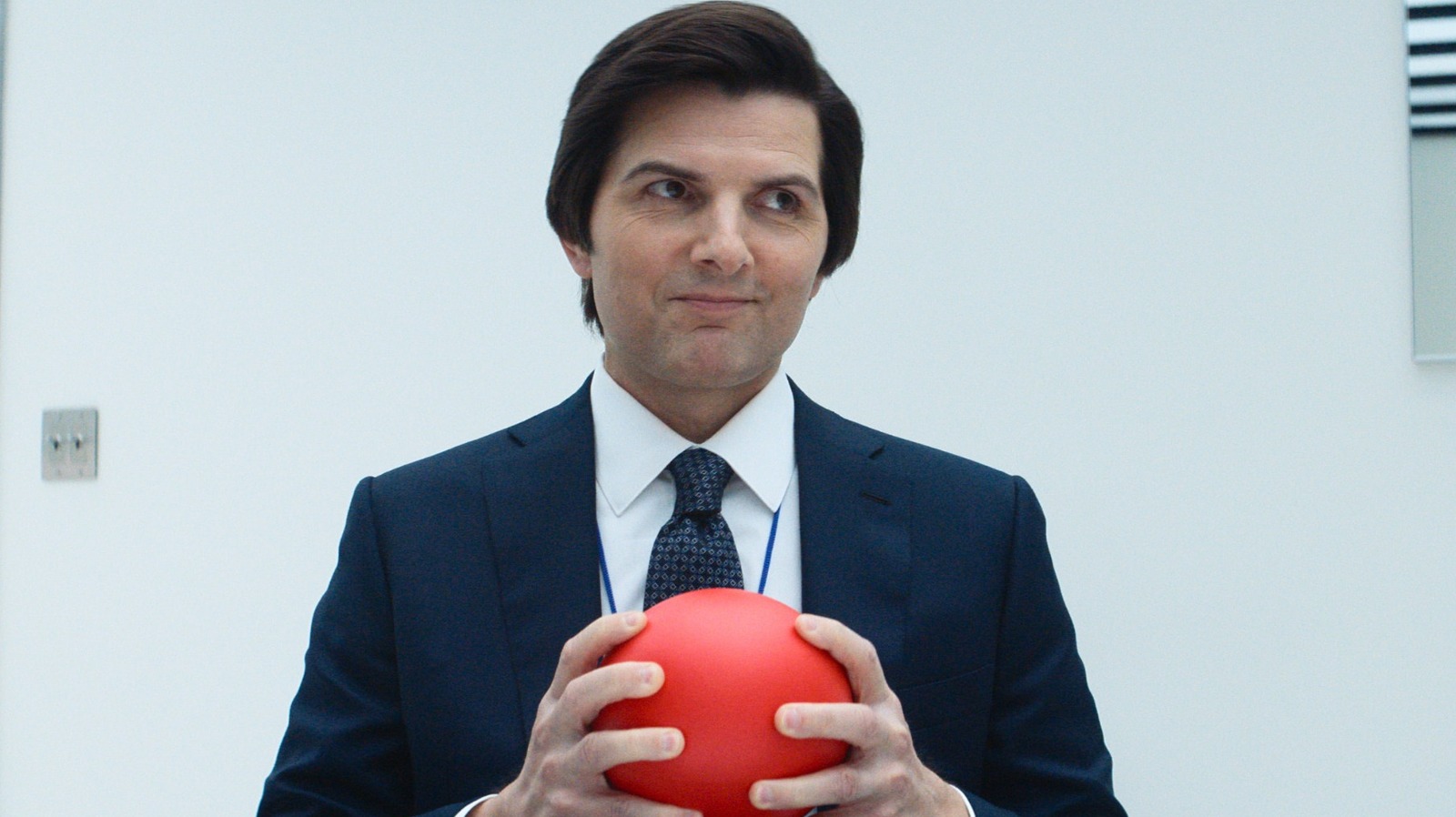
On the surface, the premise of “Severance” sounds enticing: who wouldn’t want to split their work memories from their personal and social life, effectively bisecting oneself into two people? But “Severance” is so much more than a simple division of memories, as each person who undergoes severance effectively does become two distinct people, one of whom gets to enjoy life as they see fit while the other knows nothing but the four walls of the office and the small group of people there.
On top of the moral ambiguity of dividing a person’s personality in such a way, “Severance” turns the creep factor so far beyond 11 that the dial breaks. Every scene in each episode meticulously crafts a palpable tension that drives the overall series theme of identity. Almost nothing within Lumon Industries makes sense, which only increases the anxiety the audience feels while watching it. Few shows come anywhere close to the utter brilliance that is the writing of “Severance.”
Not only do the characters not know what’s going on in their own lives, but “Severance” has been playing mind games on the audience from the very beginning. Each prop or hallway is designed to mess with viewers’ heads. Yet the series is also relatable despite its sci-fi approach to memory manipulation, and while a third season is in the works at press time, the first two seasons contain no bad episodes. Overall, “Severance” holds a 95% rating on Rotten Tomatoes.
Andor
The “Star Wars” franchise has been pumping out content ever since Disney bought Lucasfilm, not all of which fans have enjoyed. To be fair, the fandom is one of the most toxic and has lambasted Disney’s decisions since the purchase. Despite this, Disney hasn’t stopped producing films and television series in the “Star Wars” universe, the best of which is “Andor.” Although “The Mandalorian” might arguably hold that distinction, only one of the two has no bad episodes.
“Andor” consists of a detailed timeline of the life of Cassian Andor (Diego Luna), first introduced in “Rogue One: A Star Wars Story.” The first season depicts Andor in his pre-Rebel days, selling stolen Imperial technology to make a living. After he’s attacked by two security officers that he kills, Andor becomes the Empire’s No. 1 target in the sector. What follows is a massive heist, Andor’s arrest and incarceration, jailbreak, and his decision to join the growing Rebellion.
Season 2 picks up after the events of the first, and is broken up into four parts, each consisting of three episodes that cover one year. The series concludes with Andor leaving with K-2SO (Alan Tudyk) to fly to Kafrene, where he’s next seen in the opening act of “Rogue One.” The series is absolutely perfect in its depiction of Andor as a rogue-turned-rebel, and every one of its episodes is unique to the overall story. “Andor” maintains a rating of 96% on Rotten Tomatoes.
Fallout

Amazon Prime Video
The “Fallout” video game franchise began in 1997, introducing the world to Interplay’s unique take on a nuclear apocalypse. Over the years, the franchise expanded, building up a mountain of lore that details an extensive history across several centuries. For decades, “Fallout” was primarily limited to games, but after Amazon purchased the rights in 2020, that changed. Todd Howard, the director and producer of several of the games, signed on to executive produce, and the live-action adaptation premiered in December 2025.
“Fallout” absolutely blew everyone away with its meticulous attention to detail in presenting the video game world as a television series. Every broken car, each destroyed building, and all the irradiated food you can eat harkens back to the games. The same is true of many of the characters and locations. In this way, “Fallout” has been a rousing success with fans of the games, but they’re not the only ones watching the series, as it’s incredibly popular.
Still, loyalty to the lore is incredibly important, and “Fallout” hasn’t failed in this by any measure. Each episode continues the overall narrative surrounding Lucy (Ella Purnell), The Ghoul (Walton Goggins), Maximus (Aaron Moten), and the rest of the characters. It all coalesces into an outstanding adaptation that consistently pushes out one amazing episode after the other, without a single one being poorly received. “Fallout” has aired two seasons as of this writing, with another one on the way from a show that holds a rating of 94% on Rotten Tomatoes.